
My mother and the landlord (Slow burn, long read)Running

Showing only the posts of Authorsunny: 160 of 799 posts. Show all posts

Chapter 27 – Wednesday (continued)
3 December 2025 – Wednesday

Her glass stopped halfway to her mouth.

For a second she looked shy. Real shy, not the performed kind. A small thing in the cheek, in the way she looked down at the sabzi and then up again, as if the question had touched a place she still kept covered even after everything else had come off.

“Why are you so interested today.”

“You keep talking about him. Breakfast, dinner, tiffin, rent, gym, everything. I am asking. That’s all.”

She smiled, shook her head once, and then she talked. Once she started, the shyness did not last. The fondness did.

“He is successful,” she said first. The word came easy, as if she had said it to herself many times already. “Not like these building men who only sit near the gate and talk about other people’s wives. He has property. He has the other building near Jogeshwari. Shops. People in the area listen when he speaks. That is a thing, Sunny. When a man’s word stays, the whole air around him stays different. You feel it when he walks into a room.”

She tore a small piece of roti for herself. She was not eating much. Tea and two bites. The head towel made her look younger and older at the same time. Wet hair. Green blouse. Morning light on the upper curve of her chest.

“Confident,” she said. “He does not ask ten times. He decides. I like that. After so many years of deciding every small thing alone — ration, rent, your fees, which doctor, which college — it feels different when someone else also holds something. When someone says, this is how it will be, and then it is that way.”

She paused. Her thumb moved on the steel glass.

“He is also very powerful in the area. You know that. Watchman, society people, even those women who talk, they still lower their eyes a little when he comes. Mrs. Desai can say what she wants behind a window. In front of him she becomes small. That is not a small thing in a place like this.”

“And the rest? Isn’t he short-tempered? The way he gets rude at times?” I said.

“Temper is there.” She said it without dressing it. No smile this time. “He is a tough man. He does not like a few things. Delay. Lies. People who talk from both sides of the mouth. That kind of thing. He gets angry. His voice changes. You have heard it. I have heard it. But overall he is good at heart. He helps. He does not keep accounts of every rupee the way some men do. When he gives, he gives. Bike. Rent. Sweets. A man who counts every favour is a small man. He is not small.”

The bike key was in my bag. I did not touch the bag.

“But then his mother,” I said. “Why is Ammi still like that with you.”

Ma’s mouth tightened a little. Not full anger. The tiredness of a subject she has already turned over many times in this same room, on this same chair.

“The whole building knows what kind of nuisance she is,” I said. “Even before all this. She talks. She makes faces. She stands in the door and looks at people as if they have stolen something from her kitchen.”

I stopped. The two thousand was in my wallet. The sentence Ammi had put on top of it was in my throat. *Unlike your mother. New jawani. Sit with some shame.* I had decided on the stairs not to bring it up. I kept that decision. The notes stayed against my thigh.

“She has her reasons,” Ma said. “It is hard for her to trust any woman after what her own daughter-in-law did. That is the main thing. Once a house has seen that kind of fight, the old person stops trusting any other woman who walks in. Even if the other woman is only bringing food. Even if the other woman is only sitting politely with her pallu pinned.”

She drank.

“That, and her knees. Pain keeps her irritated the whole day. When the body is hurting, the mouth becomes sharp. I have seen it in the parlour also. Old women with pain talk like that. They look for a place to put the pain. A new woman in the building is an easy place.”

“What did the daughter-in-law do?”

Ma looked at me for a second, checking, maybe, whether this talk belonged at a breakfast table with tea and jeera sabzi. Then she told me Azad’s version. I could hear that it was his version. The sentences had his shape. Short. Final. No extra mercy.

“She could not gel with the family,” Ma said. “From the beginning. She was never a family woman. Some women are like that. They want their own house, their own rules, their own timings. Their house is not like that. Ammi is there. The building is there. People come. Rent is collected. Repairs happen. She never accepted their culture and all. Small things also became issues. Food. Festival. Who sits where. Who speaks how. Who touches Ammi’s feet and who does not. Always some problem. Always a face.”

She turned the glass. The purple polish caught the light again.

“She didn’t take care of Ammi properly. That is what hurt him the most, I think. Ammi is his mother after all. In the end she became so cruel that she even stopped cooking food for Ammi. Imagine. In the same house. Plate separate, food separate, and then one day no food. After that the rift became too wide. Azad Sahab decided to separate. What else could he do. A man can take only that much in his own house. He can take a wife who argues. He cannot take a wife who lets his mother go hungry.”

She stopped.

The fan moved the pallu a little. She pinned it back with two fingers. The movement pulled the blouse. The deep line opened. Closed.

Then she added, after a pause, in a softer voice,

“But he still takes care of them. That is the thing. Pays money for his kids’ education and all. Sends money every month. college. Whatever they need. He does not show it off. He just does it. That is how he is. A man can leave a woman and still not leave the children. That also I like.”

She looked at her tea, then at me.

“He is the perfect man a woman can get, Sunny. The earlier wife could not value it. This is what happens when you get everything that you desire. You stop seeing it. You start finding problems in the same things that other people are praying for. Property. Respect. A man who decides. A man who does not ask ten times. She had all of that and she still made a face.”

Perfect.

The word sat on the folding table next to the pickle.

While she was speaking I looked at her cleavage again.

I did not decide to. The blouse made the decision. When she leaned to keep the glass down, the green cloth opened at the neck and the gold chain fell into that deep line and the inner flesh was right there, lotion-smooth, the mark from Monday maybe still under the cup, maybe not. I looked. Longer than a glance. Long enough to see the way the two sides met. Long enough to see the faint shadow the bra cup made. Long enough that my mouth went dry.

She cut herself.

Mid-sentence. Some word about money or college. I lost it.

She showed me her eyes first. Then she reached across the small table and patted my hand. Not a slap. A pat. Warm. The silver bracelet touched my wrist. Her fingers stayed a second longer than a correction needs.

“Look here,” she said. “Not there.”

I looked at her face.

“I am your mother,” she said, quiet, clear. The words were not sharp. They were worse than sharp. They were calm. “Not your girlfriend. This is what happens when there is no girlfriend. The eyes go wherever they find a place. This blouse. This neck. This house. Find someone for yourself, beta. Properly. A girl who will sit across a table and not be me. Or should I start looking for a girl for marriage. You are settled anyway. Job is there. Bike is there. House is running. What are you waiting for.”

I laughed. The laugh was useful. It covered the heat in my ears. It covered the fact that my body had not listened to the word *mother*.

“Sorry,” I said. “I didn’t mean to stare Ma.”

“You meant to or not, you were staring.”

“I am too young for marriage right now, Ma. Twenty-one. Who gets married at twenty-one.”

“People do. Your father was not much older.” She took her hand back. The bracelet left a small cool line on my skin. “Anyway. I am not going to the marriage bureaus tomorrow to find a girl. I am only saying. Think about it. Don’t let this age pass only looking at office screens and… other things.”

Other things.

She did not name them. She did not need to. The other things were in the room already. The frozen last seen. The dustbin. The purple cloth. The mark under the cup. The way she said *perfect* with her mouth still soft.

I could see it while she spoke. The fondness. Not only the words. The way her mouth softened on his name. The way she defended Ammi’s distrust and still called him perfect in the same ten minutes. The way temper became “he does not like a few things” and money for the children became proof of heart. She was not describing a landlord. She was describing a man she had already placed in the centre of this 10-by-12, in the centre of the bed, in the centre of the hours I am not home.

I should have left the talk there.

I did not.

“So how did it start,” I said.

She looked at me.

“What start.”

“You and him.” I kept my voice light. A tease. The kind a son is allowed if he smiles. The kind that pretends it is only curiosity and not the thing sitting in the stomach. “The affair. Tell me. I am already late in my own house. I can be late by ten more minutes. The meeting is in the evening anyway.”

She showed me her eyebrows.

Then she smiled.

Not the small shy one from earlier. A different one. The one that knows the story and is deciding how much of it to put on a breakfast table next to cold tea and hard roti. The one that has already decided some of it will be said and some of it will be left in the pause.

“Affair,” she repeated, as if the word itself was funny in this 10-by-12. As if the word was too big for a dripping tap and a glass of water and a man standing near a window. “You have started using big words.”

She turned the glass in her hands. The purple polish caught the grill light. She looked at the glass, then at me, then at the dead phone still black on the charger.

“So it all started when we both…”
[+] 4 users Like Authorsunny's post
Like Reply
Do not mention / post any under age /rape content. If found Please use REPORT button.

Chapter 27 – Wednesday (continued)  
3 December 2025 – Wednesday

She turned the glass in her hands. The purple polish caught the grill light. She looked at the glass, then at me, then at the dead phone still black on the charger.

“So it all started when we both…”

My phone rang.

The sound cut the sentence in half. Too loud for this room. The cheap tone I have not changed since joining. The screen said Rohan.

Office.

I looked at it. I could not avoid it. In delivery week a call from the cluster at this hour is not a joke about tea. It is a file, a client line, a *where are you*.

“Take it, beta,” Ma said. The smile closed. The story closed with it. “It must be work.”

I stood and walked two steps toward the window because that is what I do when the house is small and a call needs a little air.

“Yes, Rohan.”

Rohan started with the evening meeting. Which sheet. Which log. Whether Sinha sir wanted the old numbers or the revised ones. I said the names of files. I said yes. I said I had put it in the shared folder.

While I spoke I watched Ma.

She had got up.

She went to my charger first. She picked up her phone with both hands like it might break. She pressed the side button.

This time it turned on.

The Samsung logo. The slow load. The screen coming alive with that cheap brightness. Her face changed at once. Happy. Relief so clear it made her look younger for a second. She turned the glass toward me and showed it, eyes wide, mouth open on a smile, as if I had fixed a person and not a battery.

I nodded, still on the call.

She unlocked it.

I saw the face after the unlock.

Not happy.

Pale.

The kind of pale that comes when a screen is too full. Missed calls stacked. Messages stacked. A name at the top that I did not need to read from across the room.

A little panic.

She was already moving. Kitchen. The curtain rings. She was dialling before the curtain had even fallen back. I heard the tone. I heard her breath.

Rohan was still talking. I said yes twice and ended it as soon as the sheet names were done.

“I will be leaving in ten minutes,” I told him.

I cut.

The house was quiet except for her voice in the kitchen.

I wanted the other side of that face.

I did not go to the kitchen door. I sat back on the chair as if I was only finishing tea. The folding table is close enough. The curtain is not a wall. In this flat a person who wants to hear, hears.

She was already on the line.

His voice leaked first as a scbang. Then it came through.

“The whole night, Anjali. Dead. What do you mean dead. I called. I called again. I sat with this phone in my hand like a fool. What is this?”

“Azad Sahab, its the battery,” she said, quick, already small. “I put it on charge, I swear. Whole night. Morning also it was not coming. I thought it will come after some time. Sunny also tried. He put it on his charger. Then only it opened just now—”

“Don’t give me charger stories.” The bark was short. “Evening also I tried. Two times. It ringed, but there was no callback. What is this. You disappear for hours and then you come with a battery excuse. I was about to come upstairs at night. I stopped myself. You should thank that I stopped. Next time I will not stop Anjali.”

Evening.

Yesterday evening. When she had been on her stomach with balm. When the phone had lit on the sheet and died in my hand. When I had put it back and not plugged it.

“I know you got angry,” she said. She did not raise her voice. “It was the phone. Not me. Please trust me Azad Sahab, would I switch it off on purpose? Think once.”

“You wait for my messages. That is what you told me. Then why was it dead when I wanted you. I waited downstairs. Don’t talk to me like I am the milkman asking for last month’s bill.”

“No Azad Sahab, I am sorry if it came out that way…..also, last night I slept early. Back was paining from morning. I put balm. I thought I will only lie down for some time. Then sleep came. I did not even hear. You know how I am when sleep comes in the day. Like somebody switched me off. I didn’t do it purposely, Azad Sahab.”

“Back.” He said the word as if he was tasting it. “You slept with a dead phone because of your back. Then you should have called me. I would have arranged a doctor. What kind of stupid behaviour is this. Back is paining and the phone is dead. Am I some stranger. I am the man who was inside you yesterday and you cannot pick a call.”

She lowered her voice further.

“Don’t ask about the back as if you don’t know. From yesterday only it started. After you. You held me in that position for so long. You didn’t let me turn when I said it was too deep. And then you are asking why I slept….”

A small pause and then she said giggling “You were the reason for the back pain…hehe”

The giggle was low. Private. It did not belong on top of a doctor sentence.

From the other side I heard the change. A breath. The anger did not vanish. It sat closer.

“So now you remember. Yesterday you were saying take, take, don’t stop. Today you are saying back pain. You can take a man like that in the afternoon and then you cannot keep a phone alive. Say it properly. Say your back is hurting because I used you the way I wanted.”

She turned her face toward the fridge wall, away from my side of the curtain.

“Please. I said am sorry Azad Sahab. I didn’t do it intentionally. It will not repeat, I promise. I will keep it on charge. Next to me. I am telling you.”

A whisper after that. I leaned half an inch. The chair did not creak. He said something which I couldn't hear properly. 

“I will accept the punishment.” Another giggle, smaller, caught in the throat. “offoo…shhhh…don’t say like that when I am in the kitchen. He is outside only. He can hear if you speak like that.”

“Let him hear. He has been hearing for weeks. You think the boy is a statue. I don't care.”

She whispered again.

“Offoo, please Azad Sahab, don't talk like that about him…”

Then a pause from her side. She was listening. Her fingers were on the edge of the counter. I could see that much through the thin curtain. The light green blouse. The bare arm. The gold bangle.

He was speaking, I could only hear the noise, but couldn't make out what was he speaking exactly.

“At six?” Ma said in the phone surprisingly. The worry was instant, but the voice stayed low. “It will get late then, Azad Sahab. Sunny will be home before we come back, how can I…”

The other side did not like that sentence.

“You have come to me so many times with the boy sitting in that house. Did you forget the celebration night and day after? Did you forget the monday? Are you that naive to pretend that the boy didn't notice anything when he entered the room? Comeon Anjali, what new drama is this. It is your job to handle your son. If you cannot handle him, I will come upstairs and explain it to Sunny in my own way. I will tell him what his mother is. I will tell him who she belongs to. The boy will listen then. He already looks at you. He already knows. Don’t use him as a lock on my time.”

“Accha ji… ok ok. First calm down. I am not saying no. When have I said no. I am only saying that…..”

A breath.

“Anyways, but even if we go, I don’t even have proper clothes. The ones I have won’t look right there. I should at least match the status of others around.”

I saw her face sideways through the curtain. She smiled. Small. Toned down.

Then she whispered. Then she nodded, as if he could see the nod through the phone.

Then I could again hear his voice.

“I want to see you in black. Deep neck sleeveless matching blouse. And buy a new wired bra too. The one that pushes you up. Understood?.”

“Wired one? Why so much of obsession with it? It hurts, na. The underwire sits wrong the whole time. It leaves a mark. You know it already. Still you insist.”

“That is what I like. I like leaving marks on you. You said you will accept the punishment, treat this as your punishment, haha. Wear it. If it hurts, it hurts.”

“Azad…”

It was not a no.

“Okay, okay, I’ll wear it. Don’t start again. Black saree. That bra. I understood.”

I looked at the wall clock.

It had been more than fifteen minutes since Rohan’s call. If I sat more I would actually be late.

I got up, even though I wanted to hear further.

The chair made the sound.

The bag went onto my shoulder. The tiffin was already packed from the roti box — two rotis, the dry sabzi, pickle. I had not even seen her close the lid. It was on the table. I took it.

The sound made her glance back once from the kitchen. For one second her face was still the phone face. Soft mouth. Colour on the cheek. 

“Drive safely, beta,” she said, the phone still at her ear, the mother-voice put on top of the other one.

“I’ll message when I reach.”

“Yes.”

I was at the door when the bell rang.

Short. Ordinary. The same cheap sound this house has used for years.

From the kitchen she did not move. She did not even turn. The phone was still at her ear. She was still saying something low — “you are so naughty… yes… I know how you like the pallu…” — as if the bell belonged to another building.

I opened the door.

The same boy as yesterday. Thin. Sixteen or seventeen. Small black polythene in his hand. The smell came up before he spoke. Skin. Bone. Red-white flesh.

I already knew.

“Money is already paid,” he said. 

Behind me her voice went on in the kitchen, unaware.

I took the polythene with two fingers.

I did not look inside. I did not need to.

I turned, walked to the folding table, and dropped it there. The bag made a small, wet sound on the wood, next to the two steel glasses and the dead charger wire.

The boy was already going down the stairs. His slippers slapped the steps.

I picked up my bag again.

She still had not come out. The curtain was still a curtain. The giggle was still in her throat.

I walked out and pulled the door from outside.

The compound had the usual morning. Milk. A scooter. The watchman on his chair with tea.

The strip where the white sedan stands was empty.

Azad had already gone.
[+] 8 users Like Authorsunny's post
Like Reply

(12-09-2026, 02:38 PM)Tea_Kadai_Boy Wrote:  I don't know what to say. It's one of the ultimate. The latest parts went beyond something I never imagined. Anjali had a different dimension, when she spoke of his adulthood and the reason sunny should have a girlfriend. She is matured enough to know a mother also attracts a adult son in a cramped room and close living. The heat sunny caught is natural. The scenes of nude Anjali is erotically great.  Losing herself completely to Landlord is another dimension of her. According to her he is a complicated and perfect person and overbearing.
The writing- short and simple sentences, not telling but showing which left everything to imagination along with the environment, is addictively excellent. Though it looks like slow burner, in reality it a charging Vande Bharat train. All three characters are pitiable and understandable.
As to your previous reply to my comment, my reply is not a criticism, because there is no wrong in that part, and which was immensely great in its own way. It's an imaginary riot.  One of the readers @spica308 had correctly interpreted it. It's just only my suggestion and expectation, that you could well ignore it and need not explained it.

Thank you, Tea_Kadai_Boy. I really value this.

My aim is a long story — a novel, not a rush of scenes. Things should not jump out of nowhere. Characters should not flip overnight. The house, the money, the affair, the heat — all of it has to move at a pace that feels real enough to believe.

That is the only test I keep for myself. If a reader can stay with it and still remember the people later, the work is doing its job.

Your earlier note was never criticism for me. It was a suggestion. I can take it or leave it. 

Thank you for reading it this closely.
[+] 1 user Likes Authorsunny's post
Like Reply

(12-09-2026, 12:15 PM)V1star Wrote:  [Image: indian-aunty.gif]
host images for online profiles

Thank you, V1star. The photos help. They keep the house, the clothes, and the faces in the same room as the writing.

I see the effort you put into imagining the scenes properly instead of throwing random pictures. That kind of reading matters on a long story like this.
[+] 1 user Likes Authorsunny's post
Like Reply

Chapter 27 – Wednesday (continued)
3 December 2025 – Wednesday

I put the helmet on and rolled out.

The first two minutes on the road were only traffic and the tiffin hook tapping the side. Then the kitchen voice came back. Not the mother voice. The other one. The one that had gone small and then giggled into the phone while I was still tying my shoes.

Six.

Black saree. Deep neck. Sleeveless matching blouse. Wired bra that pushes up. If it hurts, it hurts.

The words sat in the helmet with the engine noise. I kept seeing the light green blouse from the morning, the way the neck had opened when she leaned for the charger, the gold chain falling into that line. Now he wanted black. Not house black. The other black. The kind that makes a room look different the moment the pallu is pinned.

Were they going out.

Or was he coming up.

The meeting I had told her about was real. Sinha sir, evening, delivery discussion. I had not invented the late stay. Now those hours had a time attached to them. Six. And I would still be in a conference room when six came.

A tempo cut in front. I braked. The tiffin jumped. Potato and jeera. Ordinary food in a steel box while the other food — the black cloth, the wired thing, the “I will accept the punishment” — was being planned in the same kitchen where she had hummed after the headwash.

I reached office later than I liked. Card. Nod. Lift. Fourth floor. The east windows were already holding that hard white light.

Rohan was at his desk with two screens open. Vikram had a sheet printed and folded like a map. Sameer waved once and went back to his call. The morning looked like every other delivery-week morning.

It did not feel like one.

I opened the laptop. The module from yesterday was clean. Comments were waiting. I started typing and the words came, but they came from a shallower place. Under them the other pictures kept walking in. The towel at her upper thighs. The lotion on her own ass. The side of the breast when the arm went up. Then the phone call. His bark. Her giggle. Six o’clock. Black.

I checked last seen at 10:21.

Online.

Then 10:47.

Then 11:03.

Moving. Not frozen like Monday. Hands on the phone. Cooking, maybe. Messaging, maybe. Waiting.

I put the phone face down and still picked it up again after twelve minutes.

Nair ma’am walked past the row at 11:40.

I smelled her before I fully saw her. Not the heavy perfume some of the other women wore. Something cleaner, sharper, like lemon and cloth that has been ironed. She was in a white shirt and a black skirt today. The shirt was tucked. The skirt sat at the knee. Formal. Office formal. But the way she walked made the formal look like a choice, not a uniform.

She stopped two desks ahead, spoke to someone from accounts, then turned.

I thought she would pass.

She did not.

She came back and stood at the side of my desk, one hand on the partition.

“Sunny.”

I looked up. The screen light was still on my face.

“Yes, ma’am.”

“How is it going. Everything alright?”

Her voice was even. Professional. The same voice from the interview months ago, only a little warmer now that I was no longer a candidate sitting opposite a file.

“It’s fine, ma’am. A bit tight on the timelines, but manageable.”

She nodded. Her other hand went to her hair, tucked a strand behind her ear, then came down again. She shifted her weight from one foot to the other. The skirt moved with it. A small, ordinary habit. I had seen her do it in the corridor before. Today it sat closer.

“I haven’t really spoken to you after you joined,” she said. “Interviews get so rushed. Then people disappear into their teams. How was celebration? You took leave, right?”

“Yes, ma’am. Four days. Went alright. Home only.”

“Good. Family time is needed. These delivery weeks eat everything otherwise.”

She smiled. Not a big smile. The kind that stays in the eyes a second longer than the mouth.

I tried to keep my eyes on her face.

They did not stay there.

The shirt was buttoned properly. No party neck. No house neck like the green blouse at breakfast. Still, when she leaned a little on the partition to look at my screen without actually reading it, the fabric pulled. The line between the third and fourth button opened enough to show the start of the valley. Not the heavy deep line I had watched on the bed that morning. Narrower. Neater. A different darkness. The kind that belongs to a woman who leaves the house knowing she will be looked at under tube lights and still chooses the shirt.

I looked away at the keyboard, then at the window, then back because looking only at the keyboard for too long also looks like something.

She was still talking.

“In your interview,” she said, “there was one round where most candidates went blank on the scenario question. You didn’t. You took a second, then you walked through it like you had already lived inside the problem. That is why I pushed for you. Not because the marks were highest. Because the thinking was clean. Don’t forget that when the work gets noisy. I chose you by realising your potential. Hope you would not prove me wrong.” followed by a wide smile.

The words landed in a place that had been empty since morning.

I felt my shoulders drop half an inch.

“Thank you, ma’am. I will definitely not let you down ma'am.”

“Anytime. If there is any HR thing — leave, policy, even if someone is making the floor difficult — you can walk to my cabin. Don’t wait for it to become a mail.”

She touched her hair again. The same small movement. Then she stepped back, gave a short nod, and went toward her cabin.

The lemon-iron smell stayed for a few seconds after she left.

Rohan turned his chair.

“Nair ma’am standing at your desk for that long? What happened. She doesn’t do that with everyone.”

Vikram looked over the partition, eyebrows up.

I shrugged. “Just asking about the week. celebration leave. Normal.”

They waited for more. I did not give more. I opened a comment thread and started typing as if the screen had become suddenly urgent.

For twenty minutes the house receded.

I knew I had potential. I had never been the topper. Teachers used to like me because I submitted on time and did not make noise. Nair ma’am’s sentence — *I chose you by realising your potential. Hope you would not prove me wrong.* — sat in the chest like a warm coin. The butterflies were stupid and I still felt them. The way she had played with her hair. The smile that stayed. The shirt line.

Was she only being HR.

Or was the talk smoother because she had chosen me that day and still remembered the choosing.

I waved the thought off the way you wave smoke. It came back anyway, mixed with the other thought, the heavier one. Black saree. Six o’clock. Wired bra. The two pictures did not belong in the same head and they still sat together.

After lunch the house returned fully.

I ate the dry sabzi at the desk. Sameer passed, said home food, grinned, moved on. I checked last seen.

Recent.

She was on the phone, or the phone was in her hand. Cooking the second tiffin maybe. Chicken again, from the morning polythene. 

At around four I put the phone in my pocket and left it there.

The five o’clock meeting was in the bigger conference room. Sinha sir had the deck. Client on the speaker. Shared screen. My module was three slides in a forty-slide story.

The first twenty minutes were normal. Numbers. Dates. The usual polite push.

Then the client’s voice changed.

Timelines. The original ones. The ones we had already moved once. He did not like the second move. His English got faster. Files started changing hands across the table — printed sheets, a pen passed too hard, someone pulling a laptop closer. Sinha sir’s jaw tightened. Rohan took notes like the pen might save the room. I answered when my part came. My voice stayed even. The numbers were right. That was all I had.

For almost two hours the house did not enter.

No last seen. No black cloth. No six o’clock. Only the speaker, the slides, the client saying the word *unacceptable* twice, and then the slower walk-back of dates that still did not make him happy.

The main call ended near seven.

Sinha sir did not let us stand up immediately. He kept the team for another few minutes. Revised timelines. No extra drama in his voice, only the tired firmness of a man who has to carry the client’s anger down to the desks. Work hard. Stick. No slippage on the new dates.

We nodded. We said yes. We packed.

I stepped into the corridor and the morning talk hit me the way a smell hits when you open a closed fridge.

Six.

It was already past seven.

I took the phone out.

Last seen 4:32 p.m.

Four-thirty.

After that, nothing.

Had she slept again.

Had he come up.

Had they left.

The sedan would tell me something, but the sedan was thirty five minutes of traffic away.

I put the helmet on in the basement. The tiffin box was empty now. Only the steel smell. I joined the road.

Mumbai at this hour is not a road. It is a long argument between bikes and buses and the same red lights that do not care that a person is late in his own house. I kept seeing the kitchen curtain from the morning, her bare back, the lotion, then the phone at her ear, then the sentence *at six*. The helmet made my own breath loud.

I reached the society a little after eight.

The strip where the white sedan stands was empty.

The heartbeat missed once, the same stupid miss as when I had opened the dustbin on Monday.

Where.

She had not even messaged. In June she used to message if the milkman was late. Now a whole evening could leave the house and the phone could stay quiet. How does a person change like that in six months. The question had no useful answer. It only made the hands tighter on the grip.

Our third-floor window was showing light.

Light does not mean a body is inside. Light can be left on by a woman who is already in a car, already in black, already somewhere a son is not supposed to picture.

I parked. I took the bag. I started up.

On the stairs between second and third I crossed the girl from the fourth floor. College girl. Dupatta, backpack, the usual evening face. For months she had given that small courtesy smile people give when they pass the same landing every day.

Today she looked at the step in front of her and went past as if I were a wet patch on the concrete.

I did not stop. I did not have a sentence for a smile that had been taken back.

Our floor.

I already had the keys in my hand. I was two steps from the door, ready to put the key in, when I heard it.

Payal.

Not the hurried Monday-night payal. The ordinary silver sound, but moving. And under it the rustle of bags. Plastic. Paper. The soft crush of something being folded or shifted.

She was home.

The relief came first, cheap and fast. Then the other thing. Monday had also started with a door and a body on the other side of it. Six o’clock had been spoken into a phone in this same house. I was already a little sweaty under the formal shirt. Standing in a closed stairwell does that, and the mind does the rest.

I did not use the key.

I rang the bell.

The payal stopped for a second. Then it came toward the wood.

The door opened.

Same light green blouse. Same saree from the morning. Head towel gone now, hair open and a little flattened on one side as if she had been bending and straightening for a while. Kajal still there, slightly smudged at the outer corner. Gold chain. Silver bracelet. Payal.

Sweat at the temple.

I looked at her neck.

No new mark.

I looked at the line of the blouse where it sat on her chest.

No dark bloom that the morning light had not already shown. The skin looked only like morning skin that had spent a day in a small flat.

Confusion sat in the throat. If six o’clock had been a going-out, the black would be on her. If six o’clock had been him coming up, the room would smell different and the walk would be different. Neither thing was on her face. Only heat and a kind of hurry.

The smell that came out with her was not balm and not the other smell from Monday.
[+] 6 users Like Authorsunny's post
Like Reply

Chapter 27 – Wednesday (continued)
3 December 2025 – Wednesday

The smell that came out with her was not balm and not the other smell from Monday.

New cloth.

Starch and shop and that faint chemical sweetness packets have when they have just been opened.

“Beta, good that you came,” she said. The mother-voice was back, but it was running. “I was about to call you only. We need to go to the market quickly. I need to give the blouse for stitching. The tailor will close by nine. We have to leave now. I am sorry, I am bothering you after office, but please. Azad ji is also not home, otherwise I would have asked him. I was trying Rapido. No one is accepting. You know the traffic.”

I stepped in.

Near the folding table there were bags.

Three.

One was from a saree house whose name I had only seen on those shiny boards near Linking Road, the kind of place where a single pallu costs more than our monthly ration. The bag was thick paper, gold lettering, already empty and sitting open.

One was from a cosmetics counter. Smaller. Black and white. Also empty.

One was from a footwear brand I knew only from mall windows. Heels. Sandals. The bag had that stiff shape shops use so the box inside does not look cheap. Empty too.

Nothing left inside any of them that I could see. Only the names. The cost sitting on the table without the things.

She was already wrapping the empty bags, the old habit, folding them into smaller rectangles to keep for later. Onion, cobwebs, a wet umbrella — she stored bags the way other people store boxes. The wrapping told me the contents had already been taken out. Almirah, probably. Shelf behind the hanging blouses. Or the top of the steel trunk. I did not open anything. I only stood with the office bag still on my shoulder and the three expensive names on the wood.

She would not have bought these on house contribution alone. The thought arrived complete. Azad Sahab. Gift. Or instruction. Black saree. Matching blouse piece. Wired bra from the cosmetics bag, maybe. Heels that would make the payal sound different on a floor that was not ours.

For what.

The six o’clock thing. Or something after. Or both.

“Ohhh, ok Ma. Give me two minutes, I will just wash my face.” I said.

“Quickly, beta. Really quickly.”

The bathroom was still holding a little of the morning steam and the shampoo smell. I washed, changed the shirt for the house one, left the formal pants on because we were going out again. When I came out she was already near the door with a regular cloth bag in her hand. Folded.

“Ma, why so much hurry,” I said. “Can’t this wait for tomorrow?”

She cut across it the way she cuts across a pot that is about to boil over.

“I will tell you later. Now just come. If there is traffic we will miss him.”

No space for the next question.

We went down.

She sat on the bike the old way, one-sided, feet to the left, one hand on my shoulder. Not the tight hold of a person who is afraid of the road. The practical hold of a person who has sat like this for years and still does it when the auto does not come. The light green blouse was close to my back. I felt the warmth of her through the shirt when the bike leaned at the first turning.

On the stairs she had already told me the location of the shop. Not her usual tailor near the station road, the one who had stitched her old blouses for ten years and still used the same chalk. This was another market. Further. The kind people name when they want the cloth to look like it belongs to a different income.

Helmet on. Engine. Lane.

Talking properly was not possible. Wind. Horns. The helmet’s own echo.

At a red light I heard her phone.

She had taken it out with the hand that was not on my shoulder.

“Yes,” she said. “Sunny came. I left with him.”

A pause. The light stayed red.

“You please call the tailor shop. Tell him to keep the shop a little more time. If you call personally he will not deny.”

A small sound from her throat. A giggle, short, caught, the same private one from the morning kitchen.

Then, after he must have said something:

“I have given the tiffin to Ammi downstairs. I made chicken again. A little differently. Dry one. Hope you will like it.”

The light turned. She ended the call. 

Chicken again. Dry. For the same mouth that had told her to wear the wired thing until it left a mark.

I followed the map.

Four or five kilometres. On a Sunday morning it would have been fifteen minutes. On a Wednesday at this hour it became fourty. Buses, a digging stretch, a signal that stayed red as if it had forgotten the other colour. That is Mumbai. Distance is not kilometres. Distance is how many times the clutch hand gets tired.

We reached a little after nine-ten.

She pointed to a spot near a shuttered fabric shop. I parked. The market was not a mall. Ground floor mostly cloth shops still open, first floor the other things — tailors, jewellery, a couple of footwear shops, a shop that sold only blouse pieces and latkans. Dense. Lights still on.

We walked.

“Beta, you eat something if you want,” she said. “You must be hungry. I will take fifteen-twenty minutes and call you. Wait near the bike only. ok?”

She looked at her phone to check the time.

The glass was black.

She pressed the side. Pressed it longer. Chuckled once, tired and familiar.

“Huhh. This phone. Again. You wait at the bike after eating. I will finish and come here only.”

I had been ready to find a stall and eat alone. The stomach had been empty for long. Then the dead phone and the new market and the black piece in her bag sat together. Fifteen minutes in a place I did not know, with a phone that had already died twice today, felt like leaving a door unlatched.

“I’ll come with you,” I said. “It’s only fifteen minutes. On the way back we can stop. Pani puri, pav bhaji, whatever is open.”

Her face changed. The hurry loosened by one notch. A real smile, the old one, the one that used to come when I agreed to orange ice-candy after tuition.

“It’s been long,” she said. “Both of us eating from outside. Yes. We’ll do that.”

She adjusted the bag on her wrist. 

We climbed the one flight to the first floor.

The tailor shop was at the end of the corridor, light still falling on the measuring table, a man in a vest looking at the clock and then at the door as if he had already decided to pull the shutter and then decided to wait because a call had come from a number that mattered.

Ma walked in first.

I followed her in.
[+] 5 users Like Authorsunny's post
Like Reply

Chapter 27 – Wednesday
3 December 2025 – Wednesday

The tailor shop was not a shop in the way I understood shops.

Our old one near the station road was a ten-by-ten box. One bulb. Chalk dust on a wooden table. A bench that pinched the thigh if you sat too long. The man there never looked up from the machine until the money was on the cloth. This place had space the way Azad Sahab’s hall had space. Two long cutting tables. Wall racks with rolls standing like people — silk, georgette, a dark velvet that ate the light. Three full-length mirrors with white tubes above them, the kind of light that does not forgive a crease or a mark. Two mannequins in finished party blouses. One with a back so open the spine was the design. The other with a sweetheart neck that held the chest up as if the cloth itself had hands. A small AC in the corner was actually cooling. The air smelled of new cloth and tailor’s soap and a thin stick of incense near the cash drawer. Our whole flat could have sat in the middle of this room and still left a corridor.

Ma walked in first. I followed.

A woman was at the counter finishing payment. Late thirties, maybe. Hair tied clean. A black handbag that did not look like our market bags. She spoke in English the way some people speak it in this city — not showing off, just the language that comes when the shop and the purse belong to the same world.

“You’ve kept the lining soft this time, right? Last time it scratched near the armhole.”

The owner nodded, already counting.

She paid. I heard the number before I wanted to hear it. Two thousand eight hundred. For one blouse. Stitching. Not the cloth. Only the work. The boy slid the packet across. She said thank you, checked the hooks once through the packet with two fingers, and left. The door chime was soft. After her the shop felt even larger.

The owner was around sixty. Thin. Glasses on a string against his vest. Measuring tape already hanging on his neck like a second chain. He looked at her and his face changed from closing-time to known-customer.

“Come, madam. Sahab called. I was about to shut.”

Sahab. The word sat in the cooled air the same way it sat in our kitchen.

“Namaste Mukesh ji, I know I am late,” Ma said. Her voice went a little smaller, the polite size she used with people who sat above our old life. “Thank you for keeping it open.”

“For you I have to keep it open.” He smiled with one side of his mouth. Not cheap. Comfortable. They knew each other. That was the thing. This was not a first walk-in with a piece from a local bag. The comfort was already in the room.

Then his eyes went past her and found me. Not unkind. Just unused to a third person on this particular visit.

“And the boy?” he asked.

Ma glanced back as if she had only now remembered I had a face.

“My son,” she said. “Sunny. I could not get an auto. Traffic is bad, no one was accepting. I had to ask him to bring me.”

Mukesh nodded once, the way men nod when a son has been named and can now sit in the corner.

“Sit, beta…”

“Chotu, give them water”

A boy of eighteen or nineteen came from behind the second table with two paper cups.

“Water, madam?”

“No,” Ma said. “We are in a hurry.”

I took mine. The water was cold. It went down and made the bike-sweat on my back feel suddenly louder. I crushed the cup slowly so the sound would not be a sound. I sat on the stool Mukesh pointed to, slightly behind her left shoulder. Close enough to see the table. Far enough to look like a son waiting. I took out my phone because a person sitting with empty hands in a shop like this looks like he is staring. The screen came on. I did not read it.

Ma put the cloth bag on the cutting table. She opened it the way she opened tiffin lids at home — sure, no drama — and took out the black piece.

Even folded it had weight. Soft shine. Not the local-market black that becomes grey after two washes. This black held itself. She spread it with both palms. The purple polish on her fingers looked darker against it. Same polish as Monday. Same hands that had gone over her own skin in the kitchen this morning.

“This is for the blouse,” she said. “I want it sleeveless. For an evening function. The saree is already done. It has to match.”

Mukesh lifted a corner, rubbed it once between finger and thumb, and nodded as if the cloth had passed a test only he could see.

“Good piece. Last time the georgette was a little light. This will sit better.”

Last time.

The two words went into me and stayed. There had been a last time. A piece before this piece. A measurement before this measurement. She had stood in this light before, in this room I had not known existed, while I was at a desk checking last seen.

He pulled a thick catalogue from under the table and turned both mannequins a few inches toward us.

“First we lock the front,” he said. “Front and back together later. For evening they have to talk to each other. But front first. If the front is wrong, the back is only an apology.”

Ma stood at the table with one hand on the black cloth. The hurry was still on her face. The catalogue opened anyway.

“Do you have a photo of the saree?” he asked. “I would prefer not to lock a neck on a black piece, if I cannot see it against the pallu.”

Ma shook her head once, then something clicked. Her hand went into the bag which carried the blouse piece. She drew out a photograph that had been folded once and left there on purpose.

“Here it is,” she said. “I left it in this bag, while packing, so I could show you.”

She held the picture out to him.

“The saree is this.”

I could not see the whole picture from the stool. I couldn't see enough.

Mukesh held the picture a little farther, then a little closer. He did not whistle. He did not make a cheap sound. He only looked like a man who knew the price of cloth.

“This is not a small saree,” he said. “Embroidered net. Floral work sitting on sheer. Sequins in the flowers. Midriff will show whether you want it or not. Material like this does not come cheap. If we put a shy neck on it, or a solid house cup, the blouse will look like it got scared of the pallu. The front has to be as sure as the border. Clean black. Deep. Let the saree speak, but do not let the blouse hide, and do not let the blouse sit like a separate black brick on a see-through body.”

Ma took the photo back. She did not say what the saree had cost. She did not have to. The empty designer bag on our folding table had already said it in another language.

He laid the photo on the catalogue and tapped the sweetheart mannequin first.

“This one lifts. Good if the saree is heavy and you want the face to stay the main thing. Neck is not the lowest. Shape is strong. Wired lining helps it. Many women take this when they are unsure. It is bold, but it is still polite. On this saree it will look unfinished. The pallu is already doing the work of showing skin. A closed sweetheart will sit there like a lid.”

He turned a page. A drawn U-neck, deep, with a thin bridge of cloth in the middle.

“This one is running more now. Deep U. The line goes down in a curve. Gold sits in it. On a fuller figure it looks rich, not cheap, if the cut is clean. No extra work needed. Your cloth is already doing the work. But look at the photo. The saree is coming across the body on a slant. A U is a round hole. Against this net it will look like a different language.”

Ma leaned in a little. The light green blouse moved with her. I saw the house neck in the corner of my eye and then looked at the page as if the page were the only thing in the room.

“This looks… a lot,” she said.

“It looks like evening,” Mukesh said. Not pushing yet. Only naming it. “You have been taking safer necks for house. This is not that blouse. Sahab did not call at nine at night for a house neck. And this saree is not asking for a U. It is asking for a drop that follows the dbang. Wait, I will show you another one.”

He turned another page. A sharper V. Then a square neck with a drop. Then a front that was almost only two straps and a wired shelf.

“I will not give you this last one,” he said, and tapped the almost-nothing drawing. “It is for a different body and a different function. On you it will look like the blouse is fighting the saree. We won't do that.”

Ma let out a small breath that might have been relief.

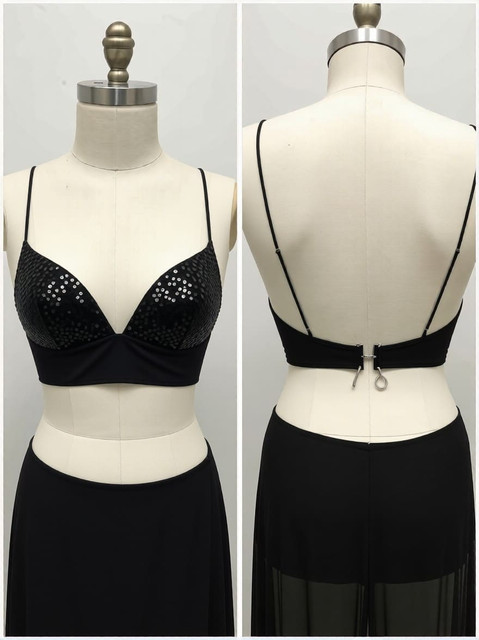
He turned one more page and stopped. A plunging V. Two cups held, meeting in a point low on the chest. Not a U. Not a polite sweetheart. A V that went down and stayed down.

“This,” he said. “Deep V. Plunging. Cups kept. The line goes between, not around. On an embroidered net saree this is the cut that does not look frightened. The pallu can come across one side the way it is coming in your photo. One cup stays in the light. The other sits under the dbang. When the pallu moves, the V is still the V.”

Ma looked at it longer than she had looked at the U.

“If it is too deep?” she asked.

“Then the pallu manages. When the pallu is off, it is an evening blouse. I would suggest you should go with this. Not the U. The U will fight the slant of this saree. Sweetheart will lift and then stop talking. Deep V will sit with the net.”

She did not say no.

“The cups,” Mukesh said, and now he was in the work, not the selling. He pulled a small roll from the rack — black net, dense sequin, the shine sitting in little cells like a dark honeycomb. He laid it on her black piece.

“Your cloth is good for the body of the blouse. Soft shine. It will not scratch. But the cups cannot be only this. Against embroidered net the cup has to catch light the same way the flowers catch light. We cut the cups in this sequin net. Same black. The sequin sits on the cup, not all over the blouse. If we sequin the whole thing it will look like a stage dress. Only the cups. The rest stays your piece.”

Ma touched the sequin net with two fingers. The purple polish looked cheaper against it, then did not.

“It will look… shiny,” she said.

“It will look like evening,” he said again. “Your saree is already shiny in the work. A dull cup will die next to it.”

Ma’s mouth tightened a little. Not at him. At the picture of it.

“Padding?” she said. The word came out like a thing she had decided to say before she could take it back. “I don’t want it looking like a bra sitting outside.”

Mukesh nodded as if he had been waiting for that exact sentence.

“No hard push-up. Soft pad. Thin. Only enough that the cup holds a shape when you sit and when the pallu comes off. Wire in the cup, yes. Without wire a deep V on a full figure collapses by nine o’clock and then the neck looks tired, not deep. Soft lining inside. Soft against skin. The pad sits inside the sequin cup so the sequin does the showing and the pad does the holding. From outside it should look like the cloth has a body, not like a pad has a cloth.”

“But the mark will come,” Ma said.

“Mark will come,” he agreed. “Under, where the wire sits. Soft lining will reduce it. It will not disappear.”

She looked at the sequin roll, then at the photo.

“All right. Soft pad. Wire. Not the heavy one please.”

“Yes madam. Don't worry about it.”

He took a narrow black tape from the drawer and laid it along the drawn strap on the page.

“Now straps. This is where women get shy after they have already said deep. They take a deep V and then they want a two-inch band so the shoulder looks covered. Then the blouse looks like two different decisions. For this saree the strap has to be thin. Finger width. Not a thread — a thread will cut and leave a line by night. Not a wide band. A wide band will sit on the shoulder like a house blouse that got lost. Thin. Sitting a little inside the shoulder, not on the bone edge. Sleeveless means sleeveless. The arm stays open. The strap only keeps the cup from falling.”

Ma looked at her own shoulder in the house blouse, the wide-enough strap of the green cloth.

“Thin will slip,” she said.

“Thin will not slip if the cup is wired and the back is holding. That is why we do not lock the back first. Front first. Thin strap on a deep V needs a back that does the work. If we give you a wide strap I will be stitching a lie.”

He waited.

Ma’s fingers smoothed a corner of the black cloth that did not need smoothing.

“Deep V,” she said. “Not U. Cups in the sequin net. Soft pad, wire, soft lining. Thin straps. Sleeveless. Ok, thats fine.”

“That is a front,” Mukesh said. “Not a compromise.”

Only then did he turn the second mannequin.

“Now back. Front is half the blouse. Back is the other half.”

The dummy’s spine was a long pale line. Two thin hooks at the waist. Almost no cloth.

Ma looked at it longer than she had looked at the V.

“That open?” she said. Not no. Only the question.

“Fully open. One or two hooks at the bottom. This is what evening wants. Pallu covers it when you walk. When you sit, when the pallu shifts, when you go inside a room and take the pin off, the back is the blouse. Last time you took a safer back. A band across, right? Try this one now.”

Ma’s throat moved. She touched the gold chain once, the old habit, then let the hand fall.

Mukesh opened two more pages and laid them side by side.

“See the middle one. Keyhole. Looks modern. Still leaves a lot of cloth. Good for a lunch. Not for this saree.”

He pointed to the third.

“Wide band across the shoulder blades. Very safe. Family function. If someone from the building walks in, nothing to talk about. You did not bring this cloth for the building. And you did not just lock a deep V and a thin strap to put a family band on the back.”

Ma’s mouth tightened a little. Not at him. At the truth of it.

“I don’t want it vulgar,” she said.

“Vulgar is cheap cloth and a wrong cut,” Mukesh said. “This cloth is not cheap. The sequin net is not cheap. Your figure will carry an open back. That is why I am saying it. If the waist was not there, I would stop you. The waist is there. The back should follow it. Two hooks. Thin. No extra band pretending to be modest. The thin straps come over and meet nothing in the middle. That is the point of them.”

He waited.

Ma looked at the dummy’s spine, then at the black piece, then at the sequin net, then at the photo still sitting on the catalogue.

“If I take the safer back,” she said, “the front can still be deep.”

“It can. And it will look unfinished. Like you started the sentence and did not end it. I have seen that blouse leave this shop. The woman always comes back the next season and says, next time keep the back open. You are already here at this hour. Don’t make a blouse you will outgrow in one wearing.”

He was not loud. That made it worse. He was only sure.

Ma’s fingers found the gold chain again and left it.

“Keep the back fully open then” she said. Clearer now. A decision that had been walked to. “One or two hooks at the bottom. Thin. Not much cloth.”

“Two hooks. If you want, a small loop on top for the pallu. If you don’t want it, we take it off.”

“Keep the loop,” she said. “The pallu has to be managed. But the back should show when it comes off.”

The old house was still in the first half of that sentence. The new house was in the second.

Mukesh tapped the front diagram again.

“Then we match it. Deep V. Sequin-net cups. Thin straps. Fully open back. That is a blouse. Not a compromise. Good. Since, the cut is locked, now we measure for this cut.”
[+] 7 users Like Authorsunny's post
Like Reply

(13-09-2026, 12:49 AM)byteson Wrote:  Anjali's blouse (kinda):
Waiting for Azad to use her the way he wants to.

[img]<a href=[/img][Image: 1000009614.jpg]" />


Author, please confirm if it is what you had in your mind.

Yes buddy, pretty much close to what she would be wearing. Cups and hooks are almost perfect, strap could be a little more broad.
[+] 1 user Likes Authorsunny's post
Like Reply

[img]<a href=[/img][Image: grok-1789276965942.jpg]" />
[+] 1 user Likes Authorsunny's post
Like Reply

(13-09-2026, 06:00 PM)V1star Wrote:  Bro... already time is 9 pm, they are still at shop and not had dinner.
But Anjali is in hurry ...why?...what happened to their evening 6 pm plan.

 I wish Anjali's complete wardrobe will get replaced with new seducing branded clothes (sleeveless deep cut blouses, transparent sarees,satin nighty etc...,.(I don't know about her dressing style infront of people like ammai,and neighbours)

Since she mentioned about gym, why don't Anjali and sunny together do it at home.yoga atleast.
Azad is dominant person,he already knows Anjali is submissive,he knows Sunny's acceptance,and sunny won't object anything.and he even know sometimes Anjali won't wear anything under nighty at home,infront of sunny.
So,what is azad doing in his relationship. Just plain sex with Anjali when ever he is in mood. 
Will he advance it to the other level like... staying night in their flat even when sunny is there.
Will he dominate sunny like a stepdad.
As of now sunny is trying to talk more openly with his mom.
And Anjali also...doing same.

Agreed, brother. Azad has a huge role in this story — that part isn’t changing.


Because it’s written from Sunny’s point of view, you won’t always get detailed scenes centered on Azad. A lot of what he does will land through Sunny’s eyes, his reactions, and the space Azad starts taking up around him.


This is a slow-burn, long-term story. Nothing here happens overnight. Azad can’t just start dominating Sunny by tomorrow morning. That shift needs a solid buildup, real pressure, and reasons that feel earned.


I want readers to feel like they’re living inside it — and to feel the heat by staying with Sunny.


Hope the pace is sitting right with you so far.
[+] 3 users Like Authorsunny's post
Like Reply

Chapter 27 (Continued)
3 December 2025 – Wednesday

That was when Ma put her hand on the table.

“Mukesh ji, you already have my measurements right?,” she said. “Use those only. We are already late. No need to take measurements again.”

Mukesh shook his head the way a man shakes his head when the cloth is already decided and the numbers are still last month’s.

“Madam, last measurements are of last month. This design is not last month. Deep V and fully open back don’t sit on a house-blouse number. Neck drop is different, back depth is different, even the strap sits in a different place. If I cut this on the old measurements, tomorrow you will come and say it is pulling from here, or loose from there, or the V is sitting off-centre… then we will fight with the cloth. Two minutes only. Fresh measure for a new cut. Please. I have to insist.”

She looked at the clock on the wall. It was nine-thirty already. Then at me, only a flick, as if the son on the stool were part of the lateness.

“Sorry beta, I know you must be hungry. Just five more minutes, ok?”

Then she nodded to Mukesh.

“All right Mukesh ji. But quickly please.”

He pointed to the low wooden platform in front of the centre mirror. Two steps. Just enough that a body stood fully in the glass with light on it from above.

Ma went up.

The payal sounded once on the wood. Different from the kitchen tile. Sharper.

“Madam, pallu will have to come off. Otherwise shoulder and back I cannot take properly.”

“Yes, yes. I know.” She unpinned it. The pin clicked, the same small click from the morning when she had dressed in the kitchen. 

She dropped the pallu over her arm, then the boy came and took it and folded it on the chair.

Now it was only the light green house blouse. Sleeveless. The same one from tea and from the onion board and from the charger wire. Saree still knotted at the waist. Gold chain. Silver bracelet. Hair open, a little flattened from the wind on the bike. Sweat at the hairline. A shine in the hollow of the throat where the chain sat.

The mirror showed all of it. Front. Side. The start of the back where the blouse ended and the skin began.

“Arms up please.”

Ordinary. Like asking someone to hold a corner.

She raised both arms.

The cut of the blouse opened the underarms to the tube light. Shaved. Smooth in the way they had been on the bed last night when she slept on her stomach.

He started at the shoulders. The tape went across. His knuckles brushed the strap of the green blouse once, not looking down, only finding the bone.

“Shoulder… fifteen and a half..”

Then the strap point. He put two fingers inside from the shoulder bone. The pad of his finger sat a moment too long on the dip where the house strap already lived.

“Strap will not sit on the edge, madam. Little inside, here. Thin. If we put it on the bone, by night it will keep slipping off the sleeveless arm. Then whole function you will be pulling it back, and that pulling will drag the cup also.”

Ma’s mouth tightened.

“Yes, thats true. Till here it's fine then..”

Then the armhole. He stood close. The tape went under her arm. His vest was almost against the side of her breast. The back of his hand grazed the green cloth where it pulled across the side swell, then lifted as if the cloth had been only in the way of the number.

He did not look at that. He looked at the tape.

“Armhole… eighteen and a quarter. Keep ease. Full through here. This neck will not allow a tight armhole.”

Ma made a small sound, then added, quieter,

“Don’t make it so open that the side shows when I lift my hand.”

“Don't worry. It will be perfect fit.”

He smiled with one side of his mouth, not cheap, only used to this argument.

“Normal breath. One second. Then little hold.”

Bust.

The tape went around.

I saw it in the mirror first, then from the side. The green cloth tightened where the tape pulled. The line between her breasts deepened for a second. The gold chain slipped into it and came back when she breathed. His left hand held the tape at her back; his right came around to meet it at the front. For a second the meeting of the tape was also the meeting of his knuckles against the lower curve of the green blouse. He read it once, loosened, took it again with hold. The second time his thumb sat a breath too long at the side, adjusting the tape so it would not ride up into the underarm.

He did not make a show of it. He only compared the tape to whatever number he was holding in his head from last month.

“Forty and a half. See, I told you no? Slightly more than last time. Around half inch at the bust. On a deep V that one inch is the difference between a cup that sits and a cup that spills.”

Ma looked down at her own front as if the half inch were a thing she could see sitting on the cloth.

“Oh,” she said. A small, real sound. “That is why my blouses are coming tight these days.”

“That is why only. House neck hides upto an inch. Deep V will not hide. Good we measured again. If we had cut on last month, sequin cup would have come short and the wire would have sat on flesh instead of on the line.”

The boy wrote. Forty and a half. The words stayed in the room after the tape came off.

My stomach went tight. Lower than the stomach. The stool suddenly had no correct way to sit. I put one ankle over the other and kept the phone higher, near my mouth, as if a message were taking all of me.

Underbust next. Where the wired band would sit. He ran the tape there. The edge of his finger followed the line under the green blouse, finding the crease the house bra had already made.

“Under… thirty-four. Mark will come here, madam. Soft lining will reduce it.”

“Mukesh ji, can’t you keep the wire a little higher? Please. If it sits exactly on that line the whole evening, by ten o’clock it starts burning. I have that already from the other one.”

“If I keep it higher, cup loses the hold and the V opens from below. Then whole night you will be pulling the front up with two fingers, and that pull will show more than the wire ever will. Soft lining we will put. Mark will come, I am not lying. But it will not scream. That is the best this cut can do, trust me.”

“All right. Keep it like that. But don’t make the band tight only for shape. I have to sit also na, not only stand.”

“You will sit, madam. Band will remember that. Don’t worry.”

“Now back, please.”

She turned.

The mirror gave me her face in profile and then the back of her head and then, when she settled, the open stretch below the blouse edge. The green cloth had ridden a little with the turning. A thin strip of skin. The start of the spine. He measured how low the new back would go. His two fingers walked down from the blouse line, not on the skin at first, then once on the skin to show the point. The second touch stayed a moment, flattening the cloth so he could see where the old blouse ended and the new one would begin.

“Back depth… twelve and a half. Till here. Under the pallu. Hook here and here. Middle no cloth. Fully open.”

Ma’s shoulders went a fraction tighter.

“Twelve and a half is low, Mukesh ji. Please. Last time you kept a band na. At least keep it till here.” She reached behind herself, awkward in the blouse, and touched a point higher on her own back, nearer the shoulder blades. “If it goes that far down, the moment pallu shifts everyone will see. I don’t want that kind of talk.”

Mukesh did not move his fingers from the lower point.

“Madam, look at the saree in your photo once. Embroidered net. Slant pallu. If I leave a band across the shoulder blades, the back will look like a house blouse that got invited to the wrong function. Front we have already locked as deep V. High back on a deep V is like starting a sentence and not finishing it. Twelve and a half is not vulgar on your waist madam. Vulgar is cheap cut on a thin body. Your waist is there. So don't worry. Let the back follow it.”

“Still, Mukesh ji. Keep it one inch higher, please.”

“If I keep one inch higher, the thin straps will have nothing to pull against. I have seen that blouse leave this shop, madam. Next season the same woman comes and says, next time keep the back open. You are already here at this hour. Don’t make a blouse you will outgrow in one wearing.”

He waited. The tape hung from his neck. His finger was still on the lower point, the genuine point of the work, not a performance.

Ma’s throat moved. She touched the gold chain once, then let the hand fall.

“If I take the safer back,” she said, “front can still be deep na?”

“Yes, it can. But it will look unfinished. Like you started and got scared in the middle. Sahab did not call at nine at night for this. This cloth is not asking for a band. Two hooks. Thin. Extra cloth we will not put only to look modest. Thin straps will come over and meet nothing in the middle. That is the point of them.”

She looked at the dummy’s spine in the glass, then at her own back in the same glass, then at the black piece on the table.

“Keep it fully open then,” she said. Clearer now. A decision that had been walked to, not jumped to. “But hooks should sit properly, Mukesh ji. Two hooks. Not one. One looks like the blouse gave up.”

“Two hooks, madam. If you want, small loop on top for the pallu. If you don’t want, we take it off.”

“Keep the loop. Pallu has to be managed. But when it comes off, the back should show. That much I have understood.”

The old house was still in the first half of that sentence. The new house was in the second.

Then the front neck.

He came around. He used two fingers on the existing green neckline, the house neck she had been wearing for weeks, the one I had been told not to stare at across the folding table.

“This is where you are now, madam. House neck. New one will come till here, in a V.”

He showed the difference on her skin. Not a long touch. A tailor’s touch that still had to find the bone and the hollow. From the place the green cloth already sat, down, in a point between, not in a curve around. The gold chain had to be lifted aside with her own hand so he could see the line. When she lifted it, the inner curve opened in the mirror the way it had opened at breakfast. Lotion-smooth. Warm under this harder light. His fingertip marked the point of the V on the skin just above where the chain had been resting. He held it there while he spoke, so the number would have a place.

“Neck drop… nine. Deep V. Cups stay rounded. Point sits here at nine.”

Ma looked down, then into the glass. And then a slight nod.

“This is too low, Mukesh ji. If it is this low, the moment I bend for anything — even to take a plate — it will open. I don’t want to spend the evening thinking about my own neck.”

“Madam, Seven is the drop that follows the dbang. When pallu is across, one cup stays in the light, the other sits under. When pallu moves, V is still V. If some room feels too much, pallu will manage. That is what pallu is for on a net saree. Not to hide a shy blouse.”

“Still, Mukesh ji. People will be there. Not only… not only known people.”

“People will be there in every room this blouse enters. That is why the cut has to be sure, not sorry. The almost-nothing drawing I already refused. Seven is sure. Anything below that is sorry. On a forty-and-a-half bust a short V looks like the blouse got frightened after the measurement. Please don't do that to this blouse. I wouldn't have insisted if it would have been your regular blouse.”

She let out a breath that was not quite a laugh.

“You have an answer for everything, Mukesh ji.” She said with a smile.

“I have an answer for cloth, madam. The rest is your evening.”

She looked at her face in the glass. Then, only once, her eyes found the stool.

A check.

Is he watching.

I quickly looked at the phone.

The screen had gone dark again. I pressed it on so the light would sit on my eyes.

She looked away first.

“All right,” she said. “Seven. But the cups - soft pad please. Not the kind that makes it look like a bra sitting outside.”

“Soft pad, madam. Wire. Soft lining. Sequin will do the showing. Pad will do the holding. From outside it should look like the cloth has a body, not like a pad has a cloth. Don’t worry.”

“Arms down. Then once more up. Final armhole.”

She raised them again. Longer this time. The underarms stayed in the light. A small shine of sweat had gathered where the arm met the body. When he ran the tape the second time, the back of his hand touched that shine and came away as if the number had needed the damp to sit true. My mouth was dry the way it had been on the bed when the navel was moving. I swallowed and the swallow felt loud only inside my own head.

“Final armhole, seventeen and a half with ease. Strap width, one centimetre.”

The boy wrote the last numbers. Mukesh took the pad, checked, and tore a slip from a small pad of his own — not the shop bill yet, a working slip. He wrote the measurements in a short list. Shoulder. Armhole. Bust forty and a half. Under. Waist. Back depth. Neck drop. Strap. A note at the bottom in his running hand: black / sleeveless / sequin-net cups / thin net yoke / wired / soft pad / deep V / thin straps / back fully open / 2 hooks / pallu loop.

He folded it once and put it on the table near the black cloth and the sequin roll.

Then he picked the slip up again, as if remembering something, and held it out — not only to her. A little toward the space between us.

“Keep this, madam.”

Ma took it. Her fingers, purple polish, closed on the paper. She looked at it for a second the way she looks at a ration bill, then slipped it into her blouse side, under the pallu that was still on the chair. Against her. The numbers sitting on her skin.

I saw the top lines before they disappeared.

Forty and a half. Written. Foldable. Carryable in a blouse.

“When will it be ready, Mukesh ji?”

“As you need it urgently, the earliest we can try is tomorrow afternoon or evening. After that you come for trial. Wear it here once. The cut is different, so in case of any fitting issues, we correct it the same hour.”

Ma’s face changed.

“Mukesh ji, tomorrow coming here for trial, that would be difficult. Can you please send it home directly? I will message the address.”

He was already shaking his head, but not the first no of a man who likes saying no.

“Madam, you need to understand that this is not a house neck that you can pull on in the kitchen and decide it is fine. Deep V. Open back. Sequin cups. Wired. If the strap sits even two millimetres off, the whole front will tell you by evening and I will not have a machine to answer you. You come. Trial first. That chance I cannot take.”

“I am telling you I may not be able to come, Mukesh ji. If you can send it with someone—”

“Most likely further stitching will not be needed, madam. Your numbers are clean. Cloth is good. Still I will not send an open-back blouse out of this shop without seeing it on the body it was cut for. One look. Five-Ten minutes max. If it sits, you take it and go. If it does not sit, evening is still there. That is all I am asking. Please understand.”

Ma pressed her lips together. The part of her that packed tiffins and counted rotis was doing sums with a shop that would not bend.

“Noon you said.”

“Yes, by noon the blouse will be ready, madam. After that we will call you, then you come and put it on.”

“All right, Mukesh ji. I will see. But please try it as early as possible.”

“Sure madam.”

He wrote the proper bill.

Ma opened her purse.

I had thought, for one stupid second, that he would wave it off. Sahab will settle it. He did not wave it off. He turned the bill toward her.

Stitching. Wired lining. Soft pad. Sequin-net cups. Hooks. Rush. Fresh measurement for a new cut. The sequin work separately named.

Three thousand five hundred.

She looked at the paper longer than she had looked at V neck in the catalogue.

“Mukesh ji, this is high. Last time it was around 2000 only.”

“Last time was not sequin-net cups and plunging V with open back, madam. This design will be unique and require special efforts to make madam. Don't worry, I am not charging extra from you. This same design would have costed around five thousand for other customers. But since, Azad Sahab is involved here, I am charging almost at the cost. Believe me. You already know our work.”

She smiled and nodded. She then counted from the inner zip of the purse. She put the notes on the table without counting twice in front of him, but her mouth had gone small while she did it.

He counted. Nodded. The boy wrote paid.

“Thank you, Mukesh ji.”

“You are most welcome madam. See you tomorrow. Good night”. Then he looked at me - “Good night beta”.

I nodded a little awkwardly, pretending to be coming out from staring at the phone.

We stepped off the cooled floor into the corridor.

The first-floor heat came back at once. Frying oil from downstairs. Someone shouting a rate. A scooter on the road we could not see yet. Ma walked ahead, payal ordinary again, the purse closed, the paper sitting where the tape had been.

I walked behind her.

The stool was still in my legs. The smell of her underarm was still in the cold part of my head. Forty and a half was still as clear as if it had been written on the inside of my eye. Three thousand five hundred had left her purse. Tomorrow noon the blouse would exist. After noon she would stand in that mirror again and put a deep V and sequin-net cups and a fully open back on the same body the tape had just named out loud. 

At the top of the stairs she stopped and looked back, only to see if I was coming.

“Sorry beta, we got late no? Whats the time? Lets grab some food first. I am also hungry.” she said. The mother-voice, thinner after the shop, but trying. “Golgappa. Pav bhaji. Whatever is open. Then home.”

“Yes Ma…it's nine-fifty already.”

We started down.

The shop door behind us made its soft chime once more, and then Mukesh’s voice, already speaking to the boy about the shutter.

Tomorrow noon the blouse would exist.

Tonight we only had the market, and the oil smell, and the walk to the bike, and the paper against her skin that said the cut was bolder than last month, that the front was a V and not a U, that the back would not wear a band, and that I had been in the room to hear why her blouses had gone tight.
[+] 5 users Like Authorsunny's post
Like Reply

Next update is coming on Wednesday, guys! 

Hope you enjoyed the detailed tailor-shop scene. I wanted to write it in a way that didn’t feel like unnecessary smut or porn-like stuff, but still had plenty of voyeurism, detailing, little conversations and those subtle moments that make the scene interesting. The idea was to build the situation and atmosphere rather than just make it about the obvious stuff.

The next update should answer a few of your questions — the 6 PM mystery, the urgency, and most importantly, the most-awaited question… what exactly is the purpose of that black blouse?

Let’s see how many of your guesses turn out to be right!

Hope you enjoy the next chapter as much as I enjoyed writing it. And if the excitement is strong enough, who knows… Wednesday might just turn into tomorrow. 

For any suggestions, inputs or discussions, drop comments, DM or hit me on TG - @SPD778
[+] 3 users Like Authorsunny's post
Like Reply

Chapter 27 (Continued)  
3 December 2025 – Wednesday night

We came down the one flight from the tailor floor into the thicker heat of the market.

The cooled air of Mukesh ji’s shop stayed on my face for only a few steps. Then the corridor gave us back the real night — a man shouting a last rate at a half-shut shutter, a scooter that would not start, the raw light of tube lamps that made every face look tired. Ma walked in front. The cloth bag hung from her wrist. The measurement slip was inside the cloth bag, where she had put it after Mukesh ji folded it.

“Sorry, beta,” she said without turning. “We got late. I know. You came straight from office and then I made you wait on that stool also.”

“It’s all right, Ma.”

“No. It is not all right. You must be hungry.” Her payal sounded on the last two steps. “It is already late. There is a small vegetarian place nearby. They make one of the best pav bhajis in this market. We can go there. I am hungry too.”

She kept walking.

I followed.

From behind, the morning saree looked different under these harder lights. The cloth sat into her waist and then opened over her hips. The pallu was pinned, but the pin had loosened a little on the bike and again in the shop, so the fall at her back was not as neat as it had been at breakfast. The light green blouse left her arms bare. Her back, from the blouse line down to the knot of the saree, was a clean stretch of cloth and then the full round shape under it. I had seen more than this in our kitchen that morning. I had seen the same back and ass with nothing on it. Even then, walking behind her in a public corridor, the body did the same stupid work. The waist dipped. The hips took over. The saree held the seat the way the jeans had held it in July and the way the towel had failed to hold it at dawn.

I walked one step behind and a little to the side so I would not look like a man following a woman. I still looked.

The whole day sat in my head in the wrong order.

The dead phone. Azad Sahab’s voice in our kitchen. Six o’clock. Black saree. Wired bra. If it hurts, it hurts. Empty bags on our folding table. Mukesh ji saying Sahab called. Forty and a half, spoken under white tubes. Deep V. Open back. Three thousand five hundred from her purse. Trial tomorrow.

And still she had not told me what any of it was for.

We reached the bike. I unlocked the helmet strap and she stopped beside the rear seat, one hand on the side grip.

“Ma,” I said. “What is all this about? You have not told me anything yet.”

She looked back.

The market light sat on her face. Kajal a little smudged at the outer corner. A shine of sweat at the temple. The gold chain dull in the hollow of her throat. She did not pretend she had not heard the question. She only put it aside the way she puts aside a vessel that is not yet needed.

“Wait, beta. I will tell you. First let us go to the restaurant. If we keep standing here and talking, they will close. Then we will get nothing.”

I nodded.

She sat the old way, one side, feet to the left, one hand on my shoulder. I started the bike. She guided with small words at the turns — left after the footwear shop, straight past the signal, right where the fruit carts had already begun packing up. Five minutes. Not more. The road was still busy enough that talking would have been only helmet noise.

The place was on a side lane, not on the main market road. A board in simple letters. No fancy lighting. The glass door was open. A smell of butter and pav and coriander came out before we even stepped in.

It was loud, but it was clean.

That was the first thing. The floor had been mopped. The tables were wiped. The steel plates stacked near the counter were dry. A television on a high shelf was playing a match with the sound low. Two ceiling fans moved the heat around without winning against it. There was proper space between the tables. A person could pull a chair without hitting the back of the next one. Because it was a weekday, the room was not packed. A family of four near the window. Two men in office shirts in the corner. A couple who looked like they had also come from some late work. Our kind of crowd. Not the Sunday crowd that makes a waiter run.

A boy pointed us to a four-seater in the middle row.

We sat opposite each other.

The table was a little sticky at one edge where someone had wiped too fast. Ma put the cloth bag on the extra chair, not on the table. She sat with her back straight at first, then let her shoulders drop, the way a body drops when it has been holding itself for a tailor and a bike and a clock.

The waiter came.

He was young. Notebook already open.

“Two pav bhaji,” Ma said. “With butter. Please make it a little fast. We are late.”

He wrote. He did not ask extra questions. He left.

Ma took the end of her pallu and wiped the sweat from her temple, then from the side of her neck. She folded that corner in and let the pallu fall back over her shoulder. Then she looked at me properly for the first time since the shop.

She smiled.

Not the shop smile. Not the phone smile. The tired, real one that still had some light in it.

“Thank you for coming beta” she said. “And thank you for getting the blouse put on stitch. If you had not brought me, the shop would have closed. Then there would have been no point buying such an expensive saree. The blouse would have sat in a bag and the saree would have sat in the almirah, and Friday would have come and gone.”

I kept my hands on the table edge.

“What Friday?”

She poured water from the steel jug into both glasses. She pushed one toward me. She drank a sip from hers first, as if her throat had been waiting for that more than for food.

“You know,” she said, and she said it slowly, like a person placing a box on a table and then opening the lid, “I will be going to the Taj on Friday.”

I looked at her.

“The Taj?”

“Yes. The hotel. The one we have only seen from outside. And in films. All these years in Mumbai, we pass those buildings and we never think we will walk in as guests. On Friday I will. I will actually go there as a guest.” She smiled again, smaller. “I wish I could take you also.”

The fan above us clicked once on a loose blade. The match on the television gave a small rise of crowd sound and then fell back.

“Why are you going there?” I asked.

She turned the glass in her fingers. The silver bracelet made its small sound against the steel.

“There is Malhotra ji, no? Malhotra Realty. It is their thirty-fifth wedding anniversary. The party is at the Taj. The arrangement will be very grand. That is why so much preparation is going on. When you go among people like that, you have to look like you belong there also.” She gave a short laugh, almost a giggle, and covered her mouth with the back of her hand for a second. “Otherwise you sit in a corner and feel that the room is looking at you.”

“What,” I said. “Malhotra ji meaning… Dhiraj Malhotra himself? Seriously?”

“Yes, yes. That same Dhiraj Malhotra. It is his thirty-fifth anniversary. Why are you getting so surprised?”

“Surprised?” I sat forward without meaning to. “Of course I am surprised. Do we even know him? How did you get an invitation?”

The name sat on the table between the two glasses.

I knew the name the way most people in this city know certain names. Malhotra Realty was not a small builder with one board near a nala. They were one of the big development companies in Mumbai. Prime projects. Luxury towers. The kind of buildings that come with a glass lobby and a name that salespeople say slowly. Recently they had finished a ten-tower township near the station. For months the hoardings had been everywhere. The project was talked about in trains and in office pantries. It pushed up the rates of the nearby locality. People who had flats two streets away started saying their own prices as if they also lived inside that township. Apart from that they had many other projects across the city. Ads ran between cricket overs. Ads ran on YouTube before ordinary videos. Dhiraj Malhotra’s face was familiar even if his house was not. One of his videos had gone around a lot — the rags-to-riches one, the small office, the first plot, the voice talking about risk and timing. I had watched half of it once at my desk and then skipped it. The face had stayed.

And now my mother was saying she would walk into his anniversary party at the Taj.

She laughed out loud.

Not a polite laugh. A full one. Her head went back a little. The gold chain shifted. The sound carried farther than our table.

“You are funny, beta. Of course we do not know him like that. But Azad ji knows him very well. He even worked for him before. And at the time of that station project, Azad ji also helped him with the local clearances and all those things. Azad ji told me that if Dhiraj sir had not supported him in the early days, he would not have become this successful.”

At the next table, the two office men had stopped talking for a second. One of them looked over, not fully, only the way people look when a woman’s laugh is open and the words Taj and Malhotra have just been said in a small restaurant. The family near the window did not look, but the woman there had turned her face half an inch.

I felt my neck heat.

“Ma,” I said, lower. “Speak a little low. People can hear.”

She glanced at the side table, then back at me. She did not look ashamed. She only brought her voice down one step, as if I had asked her to lower a flame.

“All right, all right. Why are you getting conscious? We are only talking.”

“Still.”

She drank water again. The pallu slipped a little on the right shoulder and she pulled it back with two fingers.

“But why are you going then?” I asked.

She laughed again, quieter this time, and shook her head.

“Don’t be silly. It is a wedding anniversary party. Guests are supposed to go as couples. If Azad ji goes alone, it will not look right. In fact, he was not even planning to go at first. But can you imagine — Dhiraj sir himself called him yesterday ago and said he has to come. I told you, no? Azad Sahab’s contacts are very good. Contacts like that do not get made for no reason. A person must have done some real work. That is why even people of that level know him.”

She said Azad Sahab the way she had been saying it for weeks. Not landlord. Not the man downstairs. A name that already had a place in her mouth.

I watched her face while she spoke.

She was invested. Not only in the party. In him. In the story of him. Early support. Local clearance. Dhiraj sir calling with his own phone. The way she lined up those facts, one after another, as if she were placing his importance on the table for me to see and accept.

“So you will be going as his partner,” I said. “Seriously?”

“Then what? I am not going as his sister.” She laughed, short, and the laugh stayed in her eyes. “The thing is, when Dhiraj sir himself called, Azad Sahab could not tell him about the separation and all that. Dhiraj sir still thinks he is married. So he insisted that Azad Sahab should come as a couple. Azad sahab could not explain it at that moment. It was not the right time either.”

In the morning she had called him the perfect man a woman could get. She had spoken of property, of a man who decides, of money sent to children after a marriage ends. Now she was sitting in a pav bhaji shop at ten at night, in a light green house blouse, telling me she would walk into the Taj on his arm because another man still thought he had a wife.

Her tone had changed. That was the other thing. In June she would have cut a sentence like this in half. In September she would have called it only talk. Tonight she was opening the box herself. Morning conversation. This conversation. More blunt. Less careful about my face.

“Azad sahab told me only today,” she said. “He was trying to call last night also. But that stupid phone — you already know. And these big parties have a dress code and all. That is why we had to rush. The saree, the blouse, the other things. You cannot walk into a place like that in a house saree.”

“So when did you buy that saree?” I asked. “It must have been very costly, no?”

“Yes. Only this afternoon we went to the market and shopped.” She tapped the table once with her finger, remembering. “Oh yes. I forgot to tell you. While we were looking for a blazer for Azad Sahab in the Blackberry shop, I saw a shirt for you. I liked it. But it was very costly. And you know what? When Azad Sahab understood that I was looking at it for you, he said, buy it for Sunny.”

I did not change my face.

I made sure I did not.

“What,” I said. “Did he really say that? That he would buy it? Or are you twisting the facts, Ma?”

“Why would I twist it? He said it himself, beta. Why would I lie about a shirt?” She leaned in a little. The neckline of the green blouse opened the way those necklines opened in our house now — not a party cut, only low enough that the inner curve came into the restaurant light for a second before she sat back. “I have told you, no? He is really considerate. He never becomes sticky about money. He does not need to be. I mean, he already does enough for us. The rent. The bike. The shopping. And still he does these small things. That is what I love—”

She stopped.

The word had come out clean. Then she heard it.

“I mean,” she said, and her mouth found a smaller word, “that is what I like about him.”

A shy smile. She looked at me and then at the jug and then at me again, as if the slip could be folded like a pallu and put back on the shoulder.

I kept my eyes on the empty space where the plates would come.

Love.

She had said it in a restaurant that smelled of butter, after a tailor had written forty and a half on a slip that was sitting inside her blouse. She had tried to change it to like. The first word was the one that stayed in the air.

“When is this party, exactly?” I asked.

“Friday evening. From six o’clock onwards.” She nodded as if six o’clock was now an ordinary household time, like the milk boy or the last local. “You know, at first I said no only. A party that big. People that big. I do not even speak English properly. There, everyone will talk in that manner. Big talk. Hotel talk. I told him I will feel out of place. But you know how Azad Sahab is, no? He said, in parties like this the clothes speak more than the mouth. And on top of that he insisted that I should come. Opportunities like this do not come again and again. I seriously wish you could also come there. But it is an anniversary party, so they have called only couples.”

She turned the glass again.

“Do you know, there will be only about a hundred guests. It is a private party kind of thing. And Azad Sahab is one of those guests. How nice that is, no?”

Her face was bright in a way I had not seen at our folding table in years. Not the brightness of a new kurti in July. Something else. Excitement that had a hotel name inside it. A guest list. A man who had been called personally. A black saree that Mukesh ji had looked at like a man who knew cloth.

I watched that happiness.

I also watched the room.

The waiter passed with two plates for the office men. As he went, his eyes dropped, not to our glasses, to the line of Ma’s blouse. One of the men in the corner looked over his shoulder when she laughed the second time, and his look did not stop at her face. It went to the sleeveless cut, to the bare arm, to the place where the green cloth sat on her chest. A man who came in from the door to ask the counter something glanced at our table the way men glance when a woman is sitting under a tube light in a blouse that was meant for a small house and is now in a public room.

I thought of the black blouse.

Deep V. Sequin cups. Thin straps. Back fully open. Mukesh ji’s voice saying the pallu would manage. Mukesh ji’s voice saying vulgar is cheap cloth and a wrong cut. If this green house blouse was already collecting eyes in a weekday pav bhaji shop, I did not want to put a number on what the Taj light would do to the other one.

Ma did not notice those looks the way I noticed them. Or she noticed and had decided they were part of the new air. She kept talking with her chin slightly lifted, the gold chain moving when she swallowed.

“He said we should reach by six-fifteen, six-thirty,” she said. “Not too early, not after the main people have already gone in. There will be cards at the gate. He will handle that. I only have to be ready.”

“And the trial tomorrow,” I said.

“Yes. Noon, Mukesh ji said na. If the blouse sits, we take it. If it does not sit, there is still evening to correct. That is why I was in such a hurry today. If we had missed him tonight, Friday would have been a mess.”

The television gave another small crowd sound. Someone at the counter called an order number. Our table stayed empty of food and full of the Taj.

I wanted to ask the other questions.

What time she had left with him in the afternoon. Whether the wired bra had already been bought from the cosmetics bag. 

I did not ask those yet.

The waiter was coming.

Two plates. Steam. The pav stacked on the side, already shining with butter. The bhaji dark, with a white lump of butter sitting in the centre and beginning to melt into the red-brown. Onion and lemon in a small bowl. A sprig of coriander that looked like it had been dropped at the last second.

He put the plates down.

“Careful. Hot.”

Ma said thank you. He left.

For a second neither of us spoke. The smell filled the small space between us and pushed the hotel talk to one side, not out of the room, only to the edge of the plate.

“Eat,” she said. “You have been running since morning.”

I tore a pav.

She did the same.

She leaned forward to take the lemon and squeeze it over her bhaji. The pallu, which she had pulled back twice already, slipped off her shoulder again with that lean. The green blouse came fully into the light. The sleeveless arm. The upper curve. The gold chain falling into the line between. She caught the pallu with her left hand and brought it back, and while she did that her eyes came up and found my face.

I was looking.

I did not look away fast enough.

She did not scold. She did not say the breakfast sentence again — look here, not there. She only held my eyes for a second longer than a mother usually holds a son’s eyes across pav bhaji, as if to say she had seen the looking and was putting it with all the other looking of the last weeks. Then she pinned the pallu with her fingers and turned the lemon as if the cloth had only done what cloth does.

“It is good,” she said, after the first bite. “I told you. This place is worth coming to.”

I ate.

The pav was soft. The bhaji was hot enough to make the eyes water a little. Butter sat on the tongue. Ordinary food after a shop that had not been ordinary. Across from me she ate the way she eats when she is actually hungry — not the two-bite breakfast of the morning, proper mouthfuls, the bangles sounding when she tore the next pav.

The pallu stayed for three bites. On the fourth she reached for water and it loosened again at the edge. She left it for a moment this time. Then she pulled it back.

Around us the restaurant kept its weekday noise. The family paid and stood. The office men asked for extra pav. The fan clicked. Somewhere behind the counter a tava was scbangd.

Ma looked at my plate.

“Eat properly.”

“I am eating.”

“Good.” She smiled that same tired bright smile. 

I nodded and took another piece of pav through the butter.
[+] 5 users Like Authorsunny's post
Like Reply

Chapter 27 (Continued)  
3 December 2025 – Wednesday night

The pav was almost finished on my side when she bent again.

This time it was not the lemon. It was the last bit of bhaji at the edge of the plate, the part that had gone a little dry. She leaned in, used a piece of pav to gather it, and the pallu, which had already slipped twice, gave up completely. It slid off her shoulder and down her arm and hung from the crook of her elbow like a cloth that had decided the pin was only a suggestion.

The green blouse sat there without help.

Sleeveless. Close. The upper curve of both sides clear under the restaurant tube. The gold chain in the line between. A small shine of sweat in the hollow of her throat that the pallu had been covering till now.

She felt the cloth go.

She caught it with her left hand, pulled it back, and while her fingers were still on the pin her eyes came up and found mine.

I was staring.

Not a glance. Not the kind of look a son gives when he is only checking if his mother is all right. A look that had already been named at the breakfast table and had still not learned to stay on the plate.

She adjusted the pallu. She did not cover herself in a hurry. She only put the cloth where it was supposed to sit and kept eating, as if the looking was now a thing that lived with us even outside the 10-by-12.

We finished.

The plates were smeared with butter and red-brown gravy. One pav remained on her side, half. She did not take it. She sat back, let out a small breath, and reached for the steel glass.

She lifted it with her right hand.

The sleeveless cut of the blouse opened the underarm to the light.

Not a full raise. Only the ordinary raise a person makes when they drink water after hot food. Enough. The arm went up. The cloth lifted with it. The clean shaved hollow came into the tube light for two or three seconds — smooth, a little dark at the centre, still holding the day’s heat. A faint shine. The side of her breast pressed against the green blouse from inside when she swallowed.

I looked.

I knew I was looking. I looked anyway.

She lowered the glass.

Her eyes were already on my face.

For a second she said nothing. Then she started laughing.

Not a loud laugh like the Malhotra one. A lower one. Private. The kind that sits in the throat first.

“How long will you keep staring, beta?” she said. “Be thankful I am your mother. I will not take it badly. But do you do this outside also? This is not a good habit. I do not want to give you the morning lecture again, but you understand, no?”

Heat went up my neck. The two office men had already left. The family had gone. Still the words felt larger than the table.

“Sorry, Ma,” I said. “I do not do it on purpose. The eyes go there on their own.”

She leaned across the small space and patted my shoulder. Her palm was warm. The silver bracelet touched my shirt for a second and then left.

“It is all right, beta. Men are men, after all. But keep this much in mind — I am your mother. And maybe I will not feel bad. In fact I may even feel good that at this age I am still getting this much attention.” She laughed once, short. “But if you look at some other woman outside like this, people will take it the wrong way. That is all I am trying to make you understand.”

The pat stayed in my shoulder after her hand went back.

A kind of green signal.

Look. But carefully. Look here, in this house, at this body, and she would not make a court case. Look outside at a stranger the same way and the world would name it something else.

I felt relief. I also felt worse.

It was the second time in one day. Morning tea. Now pav bhaji. Both times she had caught me and both times she had put the catching into ordinary words, as if a twenty-one-year-old son staring at his mother’s chest was a habit that could be trained like posture.

The relief and the shame sat together and did not cancel each other.

I heard my own voice before I could stop it.

“With the blouse cut you have chosen,” I said, “everyone will stare at you anyway. Then what will happen?”

She smiled.

The smile was not shy this time. It was the smile of a woman who had already stood on Mukesh ji’s platform and still had one doubt left.

“Has the blouse become too much?” she asked. “Actually Mukesh ji convinced me while talking. I have never worn this kind of V-neck before. I do not know how it will look. If it looks vulgar, I will be the one feeling ashamed.” She turned the empty glass. “I do have an old black blouse at home as backup. But that will not sit on this saree. It will ruin all the elegance of the saree.”

“We will know only after it is made, Ma,” I said. “How it has come out. How it sits.”

She nodded.

“Yes. That is true. Tomorrow the trial will tell.”

She raised a hand for the waiter.

“Bill, please.”

He brought the small paper slip. I took it before she could open her purse. I paid from the phone. The sound of the confirmation was a small dull note in the noisy room. She watched me do it and did not argue. Some old things were still old. The son still paid for pav bhaji even when the landlord paid for the saree.

We stood.

She picked up the cloth bag. I picked up nothing except my phone and the helmet strap I had looped on the chair. At the door she paused to pin the pallu once more, properly this time, as if the lane outside deserved a neater version of her than the table had got.

The market had thinned.

A few stalls were still open. Most shutters were half down. We walked to the bike without talking much. Her payal was the only steady sound.

She sat the old way.

One side. Feet left. One hand on my shoulder.

On the way here the hand had been practical. Now, after food and after the talk, it sat differently. Her palm held the bone of my shoulder through the shirt. When I leaned into the first turn her body came in behind me, the soft weight of her chest against my back for a second, the saree cloth whispering against the seat. I felt the warmth of her through the cotton. I felt the shape I was not supposed to inventory and inventoried it anyway. At a speed breaker she tightened her fingers. At the next red light she did not take the hand away. The helmet made my own breath loud. Her perfume, the restaurant butter, the faint sweat of a long day — all of it sat in that small space between my back and her blouse.

I drove.

I did not speak.

The lane near our building was quieter than the market. A dog. A scooter being walked, not ridden. The watchman’s chair empty for once. The strip where the white sedan stands was empty again.

Eleven-five, by the cheap watch on my wrist.

Pretty late for our house. In June late had meant nine. Now late had a different meaning and still the clock on my wrist said the same numbers.

We parked.

We started up.

Azad Sahab’s door was shut.

No yellow light through the net. No low voice. No smell of his aftershave in the ground-floor air. Only the closed wood and the dark. I did not know if he was asleep or out or simply done with the day. The shut door did a strange thing. It made the stairs feel like they belonged only to us again, which was a lie, but the body believes lies when it is tired.

Ma went first.

I followed.

The stair light was the old yellow one, the kind that makes every floor look the same. From two steps below, her saree was a moving wall. The cloth pulled across the full seat with each step. The hips rose and dropped. The round of her ass shifted under the tight fall of the saree — not a small shift, a heavy one, the kind a body makes when there is weight and the cloth is only doing its job. On the turn of the first landing the pallu lifted a little at the back and the shape became cleaner. On the second flight the jiggle was there. Soft. Full. The cheeks moving separately and then together again. The waist above them still holding that dip the new blouses had been advertising for months.

I watched.

I knew I was watching from below the way a man watches, not the way a son climbs behind his mother. The morning lecture and the restaurant lecture both sat in my ears and did nothing to the eyes.

The mind went further than the stairs.

It went to the back pain.

Morning. She had said it herself on the phone, half a giggle, half a complaint. He had held her in that position. Too deep. He had not let her turn. The balm on her back at night. The word energetic in the morning after the hot bath.

The mind put her on our bed.

Not standing on these stairs. On all fours. The same ass I was watching now, lifted, the saree gone, the grey or the peach or nothing, the waist dipped because the position asked for the dip. Azad Sahab behind her. His hands on the place where the hips began. The heavy cheeks opening and coming back each time he pushed. The sound she made when she could not turn. The bed frame doing the old creak it does when two people use it and not one. Her hair fallen forward. The gold chain hanging away from her throat. That huge seat moving under him the way it was moving now on the stairs, only then it would not be cloth doing the work. It would be skin. It would be the reason her back had burned and she had still called it a giggle.

I felt myself thicken in my pants.

I took the next step slower so she would not hear any change in my breath.

She did not look back.

On the third-floor landing she already had the key out. She opened. The flat received us with the same tube-light yellow it always used at night. Folding table. Steel almirah. Thin curtain. The smell of this morning’s onion still somewhere in the curtain cloth, under the newer smell of her perfume.

She dropped the bag on the bed.

“Do you want dinner?” she asked. “There is still some sabzi. I can heat it.”

“I am full, Ma. The pav bhaji was enough.”

“All right.” She rotated her shoulders once, as if the blouse strap had been sitting in one place too long. “Then I will change. Plug my phone for charging please.”

I took the phone from the folding table. The glass was black. I put it on my charger, the same white block that had brought it back in the morning. The small light came on.

She went into the kitchen.

The curtain rings slid.

She did not close them fully. She never closed them fully.

I stood near the charger for a second too long, then forced myself toward the window side. That was my place. Laptop on the folding table pulled close to the grill. Chair at an angle. I faced the bed. The screen faced the window. If I looked up from the keys I would see the bed and the curtain and whoever came out of that corner.

I sat.

I opened the laptop because a closed laptop makes the hands useless.

From the kitchen came the ordinary sounds of a saree coming off.

The pallu first. The pin click. The rustle of the long cloth being unwrapped from the waist. I knew those sounds from years of this same room. Then the shorter sound of the blouse hooks. Then a pause.

I tried to look at the screen.

The screen had a lock picture. Nothing else.

My eyes went to the curtain.

The grill light and the tube light together made the cheap cloth thin. I saw the outline. Arms up. The green blouse lifting over her head. For a second the shape of her in the dark bra, the heavy chest held, the waist bare above the petticoat. She turned. The outline of the hip. Then the bra came off. I saw that too, not clearly, only the change in the silhouette — the chest dropping from held to free, the arms moving, the garment landing on the counter with a small soft sound.

I looked at the window grill.

I looked back.

Twice today she had told me. Morning. Restaurant. I am your mother. People will take it wrong outside. Here, maybe she would not mind. That sentence was doing damage in my head. It was not permission to sit and watch her undress like a man who had paid for a room. It was something slippier. A mother saying men are men and then taking her clothes off ten feet away behind a curtain that had never been a wall.

I felt shame.

The shame did not close the eyes for long.

Less than two minutes. That was all it took. The grey satin nighty went on. I heard the thin straps being pulled up. I heard the old cotton of the petticoat and the blouse and the bra being gathered. Everything went into the washing basket in the kitchen corner, the same plastic basket that had held yesterday’s maroon blouse in the bathroom bucket’s cousin. The counter was cleared with two quick movements.

She came out.

Loose grey satin. Thin. The kind that does not stand away from the body. It hung from the straps and then followed her chest and then fell over the stomach and the hips. Her hair was still open. The gold chain was still on. The silver bracelet. The payal she had not yet removed. No bra. I knew that because I had heard it land on the counter and because the satin showed the truth of it even when I tried not to take the truth.

I wanted to look at her chest.

I wanted to see if the nipples were already pushing at the cloth the way they did on hot nights.

I kept my face toward the laptop as if a dark lock screen needed all of me.

She stood near the bed.

“Sleep now,” she said. “It is late. Where is the phone?”

“On my charger.”

She came and took it. Our fingers did not touch this time. She sat on the bed, on her side, the nighty settling around her thighs, and pressed the side button. Waited. Pressed again. The logo took its time. She frowned at the glass the way she had frowned in the morning.

“Tomorrow,” she said, still looking at the phone. “What is your timing? When will you come back?”

“Regular,” I said. “Same as usual. Leave by nine-nine-thirty. Evening seven or seven-thirty. If a meeting stretches I will message.”

She nodded.

She tried the phone again. The screen came alive, then dimmed, then came alive. She typed the pattern. I watched her thumb without watching her chest, which was a stupid kind of discipline and still the only one I had.

In my head a simple thought had already started and I hated it.

If I took her to the tailor tomorrow, I would see the blouse on her.

Not in a photograph. Not on Mukesh ji’s dummy. On her. The deep V. The sequin cups. The thin straps. The open back. My mother in the cloth Azad Sahab had bought for her, standing in that cooled shop under those unforgiving tubes, and I would be on the same stool again.

It was a simple thought. It was a stupid thought to have about my own mother. I knew that. I still had it.

I hated what she was doing for another man. I had doubts about him that were no longer doubts. I had seen the video. I had lifted the dustbin. I had heard the word punishment on a kitchen phone. And still my mind was not working from the place that ate her praise. It was working from lower. From the same place that had thickened on the stairs.

“Ma,” I said.

She looked up from the glass.

“If you want, I can come early tomorrow and take you to the tailor shop. You have to try it, no?”

Her eyebrows went up.

Then she laughed, surprised, the sound small in the late room.

“What? Seriously?” She shook her head. “What has happened to you today, beta? You are offering on your own? No. Why would you take a half day and all that? I will not feel good about it. I will manage. I will go around three or four and come back. Autos are easy at that time. And anyway, tomorrow the whole day is going to be busy. I have to go to the parlour. Facial, upper lip, eyebrows. There is a lot of work tomorrow.”

She lifted both arms.

The sleeveless nighty rose with them.

She tilted a little toward the dressing mirror, the small one near the washbasin, and looked at herself the way she looks when she is checking a thing that belongs to a function and not to a kitchen.

“The underarms will also have to be shaved, no?” she said.

She looked at me when she said it.

Not at the mirror. At me.

As if she were confirming it with the room, and the room happened to have her son in it.

I saw the underarms.

Open. Raised. The same clean hollow I had seen when she drank water, only now there was no restaurant table between us and the satin had ridden high on the sides. Officially. That was the word that came. I was being shown because she had asked a question and a question requires a face. I could not find a word to put in my mouth. She was not asking me as a man. She was asking the air, and my eyes were simply there.

They did not stay only on the underarms.

The grey satin was pulled tight across her chest by the raised arms. Both nipples were clear. Large. Pushing at the thin cloth. No bra to hide the shape. The weight of her breasts sat in the nighty the way they sat when she walked from the bathroom in a towel — held only by whatever the cloth could do.

I felt myself go hard.

Fully. The pants did not help. I shifted half an inch on the chair and hoped the table hid it.

She lowered her arms.

The nighty settled. The poking remained, smaller now that the cloth was not stretched, still there if a person knew how to look. She went back to the phone as if the shaving sentence had been only a note on a list.

“I will manage, Ma,” I said. My voice came out thicker than I wanted. I cleared it. “It is not that much. I can come. You will already be busy enough. If I help with this much, it will be easier for you.”

She looked at me.

Her eyes went wet.

Not a performance. The sudden wet of a person who has been carrying a day and then hears one sentence that lands in the old place, the mother place, the place that still wants the son to be the good boy even after the Taj and the mark and the speakerphone.

“I am so lucky to have such an understanding son,” she said. “You are the best son any mother could have, beta. Anyone else would have already made his mother feel bad by now — that she is going to an event with someone else, and all that. The way people in this society think. But I am proud that I raised you with such mature and understanding thoughts.”

She wiped one eye with the side of her finger.

Then she folded both hands up around her head, a small gesture, half blessing, half tired affection.

“My dear boy. May no one put an evil eye on you.”

The words hit.

They hit in the chest first. I felt the badness of the whole day in one clean drop. The kitchen curtain at dawn. The fist in the bathroom. The stairs just now. The thought of the blouse tomorrow. She was calling me understanding while I was sitting in front of her with a hard dick and a head full of her on all fours.

I felt emotional. I felt small. I felt like the son she thought she had raised.

Then her arms stayed up a second longer, hands still around her own head, and the nighty opened at the sides again. The underarm. The pressed line of cleavage where the two sides of her chest came together under the grey satin. Soft flesh pushed into soft flesh. The gold chain trapped in that line.

The feeling in the chest did not survive it.

The mind went back to the lower place. A twitch. Clear. Ugly. My own body answering the blessing with something the blessing had not asked for.

I smiled at her praise because not smiling would have been another kind of confession.

I waited.

She let her hands come down. She looked at the phone, then at me, then she nodded as if she had done a sum.

“Oh yes. All right, beta. Normally there should be no need. I can manage, truly. But all right. If you can manage your office, then we will go together for the blouse. It will help me also. And if it does not work out, that is also fine. No problem.”

I nodded.

I smiled.

The twitching did not stop. Tomorrow sat in front of my eyes without mercy — the black cloth, the V, the shop mirrors, her turning for Mukesh ji while I held a phone I would not read.

“Come now, sleep,” she said. She was already lying down, pulling the sheet to her waist. “It is getting to eleven-thirty. Then in the morning you will not get up on time.”

The phone was finally running.

She unlocked it. The cheap brightness lit her face from below. She typed. One message. Then another. Then a third, shorter. I came to the bed and lay on my side because the pants still needed the angle. I could not read the words from my pillow. I could see the strip of her chat. Kissing emojis. One after another, at the end of the lines. Pink. Red. The small faces going out into the dark toward a number I did not need to see.

Azad Sahab was probably asleep. Or not on the phone. She was sending the end of the day anyway. Goodbye in the only language that chat seemed to use now.

Within minutes her breathing changed.

The snore was soft. The old house snore. Not loud. Only the sign that the body had dropped the Taj and the parlour list and the underarm list and had gone wherever sleep takes a person who has walked too much.

She was close.

The double bed had never given more than this much distance. Her sweat was still in the air. The restaurant, the perfume, the faint kitchen soap from the change. The grey satin moved when she breathed. I closed my eyes because the day had been long enough to close them.

Office. The module. Nair ma’am at the partition, the white shirt, the sentence about potential. Sinha sir’s meeting. The client’s word unacceptable. The last seen frozen after four-thirty. Empty bags on the folding table. Mukesh ji’s tape. Forty and a half. Pav bhaji. Her laugh. The pallu. The stairs. The imagination I should not have had. The nighty. The blessing. The emojis leaving the glass.

Everything passed behind the lids in the same tired line.

The fan did its usual work.

Somewhere in the lane a scooter went by and faded.

I turned my face a little toward the wall, then back, because the wall did not change anything. Her breathing stayed even. My body, finally, gave up the day.

Sleep came.
[+] 9 users Like Authorsunny's post
Like Reply

Chapter 28 – Thursday
4 December 2025 – Thursday

The alarm on my phone went off at the usual time. I put my hand on it before the second ring.

The room was still dim. The grill held that first grey light that always came before the real morning. The tube light was off. The night bulb near the bathroom was off too. The fan moved the same tired air it had moved all night.

Ma was still asleep.

She lay on her side of the bed, turned a little toward the wall. The grey satin nighty had twisted in her sleep. It sat high on one thigh and had slipped off the far shoulder. Her hair was open on the pillow. The gold chain had gathered in the hollow of her throat. The silver bracelet was still on her wrist. One foot had come out from under the sheet. 

I did not wake her.

Yesterday had been long. The tailor shop. The market. The pav bhaji. The talk about the Taj. The messages she had sent in the dark before her breathing changed. I let her sleep.

I took my clothes and went to the bathroom. I closed the door as far as the weak latch allowed. The space was the same small rectangle it had always been. I bathed quickly. The water was neither hot nor cold. I shaved. I brushed. I wrapped the towel around my waist and came out.

She was already awake.

She was sitting on the edge of the bed, both feet on the floor, yawning into the back of her hand. The nighty had been pulled back onto her shoulder, but not carefully. Her hair was flattened on one side. The screen of her phone was black in her other hand. She pressed the side button once. Nothing. She pressed it longer. Still nothing.

“You’re already up, beta?” she said. Her voice was still rough with sleep. “My alarm didn’t ring, I suppose. This stupid phone battery. Dead again. Sorry. I’ll make tea quickly. Two minutes.”

She stood and went to the kitchen corner. The payal found its sound on the tile. The curtain rings slid. I heard the stove click and the steel vessel settle on the flame.

From the kitchen she spoke again, without turning.

“Beta, since it’s late already… is yesterday’s dinner all right for the tiffin? Anyway we didn’t eat last night.”

“It’s all right Ma,” I said.

I started getting ready. The formal pants first. Then the undershirt. My cream shirt from yesterday was on the chair, already worn once, but she had not ironed a fresh one because she had been asleep. I then plugged the iron, and it heated slowly. I ran it over the shirt while the tea boiled.

She brought two steel glasses to the table. She sat opposite the chair I would take. I finished the collar, put the shirt on, and sat.

For a few seconds neither of us spoke.

The tea was strong. Less sugar. The way she always made it. Outside, a vendor had already started calling. A scooter went down the lane. The loose wooden leg of her chair made its small sound when she shifted.

She looked at her dead phone, then at the white charger block on my side of the table.

“This phone has made my life difficult, Sunny,” she said. “The battery doesn’t even last two hours. Even when I am not using it, it dies. How will this work? I think I will have to buy a new one. You know these things better than I do. Please look at a phone for me. I don’t want anything expensive. Something cheap that will just do the work. We can break a small FD and buy it.”

I nodded.

Then I said, “But why don’t you tell Azad Sahab directly? There will be no need to break any FD. He can buy…”

She cut it with a look. Not a shout. The correcting look. The same look she used when I spoke like a boy who had understood only half the room.

“You don’t get it, Sunny.” She kept her voice low. “Azad Sahab gives. I don’t ask him for specific things. The rent. The bike. The gifts. He does those on his own. I have said no many times. He doesn’t like it when I say no. And he already does enough for us. If I start going to him for every small thing now, how will that look?”

She turned the glass in her hands.

“That is why I still pay the rent,” she said. “Even if it is only seven thousand. He can refuse it as much as he wants. There is a thing called self-respect, beta. If a man is doing something for you, that does not mean you start asking him for everything.”

I nodded.

The silence came back for a few seconds. She drank. I drank. 

Then she asked, “Has your salary come yet?”

“No,” I said. “Mostly it will come on Monday.”

“Do you have any loose cash in your account?”

“Why?”

“First tell me. Yes or no. And if yes, then how much.”

I looked at the tea.

“Around seven or eight thousand at most,” I said. “But I can’t use it for the rent. Otherwise I will have nothing for the next few days.”

She nodded, as if she had already expected that number.

“I am not asking for the rent,” she said. “I may need some money today. I don’t want to ask Azad Sahab to pay. He has already arranged the parlour today. When the salary comes, you can give me a smaller share this month. Right now my account is almost empty. So I may need something beta.”

She wiped the edge of the table with her fingers even though there was nothing there.

“All these things cost a lot,” she said. “Big people. Big parties. When you try to fit where you don’t belong, you have to spend a little. I don’t shop much. After your father died, we didn’t even attend functions properly. So after a long time, you have to buy everything new, and it costs. Azad Sahab has handled most of it. Even then, like I said, I can’t ask him for every small payment.”

“It’s all right,” I said. “Tell me if you need anything. I’ll transfer.”

She nodded. She smiled, small and tired and pleased in the old way, the way she used to smile when I agreed to something before she had to repeat it.

She finished her tea and stood. She went to the small mirror near the washbasin and looked at her face. She turned her head a little and checked her eyebrows with two fingers.

“Today will be busy again,” she said to the glass. “Parlour. Then the trial at Mukesh ji’s.”

“What time is the parlour?” I asked.

“Around ten-thirty.”

“Where is it?”

“The new branch near the church. Enrich or something.”

She said the name. I had heard it. The chain had boards across the city. Medium to premium. The kind of place that put white towels on everything and charged for the quiet. She would not have walked into that shop on a parlour receptionist’s money. She would not have walked into it on my salary either, not without counting twice.

“What will they do?” I asked.

I asked it like a son asking a schedule. In my head the question was not only a schedule. I wanted to know how far the list went. Whether she would say it. 

She was casual.

“Simple things,” she said. “Eyebrows. Facial. Underarms. What else. Azad Sahab has already booked a package there.”

She did not add more. She did not hide more. The rest stayed in the package, unnamed.

“Mukesh ji messaged,” she said. “He said come after three for the trial.”

She looked at me in the glass.

“Let me know if it's possible for you to come by around three, if not, that is also fine, I will manage..”

“I’ll try Maa,” I said. “I’ll ask Sinha sir and let you know.”

I picked up the tiffin from the table. Only one box. Yesterday’s sabzi and the remaining rotis. No second carrier.

“No tiffin for Ammi today?” I asked.

“Their maid is back,” she said. “Azad Sahab told me there is no need from today.”

She paused. The disappointment came into her face before she arranged it.

“It’s better,” she said. “Anyway Ammi didn’t like the food from my hand enough. Even that dry chicken I made with so much effort. She said it was not as spicy as it could have been.”

“It’s all right Ma” I said. “Some people never know how to appreciate others. They only find mistakes. You did your part.”

She looked at the stove, then at me.

“But Azad Sahab also doesn't understand at times,” she said.

She did not finish the sentence. She did not need to. The rest of it sat in the pause. He had said something about the spice. He had said something about the box. The disappointment was not only Ammi’s.

“Anyway,” she said, straighter now. “You must be getting late. You should leave. Message when you reach.”

“I will Ma.”

I took the bag and the helmet. At the door I looked back once. The grey nighty had already turned toward the kitchen again. She was collecting the glasses. The dead phone was still on the table.

I went down the stairs.

The bike was in its usual place. I secured the tiffin, put the helmet on, and started the engine. 

The ride was the ordinary ride. I kept the speed moderate. I messaged her from the basement of the office building before I took the lift.

Reached.

She replied after a minute. Good. Eat the tiffin. I’ll leave by ten.

I swiped my card on the fourth floor. The lobby had the usual morning sound. Bags on desks. Laptops opening. Someone asking if the coffee machine had been filled.

Rohan looked up when I sat.

“Standup at ten-fifteen,” he said. “Sinha sir’s cabin. Don’t be late. He’s in that mood.”

I put the bag down and opened the laptop. The module from yesterday was still in the shared folder. Comments were waiting. I had planned to check them after the standup. Then I saw the calendar invite. 10:15. Cabin. The whole cluster.

At ten-twelve we walked in.

Sinha sir was already seated. He had a printed sheet in front of him and the shared deck on the screen. Vikram came in behind us. Sameer from the adjacent group stood near the glass because there were not enough chairs. Sinha sir did not waste time on good mornings.

“New timelines,” he said. “The client signed the revised dates last evening...”

He went through the dates one by one. The voice was level. It did not need to rise. In client week his level voice was enough.

“Work will double for a few days,” he said. “Speed up. Keep an open eye for mistakes. We cannot afford any….”

He assigned the work.

Rohan got the integration piece. Vikram got the revised reports. I got a low-priority module that two seniors had already run through. Final touch-ups. Comments. A clean pass before it went into the larger deck.

It was not a big piece. On another day I might have felt the smallness of it. Today I did not. Nair ma’am’s sentence from yesterday was still in the chest. I chose you by realising your potential. Don’t prove me wrong.

I went back to my desk. I put the phone in the drawer. I closed the last-seen habit with the drawer. I opened the module.

For the first hour the house stayed out.

That surprised me more than the work did. The kitchen voice from yesterday morning tried to come in once. Six o’clock. Black saree. Wired bra. I let the line of code take the chair instead. I read the module the way I should have read the sheet on Friday. Slowly. Then again. Then from the bottom.

The two seniors had checked it. That was true. They had checked the logic. They had not sat with the source data long enough. In a side table that fed one chart, a filter was still pointing at the old date range. The numbers looked clean because the old range was clean. Against the new timeline they were wrong. Not loudly wrong. Quietly wrong. The kind of wrong that survives two reviews because nobody expects a low-priority module to carry a hole.

I corrected it. I wrote the note in plain language. I attached the old filter and the new one. I sent the mail to Sinha sir before I could talk myself out of sending it.

Then I took the small pending tickets that had been sitting in my queue since the leave. Two of them were simple. One needed a short retest. I finished all three before lunch.

At twelve-forty the mail from Sinha sir came back.

Seen. Good catch. Keep this standard.

One line. No extra praise. In his language that line was praise.

I sat back. For a few seconds the fourth floor felt exactly like a fourth floor. Desks. AC. The east windows. The sound of someone laughing near the pantry. The house was still in Andheri. It had not climbed the lift with me. I had not known I could do that today.

Lunch was at the pantry table near the window. Rohan had already opened his box. Vikram had gone down to the food court. Sameer pulled a chair and sat with a packet of rolls.

Rohan spoke first, the way he spoke when he had a thing he was not supposed to say and was going to say it anyway.

“Guys, I have news!,” he said. “There is a rumour that Menon sir has resigned. His notice period will also be waived off. He is joining some other company..that means, senior level reshuffling is on the table. Be ready for new HOD guys...”

Sameer raised his eyebrows.

“Menon sir? Seriously? He was a good man yaar. Why did he even resign? Fuck, again will have to make up with the new HOD now.”

Rohan added “Yeah, and just imagine, if he goes, then someone from the middle will move up.”

Sameer grinned.

“Maybe that’s why Sinha sir has become like this. Strict. Workaholic. No-nonsense. Maybe he wants to be the next super boss.”

I tore a piece of roti. The sabzi from last night was drier in the afternoon, but it was still the jeera she had put on.

“If Menon sir is actually going,” I said, “the next two weeks will be ugly. Everyone will try to look useful.”

The talk did not go much further. Someone from accounts came to heat food. Rohan closed the subject the way office people close subjects that are still only rumour. We ate. We threw the paper plates. We went back.

At my desk I took the phone out of the drawer.

The time on the screen was one-thirty.

Ma's last seen 10:21 a.m.

Then nothing.

She would have reached the parlour by then. Or she would have been in a chair with her phone in a locker. Or she would have put it on charge again because the battery had already died once this morning.

I called.

It rang. It kept ringing. It died into the tone that means the phone is on and the person is not picking.

I typed.

“Done with parlour? How is it going?”

Two minutes later the reply came.

“Parlour only, beta. Phone was on charging. Pedicure going on.”

Before I could type anything, a photo arrived.

I opened it.

The book has a way of staying on cloth. This photo asked for the same time.

A white towel. Her left foot on the rest. The skin wet, clean, a little shining under the parlour light. A girl’s hands holding the heel. Soft hands. Professional. The kind that do this fifty times a day and still know where to press. Four nails already painted black. The thumb still bare. The silver payal taken off and lying at the edge of the towel like an ordinary object that did not know what it was doing in that light.

I knew those feet.

I had seen them on our bathroom floor. I had seen them on the stairs. I had fastened that same payal on those same ankles one night and told myself I was only helping. In this photo they did not look like the feet of a woman who had stood in a hotel reception for years. They looked cared for. Younger. The black polish made the shape of the toes cleaner. The wet skin made the arch look longer.

I felt it immediately.

Not a slow heat. A direct one. In the middle of a fourth-floor office, with Rohan’s chair two feet away and Vikram’s screen glowing over the partition, I sat with my mother’s foot in my hand in a photograph and went hard inside formal pants.

I locked the phone.

I unlocked it again.

Another photo arrived before I had written a word.

Both feet this time. Nails fully done. Black. Fresh. The towel under them still white. No payal in this one. Only the feet, side by side, the polish catching the light, the skin looking soft enough that a person who did not know her age would not have put forty-seven on them.

Then her messages. Fast. The way she typed when she was pleased and had forgotten the size of the room at the other end.

“How is it looking? Did this after a long long time. But anyway, it costs a lot. Good that I don’t do it often. But black looks good, no, beta? Tomorrow it should match. The girl is saying the feet look younger than the age. Haha. These girls and their talk.”

“Anyway. Will you come, or should I take an auto to Mukesh?”

I put the phone face down.

I drank water from the bottle on the desk. The water did not do much. I waited until I could sit without arranging the shirt over the belt.

Then I typed.

“Yes Ma, the girl is right indeed. It looks nice. About Mukesh, I am yet to ask Sinha sir about leaving early. I will ask him after lunch and tell you.”

“Ok beta. Ask and tell. Mukesh said come after three-thirty.”

“Sure Ma.”

I kept the phone aside.

The urge to go and take her to the tailor came back stronger than it had been at breakfast. It was not only help. I knew that. I had known it last night when I offered. I wanted to see the blouse on her. The deep V. The sequin cups. The open back. I wanted to sit on that stool again and watch Mukesh’s mirror do the work the house curtain had been doing for weeks. It was cheap. It was still the thought that sat in the chair with me.

I tried to return to a ticket. The ticket was small. My attention was not.

At two-twenty Sinha sir came back from lunch. I saw him through the glass of his cabin. If I did not ask now there would be no asking. Three-thirty at Mukesh’s would not wait for a man who was still sitting at a desk gathering courage.

At two-thirty I stood up.

Sinha sir’s cabin glass was half frosted. Two shapes inside. I knocked.

He looked up and waved me in.

Nair ma’am was in the chair opposite him.

I had not seen her since morning. She must have come late, or she had been on the other side of the floor. She was in a black saree. The pallu was pinned at the shoulder with a small brooch. The blouse was closed at the throat and still fitted in the way formal blouses fit when a woman has decided the cloth should do some of the talking. Gold at the ears. The lemon-iron smell was already in the air-conditioning.

For one stupid second the mind did the rhyme.

Black. Tomorrow black.

This black was a different language. Office black. Closed throat. Brooch. A woman who walked into cabins knowing the cloth would be read. My head still put both blacks on the same hook.

Sinha sir was smiling. That itself was unusual in client week.

“Come in, Sunny,” he said. “We were talking about you only.”

He turned the screen a fraction toward Nair ma'am.

“This is the difference,” he said. “Most of them scroll. He stopped and closed the hole before the client could put a finger in it. This is why the hiring was clean.”

He looked at her.

“You did a great job, Mrs. Nair. You have a good eye for young talent.”

Nair ma’am smiled at him. They were more or less of the same experience. No senior-junior in the way juniors used those words. They called each other by surnames.

Then she looked at me.

Not a long look. Long enough. The eyes were pleased in a professional way that a person in my chest was already busy translating into something else. She remembered the interview. She had told me yesterday also. Don’t prove her wrong.

The smile stayed in the eyes a second after the mouth.

She looked at me from top to bottom. A quick scan. Shirt. Belt. Face. I did not understand whether it was only HR habit or something else. I felt looked at. That was all I could name.

“Great job, Sunny,” she said. “You have very good learning skills. So much good work and appreciation in so little time. Wonderful. Come. Sit. Sit. Sinha is not easy to impress in client week.”

She touched her hair after she said it. The same small movement from yesterday. A strand tucked behind the ear.

“I’m fine standing, ma’am,” I said.

Sinha sir nodded.

“Absolutely. He is a great asset to the team. He can fit anywhere, you know. He is so flexible.”

I nodded because that was what a person did when two seniors were placing sentences on him in a glass cabin.

Nair ma’am asked, “Why are you here? Something to say?”

“Sir,” I said, and I looked at Sinha sir because the ask was his to grant. “If I could leave by three today. Family thing.”

Nair ma’am’s eyebrows moved a little.

“Any urgency? All good?”

“Yes, ma’am. All good. I have to take my mother to the market.”

I said the truth because I could not come up with a cleaner excuse in time. Market was not a lie. Mukesh ji’s shop sat above a market. The blouse was the rest of the truth and I left that part in my mouth.

“I have already completed the module,” I said. “I also closed two tickets. I can come early tomorrow if required.”

Sinha sir opened his mouth.

Nair ma’am spoke first.

“But Sunny, I have a meeting scheduled at five today with Mike sir. I want you there along with your other two batchmates. I am going to introduce you all to him. Didn’t you get the email? You know how busy Mike is otherwise. It’s a good opportunity for you to get exposure to that level of management. Not many in this office get to meet the CEO this early in their career.”

I had not opened the email. It would have been sitting in the inbox under the module thread. I felt the mistake in my neck.

Sinha sir leaned back.

“Yes, Sunny. Family can wait. Don’t lose this opportunity. You never know what things can click where in the corporate world.”

Mike sir.

The name sat in the cabin the way certain names sit. CEO of the Mumbai unit. There were seniors on this floor who had not met him yet. There had been a story last month about a manager who waited three weeks for a fifteen-minute slot and then got moved. Nair ma’am was offering a seat in that room because she had chosen me in an interview and was still watching the choosing.

I could not say no.

I showed the face that office rooms require. Interest. Gratitude. A nod that looks like excitement even when the chest is doing something else.

“All right, sir. All right, ma’am. I’ll be there.”

“Good,” Nair ma’am said. “Five o’clock. Reach the upper floor by four forty-five only.”

“Sure ma'am.” I smiled and stepped out.

The corridor felt colder after the cabin. I typed to Ma before Nair ma’am came out.

“Sorry Ma. Can't come. Something urgent came up in office..”

The blue tick came almost at once.

“I told you also. I will manage. No issues beta. Focus on work.”

That was the mother-voice. Practical. No guilt placed on the glass. It should have helped. It did not.

I went back to the desk and sat down in front of a screen I did not see.

I had been an excellent employee for one morning. I had closed a hole two seniors had missed. I had put the phone in a drawer and kept it there. Then two photographs of her feet had come into the pantry hour, and the rest of the day had leaned back toward Andheri.

I would not see the blouse.

Mukesh ji would see it. The mirrors would see it. Azad Sahab had already seen the saree. Tomorrow a hotel full of people who did not know our 10-by-12 would see the finished thing. I would see it only later, if I saw it at all, in a photograph or in the way she would walk back into our room on Friday.

I knew why I had wanted to go. I did not dress it up. It was cheap. That was how the mind worked now. A son offering a half-day so he could sit on a stool and watch his mother put on a blouse another man had choosed and paid for.

I opened a file because a closed file looks like a man who is not working. I did not do useful work inside it.

The afternoon moved.

Rohan asked something about a shared API. I answered from memory. Vikram went to the printer. Sameer sent a message in the team group about the five o’clock meeting. So the mail had reached them. I opened it then. Meeting with Mike sir. 5:00 p.m. Nair, HR. Three names from our joining batch. Venue: upper floor cabin.

At four-forty-five I started moving to the upper floor towards CEO's cabin. 

Ashish and I took the lift with Priya from the other cluster, the third name on the list. Ashish checked his shirt in the steel wall. Priya put her phone on silent.

Mike sir’s cabin was at the end of the upper corridor. Glass on two sides. A long table. A view of the metro line in the distance. A woman from his office asked us to wait two minutes. Then Nair ma’am came from the other hall and took us in.

Mike sir stood up when we entered. That itself was a kind of warmth people talked about later. He was in a white shirt, sleeves rolled once. No jacket. He shook hands with each of us and said our names as if he had read them five minutes earlier and intended to keep them.

“Sit,” he said. “This is not an interrogation. Mrs. Nair wanted me to see the new people before the year gets noisier.”

We sat.

He spoke about the organisation the way men at that floor speak when they want to sound open. Career paths. Internal movement. He said he was open to ideas from younger people. He used the words gen Z once, smiling, as if he knew how it sounded and used it anyway. He asked Ashish what he had worked on before joining. He asked Priya about the ticket volume this week. He asked me what I had learned fastest since coming in.

I said the client work. I said you learn faster when the date on the slide is real. He nodded once.

Then Nair ma’am spoke.

She praised our work in our respective pieces. She did it cleanly. No extra sugar. She named the module catch without making it a speech. Mike sir looked at her while she spoke.

“She’s been exceptional this quarter,” he said, still looking at her. “HR looks easy from outside. It is not. She has held six hiring cycles and the policy mess after the last exit without making it a circus. That is not common.”

Nair ma’am smiled. She did not look shy. She looked like a person who knew the value of a sentence like that in a room like this.

“Thank you, Mike,” she said. First name. Easy. “The team makes it possible. These three also. Fresh eyes. They don’t carry the old shortcuts yet.”

The talk moved.

It moved, after a while, off us and onto her other work. A campus drive she had closed. A grievance case she had settled before it became a mail chain. The way she had handled a manager who wanted an exception that would have broken a rule. Mike sir laughed at one of those. She laughed with him. She touched her hair once. She leaned a little on the table when she made a point.

It was not open. It was not a scene. It was the kind of extra warmth some people carry into rooms where chairs are being watched. Menon sir’s name was not said. The empty chair above Sinha sir was not named. Still the air had that shape. A woman from HR, already liked by the Mumbai head, already being given extra minutes in a meeting that could have ended after the introductions. A reader sitting far from this cabin would have seen the pitch even if nobody in the room used the word.

I sat with my hands on my knees and tried to look like a man who was grateful to be there.

My phone buzzed in my pocket.

I could not take it out. Not in that cabin. Not while Mike sir was still talking.

It buzzed again a minute later. I let it die.

The meeting closed the way those meetings close. Mike sir stood. He said he was available if we had ideas that were not only complaints. He shook hands again. Nair ma’am thanked him. He thanked her back, a second longer than he had thanked us.

In the corridor she stopped the three of us.

“You did well,” she said. “Don’t waste a room like that by going back to your desks and becoming small again. Mike remembers faces. That’s enough for today.”

She left toward the lift lobby. Ashish let out a breath he had been holding. Priya checked the time.

It was already six.

I took the phone out.

Two missed calls. Both Ma.

Then the messages.

“Sorry, beta. Are you in a meeting? Actually I wanted to make a payment. Please message me when you get free. I am waiting.”

The last line was five minutes old.

I felt the sorry sit in the throat. I had cut her twice. She had been standing somewhere with a machine waiting for a scan, and I had been sitting in a glass cabin listening to HR sentences.

I typed.

“Free now. Send the QR. And the amount.”

The QR came.

Then the number.

“2870.”

I looked at it longer than a man looks at a UPI screen.

Two thousand eight hundred and seventy. On a day when I had told her I had seven or eight thousand for the next few days. On a day when rent was still sitting in the month and salary was promised for Monday. I had no clean way to ask why in the middle of a basement corridor. She had asked in the morning. I had said I would transfer.

I scanned.

The vendor name appeared.

Belleza Glow.

I thought of a cosmetics shop. Creams. A counter. Something extra after the parlour. The name did not say Mukesh ji. It did not say tailor. It did not say Taj. It said a shop that sold shine.

I paid.

I sent the screenshot.

She replied almost at once.

“Received. Thank you, beta.”

That was all.

I walked toward the basement with the helmet in my hand.

Three pictures that did not belong in one head moved with me down the stairs. A white towel and black nails. A black pallu pin in a glass cabin. A QR that looked like a cosmetics shop.

I had been an excellent employee for one day. A mail that Sinha sir had noticed. A cabin with Mike sir. Nair ma’am saying learning skills and potential and don’t become small again. That was what I was carrying as motivation. That was the clean part of the day.

The other part was still in Andheri. A trial I had not seen. A payment I had not asked about. A woman who had typed fast from a parlour chair and then waited outside a shop with a QR.

I put the helmet on.

I started the bike.

I hit the road.
[+] 6 users Like Authorsunny's post
Like Reply

Chapter 28 – Thursday
4 December 2025 – Thursday evening

The strip where the white sedan stands was empty.

I saw that first, before I saw her.

I turned the bike into the compound a little after six-forty. The watchman was on his chair with tea. A child ran past with a college bag that was too big for him. The third-floor window of our flat was dark. For one second the old fear came back — that she was still at Mukesh ji’s, or already downstairs, or already gone somewhere the sedan would have told me if it had been there.

Then I saw the auto.

It stopped near the gate just as I was taking the helmet off. The flap lifted. Ma stepped down with her weight on one foot, then the other. Three bags. One in the right hand. Two hanging from the left wrist. She paid the driver without looking at the lane. Then she turned and saw the bike, and then she saw me.

“You’re early,” she said. “I thought you would come after seven.”

“Meeting ended. I came straight.”

I took the heavier bags from her wrist before she could argue. One was thick paper with gold lettering — yesterday’s saree-house bag, used again. One was a vegetable bag, onions and tomatoes pressing the plastic. The third was smaller, black and white, stiff at the bottom. Belleza Glow. The same name that had come on my phone forty minutes ago above the number 2,870.

She did not explain the bags.

The parlour had done more than a pedicure.

Her face looked smaller and cleaner at the same time. The eyebrows were shaped. Not thin. Just finished. The extra hair at the edges was gone. The upper lip was smooth in a way it had not been in the morning. A facial had left a light shine on her cheeks. And the hair — she had cut it. Not short. Not a big city cut. Only the ends and a little around the face, so the open hair sat closer to her jaw and made her look younger than the woman who had yawned on our bed at eight in the morning. If a stranger had seen her on that stair under the yellow light, forty-seven would not have been the first number.

The payal sounded on the steps. The black nails from the afternoon photo showed when she lifted her foot. I knew those feet now in two versions. The wet towel version. This dusty-stair version. 

“You are staring at my face,” she said without turning.

“You look different.”

“That is what a parlour is for.” There was a small smile in the voice. “Four hours, beta. I thought I would be done by two. They kept adding things because the package was already paid.”

We reached the door. She found the key. The flat received us with the same tube-light yellow it always used when nobody had been home to switch things on. 

She dropped her small handbag on the bed and stretched both arms once, the way she had started doing more often. The kameez she had worn for the day was a simple navy one. After four hours in a chair it looked tired. She did not. That was the strange part.

“Put the vegetable bag on the kitchen counter,” she said. “The other two — here. I’ll keep them in the almirah.”

I did what she said. The Belleza bag sat on the bed next to the gold-lettered one. I looked at them longer than a son looks at shopping. She saw it and did not offer an inventory.

“First wash your face,” she said. “Then we’ll talk. I am also dying for water.”

She drank two glasses at the kitchen counter without stopping. When she kept the glass down she pressed her lower back with two fingers, the same place she had pressed on Tuesday, then took the hand away as if the muscle had no right to speak on a day like this.

I washed. When I came out she was standing at the small mirror again, turning her face left and right.

“So,” I said. “The parlour.”

“Yes, Azad Sahab booked a full package. I didn’t even know half the names. Facial. Eyebrows. Upper lip. Underarms. Pedicure. Then they said the hair was looking dry, so they did a cut and a small treatment. I told them not to make it too short. Still they took more than I thought. I went in by 10:30 and came out almost by 2:30.”

She touched the new line of her hair near her cheek.

She glanced at me in the glass. The glance was quick. Then she went to the bed and picked up both paper bags.

“How was visit at Mukesh ji?” I asked.

“After the parlour I took an auto straight there. He was waiting. Trial took time. Then I came to the market.”

She put both bags on the upper shelf, behind the hanging blouses, not fully hidden, only placed. Then she took out an old black blouse. Cotton. The colour had gone a little dull near the seams. The neck was a round house neck. The sleeves were ordinary. Next to the idea of sequin cups and a deep V it looked like a blouse that had already finished its life.

She held it up against herself and made a face.

“The new one came out fine,” she said. “Fitting is fine. Mukesh ji was happy. He made me wear it twice and checked the straps and the back. But I don’t think I can wear it tomorrow.”

She kept the old blouse against her chest and looked down at it as if the cloth would give her a better answer.

“It is too deep. I shouldn't have listened to him that day. I should have ask him to keep measurements conservative. But anyway” she said. “Too revealing. How can I wear that in front of so many people? Wearing it at home, or for Azad—”

She stopped.

The name had come out clean. Then she heard it.

She smiled. A small, caught smile. Then she made a hush sound with her mouth, the way she used to when I said something too loud in a bus.

“I mean,” she said, “I can’t go like that in front of a hundred people. I am thinking of wearing this black one itself.”

She shook the old cotton blouse once. Even she did not like it. The colour was weaker. The finishing was weaker. Against a net saree that Mukesh ji had treated like a serious piece, this blouse would sit like a lid on a plate that did not want a lid.

“I don’t have any option left now,” she said, and then she giggled, as if the sentence was both a problem and a joke she had already accepted.

“But this black blouse would not suit the saree Ma. It will spoil the look.” I said.

She looked at me over the old blouse.

“Yeah I know, but then…huhh..it's too confusing. I will see tomorrow what to do now. I am already tired of trying it again and again. Not anymore. Mukesh ji made me turn so many times I felt I was standing there for a function already. Enough for today.”

She folded the old black blouse and kept it on the chair, ready, as if tomorrow might still go that way.

Then she opened the small steel box where she kept jewellery.

The next half hour was only that. 

Then she said while trying the jhumkas. “Beta, I don’t feel like cooking tonight. Can you order something from outside?”

“Ok Ma.”

I opened the app. The choices in our lane were the usual ones. I ordered two simple thalis from a place that would not take an hour. The bill came to a little over four hundred. I stared at the number before I paid. In the morning I had seven or eight thousand. Then 2,870 had gone to Belleza Glow. Now four hundred more. Monday was still Monday. I paid anyway. A house still had to eat.

She heard the confirmation sound and nodded, satisfied, as if food arriving from a phone was a small kindness she could accept without a speech.

“I am going to wash this parlour off my neck at least,” she said. “They put so much cream. I feel sticky.”

She stood, picked up her phone, and went toward the bathroom.

She did not take the bags.

The curtain rings slid. The door did not close fully. It never did. Water started.

I sat on the chair for five seconds and told myself not to.

Then I stood.

The Belleza bag was on the upper shelf, half behind a folded nighty. I took it down with two fingers. The paper was thick. Inside, under a thin sheet of white tissue, there was a box. Not a cream box. A smaller, flatter box with a clear lid.

I lifted the tissue.

A bra.

Satin. Black. Wired. The cups were full and shaped, the kind that lift and hold instead of only covering. The underwire was visible through the satin like a quiet line. A small tag was still clipped to the strap. The number on it sat very close to the number I had paid on a basement corridor while Nair ma’am’s meeting was still in my legs.

I felt the heat in my face before I felt anything else.

She had asked me for money because she did not want to ask him for small payments. She had said big people, big parties, you have to spend a little. She had said her account was empty. I had transferred 2,870 because the good son transfers.

The wired bra he had asked for yesterday morning.

If it hurts, it hurts.

The punishment.

Funded from my account. On a week when salary had not come.

I put the lid back. I put the tissue back. I put the bag on the shelf the way it had been sitting. My hands were not as steady as the bag needed them to be.

The other bag was still there. Yesterday’s gold-lettered bag. The blouse.

I opened it only enough to see.

White paper. Proper wrapping. Folded edges. No loose cloth. If I took the paper off I would not get it back the way it was packed. Not before she turned the tap off. I let the bag close.

From the bathroom the water kept running. I sat down on the chair and looked at the old cotton blouse on the other chair. She had said she might wear that tomorrow. She had said the new one was too deep. She had almost said she could wear the new one at home, or for him. Then she had bought the bra he wanted and paid for it with the money she had asked from me in a soft voice over tea.

The tap stopped.

I picked up my phone and looked at the Zomato status as if the rider’s location was the only thing in the room.

She came out in the old peach nighty. Hair still in the new cut, a little damp at the ends from the splash she had given her face. No bra under the nighty. I knew that the way I had started knowing it. She had left the day’s clothes in the basket. The navy kameez. The rest.

She went to the jewellery box again and closed it. Then she sat on the bed and looked at her nails. Hands and feet both. Black. Tomorrow’s colour.

“I still think the old blouse is safer,” she said, as if the conversation had not stopped. “If I wear the new one and someone from his circle looks too much, I will be the one sitting there thinking about my own neck the whole evening. I don’t want that.”

“Then wear the old one Ma. Why are you stressing so much about it? Comfort matters more.”

“Yes, but then as you also said, the saree will look incomplete. That is the problem.”

She smiled at her own problem and shook her head.

The doorbell rang. The food. We sat opposite each other.

For a few minutes we only ate.

The thali was ordinary. Hot. A little oily. After a day of parlour chairs and glass cabins it tasted like a decision that did not need a speech. The new hair kept falling near her cheek. She tucked it once. The gold chain moved.

At eight-thirty her phone rang.

She looked at the screen and her face changed in the small way it now changed for one number.

“Beta, you eat,” she said. “I’ll take this.”

She did not go far. There is no far in this flat. She walked to the kitchen corner and stood near the fridge, the curtain half drawn, as if a curtain could make a call private.

I kept my spoon in the plate and listened.

“Yes,” she said. The voice had already gone softer. “Just now. We are eating. Outside food. I didn’t cook tonight.”

A pause.

“The parlour was long. Four hours. They did everything. Yes, the hair also. A little cut. You will see tomorrow.”

She laughed. Low. The private one.

“Don’t start,” she said. “I am in the kitchen. He is outside only.”

Another pause. I heard the shape of his voice, not the words. Then she spoke again, clearer.

“About the blouse. Mukesh ji said it is sitting well. I tried it. I don’t know, Azad Sahab. It is too deep. In front of so many people… I was thinking I will wear my old black one.”

The other side did not like that. I could tell from the way her shoulders tightened.

“He sent you a photo?” she said. “Mukesh ji sent you a photo?”

She listened.

Then she smiled in spite of herself, the smile she tries to keep out of her mouth and fails.

“You should not say that,” she said. “Hot. What kind of word is that for a blouse. It is an anniversary party, not… all right. All right. You don’t find anything wrong. I heard you. You are saying I have to wear it. I am not fighting. I am only telling you how I felt when I saw myself.”

She turned her face toward the fridge wall.

“The straps are thin. The back is open. You know what you asked for. Mukesh ji did exactly that. That is why I am saying—”

A short sound from her throat. Not quite a giggle. Then the giggle came.

“You have an answer for everything,” she said. “Same as him. Both of you decided the cloth before I stood in it.”

She listened again. I knew the next subject before she named it. Yesterday morning had already named it.

“The bra,” she said.

Her voice became careful.

“I couldn’t find the one I liked.”

Even from the chair I heard that it was a lie. The carefulness gave it away. She had found it. It was on our shelf in a Belleza box. She had made me pay for it. She was standing ten feet from it and telling him she had not found it.

The other side got angry. His voice rose again.

She spoke fast.

“Don’t get angry, Azad Sahab. Listen. I bought it today. I bought it. I didn’t tell you because I wanted it to be tomorrow. A small surprise. That is all.”

A pause. Then she smiled. I heard the smile.

“Yes. Wired. The one you said. Satin. Don’t ask me if it hurts already. I have not even worn it properly yet. Tomorrow. You will see.”

She lowered her voice after that, but the flat is small.

“Don’t say such things when I am at home,” she said. 

Then his voice changed again. I could not hear the question. I heard her answer.

“Sunny is here only. Eating. He came from office and helped with the bags.”

She glanced toward the curtain, toward me, as if checking that the name had landed.

“He has become very supportive these days, Azad Sahab. Truly. He didn’t make a face about the parlour. He even said he would take me to Mukesh ji. Office didn’t allow it, that is different. But he asked. He transferred money also when I needed it in the evening. He didn’t question. Very understanding boy. Anyone else would have made his mother feel small by now.”

I sat with a spoon in a thali and listened to my own good name being sent down the phone to the man who called me the boy.

Azad Sahab said something. She laughed a little, then not.

“Why do you call him that,” she said. “He has a name.”

A pause.

“Useful? What kind of question is that. He is my son. He is working. He is running his office. That is also a kind of use.”

She listened.

Then she said, quieter, “You think he only knows studies and tech. That he has no knowledge of the world. He is only twenty-one, Azad Sahab. The world teaches slowly.”

Another pause. Her fingers were on the edge of the counter. I could see that much through the thin cloth.

“Then you teach him,” she said.

The sentence came out with a small smile in it. Almost a tease. Almost something else.

“You teach him the world, no? Since you think he doesn’t know it. As if you are—”

She stopped before the word father. I still heard the shape of it. She covered it with a cough of a laugh.

“Don’t twist my words,” she said. “I am only saying, if you have so many opinions about him, say them to his face someday. Not only on the phone with me.”

His reply made her go still for a second. Then she made the hush sound again.

"He’s a quick learner. He mentioned yesterday that his bosses praised him, too. I know he’s not very outgoing or talkative, but that’s just how he is," she said.

Then a long pause and nodding for few seconds followed.

“Yes, yes. I will be ready by five. You said five-fifteen. I remember.”

She listened.

“I know it is a big room. I know I have to look like I belong there. That is why the saree. That is why all this. You don’t have to remind me every time Azad Sahab.”

A longer pause. His voice dropped. I heard only the tone. The kind of tone that does not belong on a kitchen call if a son is eating ten feet away.

She turned her face fully to the wall.

“Azad… not now. I said not now. Tomorrow you can say whatever you want. Right now I am standing in my kitchen.”

She bit her lip. I saw that. Then she smiled at the fridge, as if the fridge had said something funny.

“I will wear it,” she said. “The blouse. The other thing also. I already told you I bought it. Stop repeating the punishment word. I am not a child, please.”

A last small laugh.

“Yes. I will message when I sleep. Eat something.”

She ended the call.

For a second she stayed in the kitchen with the phone against her chest, collecting the mother-voice from wherever she had put it. Then she came out.

Her cheeks had colour. The new hair made the colour look cleaner.

“Beta, you haven't finished yet?,” she said. 

“That was long.”

“It was Azad sahab, he was asking about tomorrow. Time. Clothes. All that.”

She sat down and took a bite as if the last ten minutes had been about a gas bill.

“He asked about you also,” she said.

“I heard my name.”

She looked at me over the plate. Not guilty. Checking.

“I told him you have been supportive. That is the truth. Why are you making that face. A mother is allowed to say a good thing about her son.”

“He doesn’t even call me by my name Ma.”

She was quiet for a second.

“He has his way of speaking,” she said. “You should not collect every word and keep it. Tomorrow is a big day. Let the night be light.”

The instruction was gentle. It was still an instruction.

We finished the dinner and then I switched off the main light.

The night bulb near the bathroom was enough. I lay on my side. She lay on hers. The double bed gave us the same small distance it had given us for years. The new hair on the pillow looked darker in this light. The peach nighty rose and fell with her breath. The black nails were a small wet shine when she moved her foot once under the sheet.

I stared at the ceiling.

The day sat there in the wrong order.

A module catch. Mike sir’s cabin. Nair ma’am in a black saree with a closed throat. A QR named Belleza Glow. An auto at the gate. A younger face on the stairs. An old blouse held up like a shield. A sentence that had almost said for Azad. A satin wired bra in a box I had paid for. A kitchen voice telling a man she had bought his punishment as a surprise. My name turned into the boy. The world I was supposed to learn. Dhiraj sir’s function tomorrow. Five-fifteen.
[+] 11 users Like Authorsunny's post
Like Reply

Author's Announcement:

Hello guys,

First — congratulations. We crossed 1 lakh views. Thank you for staying with this story for that long.

I’ve been reading the comments and the Telegram DMs. Don’t think I’m ignoring you. The praise, the suggestions, and the criticism are all useful. I take them seriously.

A quick reminder of what this is. The story is Sunny’s journal. Some days will have nothing sexual in them. Some days exist only as buildup. Wednesday and Thursday were those days. Sunny also has an office, and that office has its own people. If I kept only Azad, Sunny, and Ma on the page, it would go stale. The other characters and dynamics are part of the life I’m trying to write.

I’m writing this as a daily soap, not a two-hour film. The story is already past 170k words — longer than most full novels — and there still hasn’t been a full sex scene between Ma and Azad. You’re still here. That loyalty means more to me than a few long spicy chapters would.

On repetition: point taken. I’ll trim it so it doesn’t start to feel like the same beat on loop.

On the slow burn: I know it’s extreme. That is deliberate. The title itself says slow burn and long term. I want this to feel different from most smut — like you are living inside Sunny’s days, not skipping to the next scene. Every person and detail is there for that reason, or at least I try to make it so. If enough of you still want the intimate scenes to arrive faster, I can do that. I’m just not convinced it would serve this particular story.

Now, Chapter 29 on Friday. This one should pay off the buildup. Don’t expect spice in the opening stretch. It will take its time. It’s an important chapter and may nudge the story’s direction a little from here on.
I’m planning to write it long — in the range of celebration Night or Wednesday, easily 15–20k words. Tell me what you actually want:
- the full long version, or
- a shorter cut, with a few scenes trimmed.

I prefer the longer one, because that’s where this story usually breathes. But I’ll follow what you ask for.

Thanks again for reading this far and for staying connected.
[+] 5 users Like Authorsunny's post
Like Reply

Chapter 28 – Friday  
5 December 2025 – Friday

White marble under her feet. Cold. Shining. The kind of floor that does not belong to Andheri, or to our building, or to any corridor I have walked in my life. It went on and on, a wide hall with light coming from somewhere high, and she was walking across it as if the floor had been laid only for her.

The blouse was the first thing that held the eye.

Black. Thin straps. The back was open the way Mukesh ji had spoken of it in the shop — two hooks, a small strip of cloth between them, and then nothing. Her back was fair against that black. Wide. Smooth. In the middle of that fairness there was a mark that was not a mark of cloth. A darker hand had been there. A large hand. The print sat in the skin as if the palm had pressed and stayed long enough to leave itself behind.

The arm that belonged to that hand came into view a moment later.

Azad Sahab.

He walked half a step behind her and a little to the side, not holding her, not needing to. The black pathani he wore looked as if it had always known this kind of floor. His beard was neat. His mouth was easy. He looked at her open back the way a man looks at a thing he has already paid for and is still pleased with.

They walked.

On the left, near a pillar, Sunita Aunty was standing with a trolley bag. The bag was upright. Her hand was on the handle. Her face had the same pinched heat it had carried on our stairs the night she used that word. She saw them and her mouth opened as if the hall itself had given her permission.

“Shameless woman,” she said, loud enough for the marble to carry it. “Kalank. That is what she is. A stain on the whole building.”

A man beside her — her husband, the same tired man who never came out when she spoke — put a hand on her arm.

“Enough. Not here. Keep your voice down.”

She shook the hand off and said it again, shorter.

“Kalank.”

Ma did not turn. Azad Sahab did not turn. Their steps did not change. They walked as if the pillar and the trolley bag and the word had been placed there for someone else.

A man came from the front. No face at first. Only a suit and a smile and the manner of a person who is used to being received. When he came closer the face still would not settle, but the voice did. It was the kind of voice that belongs to hoardings and township ads.

“Azad. You came. Good.”

Then he looked at Ma.

“Bhabhi, you are looking very beautiful tonight.”

Azad Sahab laughed. Not a small laugh. A full one. It went up into the high light.

“Not bhabhi,” he said. “She is the woman I keep. That is the correct word. My Rakhail.”

He said it as if he were correcting a name on a card.

Ma laughed with him. Soft. Unbothered. The two hooks on her back rose and fell with the laugh. She did not cover herself. She stood on that white floor in the blouse he had chosen and let the word sit on her like perfume.

The hall jumped.

Mukesh ji was suddenly in front of her. Same vest. Same tape still hanging from his neck, as if the shop had come with him. I was behind her. I could see the open back and the two hooks and the fair skin. I could not see her face.

Mukesh ji put his hand on the front of the blouse.

From where I stood I only saw the movement of his arm and the way her shoulder tightened.

“It has come out nicely, madam,” he said. “Azad Sahab, you must be happy, no?”

Azad Sahab’s laugh again.

“Well done, Mukesh bhai. Well done.”

He stepped in. His fingers went to the same place Mukesh had touched. He pressed. Not a tailor’s press. A man’s press. The sequin cups shifted under his hand.

“This V has come out just right,” he said. “Nine inches, yes? Very well done. Next time, make it even deeper. Haha.”

He laughed again, pleased with the number, pleased with the cloth, pleased with the body inside the cloth.

The hall jumped.

Rohan was standing in front of me. Sameer beside him. Office shirts. Pantry light on their faces. They were looking past me, at her.

“That is your mother?” Rohan said. He did not bother to lower it. “My God. What a hot slut she is.”

Sameer laughed once, short.

“And that man is not your father, right? Pathetic, bro. How do you even tolerate this?”

I opened my mouth. No sound came. The marble was still under my feet. Their faces were too close. Behind them the black blouse kept walking.

The hall jumped.

Azad Sahab’s hands were at her back. The two hooks. He opened them without hurry. The small strip of cloth gave way. The blouse loosened and fell off her shoulders and hung at her elbows for a second before it dropped.

The black satin bra was there.

Wired. The band sat tight. The straps were thin. From behind I could see the way the wire held her. I moved. I wanted the front. I had not seen the front since the hall had begun. I stepped to the side.

He stepped with her.

I stepped the other way.

He turned her with him. The front stayed hidden. Always his shoulder, always her hair, always the angle that refused me.

He put one finger under the band at her back and pulled the wire away from her skin.

She cried out.

“Ah — it hurts, Azad Sahab. Please.”

He laughed. The laugh had no kindness in it.

“That is your punishment, you bitch..”

The last word was ugly. It landed in the high hall and stayed there.

“Please don’t do this, Azad Sahab.”

He let the band snap back. Then his open hand hit the middle of her back.

The sound was sharp on that fair skin.

She screamed.

Around them, people smiled. Sunita Aunty smiled. The faceless man in the suit smiled. Mukesh ji smiled with one side of his mouth. The smiles were the worst part. Nobody moved to stop it. The marble took the scream and made it clean.

The hall jumped.

He was holding her. Both arms. Her face was tipped up. The open back was against his chest. The hall had filled without my noticing — a crowd in good clothes, glasses in their hands, the same high light.

They began to call.

“Kiss. Kiss. Kiss.”

In one corner I saw Nair ma’am. Black saree. Closed throat. A wine glass. Mike sir stood next to her in a white shirt, sleeves rolled once. They were looking at Ma and Azad Sahab the way the rest of the hall was looking. Nair ma’am’s mouth moved with the others.

“Kiss. Kiss.”

Azad Sahab did not kiss her.

He put a hand on her shoulder and pushed her down.

Her knees met the marble.

The sound was small and hard. She looked awkward in that position — a woman who had spent years on her feet in a hotel reception, now on her knees in a hall that was not hers, the black bra still on, the blouse gone, the crowd still calling for a kiss that was not coming.

His hands went to his belt.

She lifted hers to the buckle. Fingers that had packed my tiffin. Fingers that had painted black polish yesterday. They opened the buckle. They drew the zip down.

He was already hard.

The same thickness I had seen on a phone screen in our flat, in a deleted video, in a hotel room I had never entered. Dark. Veined. Heavy. It came out into the white light of the hall as if it belonged there.

She looked down at it.

Then she turned her head.

She looked behind her.

She saw me.

The awkwardness left her face and something else came in — shock, clean and complete, as if the hall and the crowd and the man in front of her had been bearable until the moment her son was standing in it.

“Sunny?” she said. “You? You are here?”

Then suddenly, I heard the steel vessel hit the sink.

I opened my eyes, then I sat up. 

The room was our room. Tube light off. Grill holding the first grey of morning. Fan turning the same tired air it had turned all night. My heart was going too fast for the bed. Sweat on the forehead, on the neck, in the hollow of the throat. The sheet was twisted at my waist.

It was again a dream, a wild and scarry one

I was hard.

Fully. Painfully. The kind of hardness that has nothing useful in it. It sat in the shorts like an accusation.

From the kitchen corner came the ordinary morning sounds. The stove. Water. A second vessel placed down more quietly than the first. She was already up.

I turned my head.

She was in the same nighty. The old peach one. Thin. The morning line from the grill cut across the small kitchen and caught the cloth. It showed too much and still pretended to be only light. The weight of her chest. The dark suggestion of the nipples against the peach. The round of her hip where the nighty had caught at the side. Hair open, flattened on one side from the pillow. Gold chain in the hollow of her throat. Silver bracelet. Bare feet on the tile.

I looked away.

The hall was already breaking into pieces. The marble going. Sunita Aunty going. Mukesh ji’s hand going. Rohan’s mouth going. Nair ma’am’s wine glass going. The slap on the back going. What would not go was the last frame — her on her knees, the zip open, her face turning, and that one sentence.

Sunny? You? You are here?

I sat on the edge of the bed and waited for the breath to come down. It did not come down. I stood, took the towel from the chair, and went straight to the bathroom. I did not look at the kitchen again. I did not say good morning. I closed the door as far as the weak latch allowed.

The space was the same small rectangle. I put my forehead against the wall for a second. The tile was cool. I was still hard. I turned the tap on and let the water run over my head and neck and shoulders without waiting for it to settle. Cold. Then less cold. I soaped quickly. I did not give the body time to do anything with what the night had left. I washed as if washing could take the marble out of the head.

It did not.

By the time I wrapped the towel and opened the door, most of the hall had already thinned. I could not have said, if someone had asked me then, whether Sunita Aunty had been holding a trolley bag or a steel plate. I could not have said the exact words Rohan had used. I could not have said whether Mike sir had been holding the glass or only standing. The mind was already dropping pieces the way a hand drops water.

What stayed was the knees on the floor.

What stayed was her face turning.

What stayed was, Sunny? You? You are here?

She had poured the tea.

Two steel glasses on the folding table. The iron was standing on its rest near the chair, still warm. My cream shirt was hanging on the back of the chair, done, collar turned the way she always turned it. She had not waited for me to ask. 

“You’re late already,” she said. She looked at the wall clock, then at me. “Sit. Drink beta.”

I sat. The towel was still around my waist. I should have put the pants on first. I had not thought that far. 

I drank. The tea was strong. The same tea as every morning. It should have brought the house back into its proper size. It only sat in the mouth.

She sat opposite me and folded one leg under the other. The nighty climbed a little on that thigh and she pulled it down without thinking, the way she still did sometimes, as if a part of her had not fully left the old house.

“Today I may not be here when you come back,” she said.

She said it looking at the glass, not at me.

“I know.”

“Azad sahab said five-fifteen. I will start getting ready by four. You have your set of keys right?”

“Yes Ma. I will try to come by seven. Same as always. If a meeting stretches I will message.”

“Message even if it does not stretch,” she said. “Just so I know you have left.”

There was a small excitement under the words. Not the private smile she wore for the phone. Something more restless. The kind of restlessness that comes when a person has thought about a room all night and still cannot see the room. Anxiety sat next to it. They did not cancel each other. They shared the same mouth.

“You will be fine,” I said, because a son is supposed to say something, and because the other things I could have said had no clean place at a tea table.

She gave a short breath that was almost a laugh.

“I don’t know about fine. I have never walked into a place like that. I keep thinking I will stand wrong, or sit wrong, or say the wrong thing. Azad Sahab says the clothes will do the talking. I hope he is right. I don’t have that kind of English, Sunny. You know that.”

“You don’t have to give speeches Ma. You only have to be there.”

“That is what Azad sahab said also.” She turned the glass. The bracelet made its small sound. “Still. A hundred people. All couples. All used to that kind of room. I will be the one counting the glasses so I don’t pick up the wrong one.”

She smiled at herself, then let the smile go.

“Anyway. You focus on office. You have your own work.”

I should have left it there. The next sentence came anyway, because the dead phone was on the table between the two glasses, black and silent, and because the morning needed one ordinary problem that belonged to us and not to a hotel.

“Your phone?” I asked.

“Off again. I didn’t even hear the alarm. I woke because the light came on the wall. This battery is finished, Sunny. I told you yesterday. Did you get any time to look for a new model?”

“Not properly Ma. Yesterday went in meetings.”

“Look today if you can. Nothing expensive. Something that serves the purpose. I don’t want to break an FD for a phone. But I also cannot keep living like this — charging it every two hours, missing calls, not knowing if a message has gone or not. Today of all days I need it to stay on.”

“Yes, I understand. Today, I will definitely look.”

“Don’t look at the ones with three cameras and all that nonsense. A clear screen. A battery that does not die. That is enough.” She paused. “And don’t tell Azad sahab that I asked you. I don’t want this to become another thing Azad sahab has to handle.”

“I won’t.”

She nodded, satisfied with that much, and got up to rinse her glass. The morning line found her again at the sink. I kept my eyes on the remaining tea.

I dressed in the bathroom this time. Formal pants. Undershirt. The ironed shirt. Belt. I shaved faster than I should have. In the small mirror my face looked like a face that had not slept, even though the body had been on the bed the whole night. When I came out she had packed the tiffin — one box, yesterday’s sabzi stretched with fresh roti. She held the bag out and then, as she always did, reached up and checked the collar.

“Eat at lunch. Don’t skip.”

“I won’t.”

At the door I looked back once. She was already turning toward the almirah. The nighty. The open hair. The dead phone on the table. The Belleza bag still on the upper shelf from last night, though I did not let my eyes stay there. Friday had started. The hall in my head had no business in this room, and it was in this room anyway.

“Go,” she said, without turning. “You will get late.”

I went down the stairs. The compound was ordinary. Watchman with tea. I put the helmet on and started the bike. At the first signal, when the engine settled under me, the sentence came back without being invited.

Sunny? You? You are here?

I opened the throttle more than I needed to.

The fourth floor was already awake when I swiped my card. Bags on desks. Laptops opening. Someone asking if the coffee machine had been filled. Rohan looked up and lifted his chin.

“Standup is at ten-thirty today. Mail came. Don’t vanish.”

“I won’t.”

I sat. I opened the laptop. The new module was already in the shared folder — Sinha sir had dropped it late last evening with a one-line note. Look at this over the weekend. First pass by Monday. Not urgent. Not light either. The kind of work that rewards a person who starts immediately and punishes a person who tells himself he has time.

I told myself I had time.

I opened the file. I read the first page. I read it again. The words stayed words. They did not become work. My hand went to the phone in the drawer before the third paragraph was over.

I took it out.

Last seen, 8:41 a.m.

She had switched the phone on after I left. Or the phone had taken charge for a few minutes and then she had used it. 8:41. I had been on the bike then, near the flyover.

I locked the screen. I put the phone face down. I opened the module.

Ten minutes later I turned the phone over again.

Last seen, 8:41 a.m.

No change.

The standup was short. Sinha sir assigned the weekend module again in the room so that nobody could later say they had not heard. Rohan got a review. Vikram got a client note. I got a reminder that Monday meant Monday and not Monday afternoon. Nair ma’am did not come to our cluster. The upper floor stayed the upper floor. I went back to the desk with a page of notes I had written without reading.

By eleven I had produced nothing that would survive a second look.

The head would not stay on the screen.

It went to the kitchen and the peach nighty in the grill light.

It went to the dead phone on the folding table.

It went to four o’clock in that same room, when she would take the Belleza box down from the shelf and put on the thing I had paid for.

It went to five-fifteen and the sedan in the compound.

It went, without permission, to white marble and two hooks and a laugh that had used a word I did not want to hear in any language.

And then it went back to the same sentence.

Sunny? You? You are here?

I got up and filled the bottle from the pantry. Rohan asked if I wanted tea. I said no. I came back. I opened the module at the data tab and stared at a column until the numbers blurred.

At eleven, I checked again.

Last seen, 10:52 a.m.

She had come online. Time of her morning that I would not see. Getting ready, or talking to him, or standing in front of the small mirror with the old black blouse in one hand and the new one in the other. The mind made all three pictures and then made a fourth that did not belong in an office.

At eleven-twenty the mail notification slid across the corner of the screen.

Salary processed.

I opened the banking app because the mail never showed the actual number cleanly.

The credit was there.

The usual amount first. Then a second line. Variable pay. Performance. The wording on the slip was the kind of wording companies use when they do not want to call it a bonus and do not want to call it a gift. Quarterly variable. One-time. Subject to tax.

A little more than twenty thousand extra.

I sat back.

For a few seconds the fourth floor became only a fourth floor. The extra money sat on the screen like a clean object. Not rent. Not Belleza Glow. Not pav bhaji. Not the seven or eight thousand I had been counting since Thursday. A buffer. A small one. Still a buffer.

I looked at the running total.

Then I thought of the dead phone on our folding table.

Then I thought of her saying she would break a small FD.

Then I thought of her saying, Don’t tell him I asked you.

The iPhone 13 was in my pocket, face down under the notebook. I took it out and turned it over in my hand. The edges were no longer sharp. The back had a thin line of wear where the cover never quite sat. I had bought it — no. She had bought it. June. Joining. The first full week. She had gone to the shop near the station with money she had put aside from the parlour years, counted twice at the counter, and come home with a box that did not look like it belonged in our almirah. Fifty thousand after the offer. She had said, You cannot go to an office like that with a phone that hangs when a mail opens. Take it. It's your gift.

I had made a face anyway, and then I had taken it.

Today, she was still using a handset that died before noon.

I opened the shopping app.

The filter was the only thing my mind was willing to do properly. Price. Twenty thousand to thirty. Battery. Screen. Brand. I pushed away the ones with a camera list longer than the battery line. I pushed away the ones that cost as much as a month of our old rent. I read reviews the way I read requirement sheets when I am actually present — slowly, then again.

Samsung. OnePlus.

The Samsungs in that band looked like phones that would last a year and then begin to bargain with the charger. A few models sat higher. The A36 5G was inside the number if a bank offer was applied. Eight gigabytes. A battery that the reviews did not laugh at. A screen she would be able to read without bringing the glass to her nose. Nothing she would need a lecture to use.

The OnePlus Nord in the same band was cleaner at the edges and a little sharper in the photos. It also asked for a little more money once the warranty add-on was ticked.

I went back and forth.

I thought of her fingers. The way she typed with one thumb. The way she lost a phone in the bedsheet. The way she would not take a handset that looked like a statement. Samsung would sit in our house without looking like I had tried to impress anyone. She already knew the gallery and the calling screen on that kind of phone. She would not have to learn a new language of buttons on the evening of a day like this.

I selected the Samsung.

Blue. Not the brightest blue. The quieter one. 128 gigabytes. The seller who had the better rating. Delivery — I checked twice.

Sunday.

Sunday would put the box in our room after the Friday she was already carrying. After whatever the Taj did to the air in the house. A new phone on a Sunday morning is an ordinary object. Ordinary objects are what our house understands.

The price, after the card offer, came to a little under twenty-nine thousand.

I sat with that number.

Thursday I had told her I had seven or eight thousand and could not touch it. Thursday I had still transferred 2,870 because she had asked. Today the slip had given me twenty thousand I had not planned for. If I used a part of the extra and a part of what would remain after tax, the month would be tight until the next cycle. Tight was not empty. Empty was the word she had used for her own account.

I added the phone to the cart.

The next screen asked for the address. I put ours. Third floor. The building name the delivery boys already knew from other parcels. I put my number as the primary and hers as the alternate, then took hers off again. I wanted it to be surprise gift for her. 

Payment.

The card screen opened. I looked at the iPhone in my other hand. Fifty thousand of her parlour savings, once. A joining gift so that her son would not look small in an office lift. She had not called it a sacrifice. She had called it necessary.

This was smaller.

This was also mine to do without asking the ground floor.

I put the card details in. The bank page loaded. I entered the password. For a second the screen only said processing.

I did not touch the module. I did not touch the last-seen. I did not let the marble hall come back in. I watched the little circle turn.

The confirmation came.

Order placed.

A number. A Sunday window. A line that said the item had been confirmed by the seller.

I locked the phone.

I put it in the drawer.

On the laptop the module was still open at the same column.

I had a new module until Monday.

I had a salary slip with an extra line.

I had an order number that would arrive after the party.

And somewhere under all of that, thinner now than it had been at eight in the morning and still not gone, her face on a white floor, turning, saying my name as if I was the one thing in that hall that did not belong.
[+] 5 users Like Authorsunny's post
Like Reply

Chapter 28 (Continued) – Friday afternoon  
5 December 2025 – Friday

The confirmation screen was still open when the desk phone rang.

Not the mobile. The landline that almost nobody used unless the call was from inside the building. I let it ring once. Rohan looked over the partition. I picked it up.

“Sunny.”

Nair ma’am’s voice. The same even tone she had used in Sinha sir’s cabin the day before. No greeting padded around it.

“Yes, ma’am.”

“Come to my cabin. Ten minutes. If you are in the middle of something that cannot be paused, finish the line and come.”

She cut the call before I could ask why.

Rohan raised his eyebrows.

“HR,” I said.

“What did you do?”

“Nothing.”

I saved the order screenshot, locked the laptop, and stood. The walk from our cluster to the HR cabins was not long. It still felt longer than it was. The dream from the morning had thinned, but Ma's face turning on the marble was still somewhere behind the eyes. Now another woman was calling me into a glass room and I could not find a clean reason for it.

Her cabin door was half open. I knocked on the frame.

“Come in. Close it.”

I closed it.

She was wearing a deep rust saree, office-formal, the pallu pinned at the left shoulder with a small gold brooch. The blouse underneath was the same rust, sleeveless, the neck cut in a soft round that sat lower than yesterday’s closed throat. Gold at the ears. The lemon-and-iron smell was already in the air-conditioning. A notepad was open on the table. A red pen lay across it.

“Sit.”

I sat on the visitor’s chair. The table was between us. That should have helped. It did not, fully. She looked at me for a second longer than a work look needs, then tapped the pen once on the pad.

“As you may already know, Menon sir is leaving. The mail will come today. His last working day is Monday.”

I had heard the rumour at the pantry table the day before. Hearing it from her mouth made it a fact.

“Oh. I see.”

“Don’t say you see. Say you understood.” She gave a small smile, as if the correction was light. “There will be a farewell on Monday afternoon. Nothing large. A room on this floor, some words, a small gathering, cake, a card. I want it to look like the office remembered him.”

“All right, ma’am. Farewell is a nice idea.”

“Amit usually handles this kind of coordination for me. But he is on medical leave.” She said Amit’s name the way a person says a name they are used to saying. Easy. Claimed.

I should have nodded and waited. The question came out anyway.

“But ma’am, why me? There are seniors on the floor. Rohan has done farewells before.”

She sat back. The rust blouse shifted. The round neck showed the start of a line I should not have noticed and noticed anyway.

“I have already told you why I picked you in the interview,” she said. “I chose you because I saw potential. You learn fast. You do not talk more than the work needs. That is rare these days.” She turned the pen once. “Sinha said you can fit anywhere. I want to test that sentence. A farewell is not code. It is people, vendors, a room, a time. If you can hold that without making it a circus, I will know the other praise was not only politeness.”

The smile that came with it was professional. It was also something else. I could not name the something else. It sat in the way she watched my face after she finished speaking, as if my answer was only the second thing she was collecting.

I thought of Amit. I had seen him near the HR bay a few times — younger than Rohan, always with a file, always nodding when she spoke. I had never thought about why he was the one who nodded. Sitting in that chair I thought about it for a second and then put it away. It was not my business. The cabin was already too full of things that were not my business.

“I can help, ma’am,” I said.

“Good, Sunny.”

She stood.

I thought she would stay on her side of the table and read from the pad. She did not. She picked up the pad and walked around. The rust saree made a low sound against itself. She came to my side and stood close enough that I had to tilt my head up.

“Listen properly. I will not repeat this three times.”

She spoke from the list, but she did not look at the list as much as she looked at me.

“First. Book the small conference room for Monday, two to four. If two is taken, take three to five. Do not take the glass cabin near Sinha. That room is for clients.”

“Yes, ma’am.”

“Second. Speak to facilities for the cake and the water. Not the heavy buffet. Cake, paper plates, bottles. I will approve the amount. You only collect the quotes and email it to me. Understood?”

“Yes, ma’am.”

“Third. A card. Get it signed by this floor and by Menon’s old cluster.”

“All right.” I was already doing the math and planning out the execution in my mind.

She lowered the pad.

Then suddenly she put both her hands on my shoulders.

The movement was sudden only because I had not expected it. Her palms were warm. The gold bangles on her right wrist touched the cloth of my shirt and made a small sound. Because she was standing and I was sitting, she had to lean. The rust blouse came forward with the lean. The round neck, which had been only a neck from across the table, opened. The inner curve of both sides pressed together for a second. The line between them deepened. I looked at her face because looking down would have been worse, and looking down was what the eyes still tried to do.

Her perfume was stronger at this distance. Something sharper. Office perfume. It sat in the throat.

“Why are you so surprised, Sunny?” she said. The smile was wider now. “Why do I see you sitting there as if you have been called in for a warning? I am not going to eat you.” She laughed once, low. “Cheer up. I know you will do it. You have my number, yes?”

“Yes, ma’am.”

“If anything is stuck — the room, the cake, facilities saying Monday is not possible — you message me. You can call if the message is not enough.”

Her hands stayed on my shoulders for a second after the sentence ended. The thumbs pressed once, lightly, the way a person presses to make a point land. Then she took them away and stepped back as if the whole thing had been only instruction.

“You can go now.”

I stood. The chair made a sound on the floor. I was too aware of my own face.

“I will make the arrangements, ma’am, and will update you by end of day.”

“Good. And Sunny.”

I turned at the door.

“Relax. Don’t look like that on the floor. People will think I shouted at you.” She smiled and was already going back around the table.

“Yes, ma’am.”

I opened the door and went out.

The corridor felt colder after the cabin. I walked back to the cluster without stopping at the pantry. My shoulders still held the shape of her hands. The perfume was still in the nose. I could not decide whether what had happened was only the way some seniors spoke when they wanted a junior to stop looking frightened, or whether it was something I did not have a name for yet. Both options sat badly. The first made me look like a boy. The second made the rust blouse a problem I had no right to carry.

I sat down. Rohan looked at me.

“All good?”

“Farewell work,” I said. “Menon sir is leaving. Monday is the last day.”

His eyebrows went up.

“So it is true.”

“The mail will come.”

I opened a blank note and wrote her three points before they mixed with everything else in the head. Room. Cake. Card. The handwriting looked steady. The hands were not.

Lunch was already being spoken of around the desks. I waited until Rohan stood, then followed. We took the pantry table near the window. Sameer pulled a chair and sat with a packet of rolls. I opened the tiffin. The sabzi from the morning looked drier. I ate it anyway.

Rohan did not waste time.

“So. Menon sir news. Confirmed?”

“Yes,” I said. “Last day Monday. There will be a farewell in the afternoon.”

Sameer whistled under his breath.

“He didn’t even drag the notice. That means the other company wanted him immediately.”

Rohan tore a piece of his roti.

“The real question is not why he is leaving. The real question is who sits in that chair after him.”

Sameer shrugged.

“Sinha, no? He is already doing half of that work.”

Rohan smiled the smile he used when he had a thing he was not supposed to say.

“That is one name. There is another. You will not believe it.”

“Say it.”

“Nair.”

Sameer stopped with the roll halfway to his mouth.

“Are you stupid or what? She is HR. How does HR take a development chair? And why would they skip Sinha? He is relatively senior to her in this building.”

Rohan shook his head, pleased that the table had sat up.

“She is not only HR. That is what people don’t remember. MBA in marketing. She came into HR later, some personal reason, nobody says it clearly. But the work she has done here — hiring cycles, handling that policy mess after the last exit — the upper floor likes her. That is the impression, at least. Mike likes her. That much even you have seen.”

Sameer made a sound that was not quite a laugh.

“Ohhh. She must have slept with Mike.” He paused, then went on. “Don’t look at me like that. Have you watched them when they are talking? The way she talks. The way she laughs. She knows how to keep people in her pocket. That is not an MBA. That is something else.”

I kept my eyes on the tiffin.

“What kind of language is that?” I said. “We are in office. Not in college, Sameer.”

Sameer grinned, not sorry.

“You haven’t been here long enough. You don’t know her yet. Her husband works in Singapore. He is not in this city most of the year. She has time. And there are no children, so you can imagine the rest.”

The last part landed in a way I did not want it to.

“No children?” I said. “She is old enough, no?”

“Who knows?” Sameer said. “Maybe the husband is not able to. That is why she looks elsewhere. I am only saying what the floor says. Don’t write a complaint.”

Rohan glanced at the pantry door and lowered his voice.

“Don’t put it like that. I didn’t say she slept with anyone. I said her name is in the talk. That is different. If Menon goes and they want someone who already has Mike’s ear, HR is not as far from that chair as you think. Organisations do strange things when they want a face they already trust.”

Sameer pointed his roll at me.

“And now she has called our boy into her cabin for a farewell. Next she will have him carrying files like Amit and god knows what else. Wait and watch. Interesting times ahead.”

“Amit is on leave,” I said, and regretted it at once. It sounded like I was already inside her room.

Rohan looked at me properly.

“She told you that?”

“She said he usually does the coordination. He has fever.”

“There you go,” Sameer said. “Old favourite is down. New boy is up. Enjoy the promotion.”

“It is a simple one-day arrangement,” I said. “Cake and a card. That is all.”

“That is how it starts,” Sameer said. “A cake and a card. Then a message at night. Then a call. I am telling you, that woman does not pick people only for potential.”

I closed the tiffin. My hand shook a little.

The food had no taste left. The rust blouse, the hands on the shoulders, the line of the neck when she leaned — all of it sat next to Sameer’s sentences and made a shape I did not want. I did not believe the crude version. I also could not say I had imagined the way she had looked at me after she asked why I was uncomfortable. Both things could be true. That was the part that would not settle.

“It is nothing like that. She is HR. She knows office rules better than any of us.” I said it to convince myself. No one answered. “Anyway. Leave her. Talk about Menon.”

Rohan shrugged.

“Menon was decent. The next two weeks will be ugly if they don’t name the chair quickly. Everyone will try to look useful.”

“Including you,” Sameer said.

“Including all of us,” Rohan said. “Don’t pretend you are above it.”

The talk moved to notice periods and to a campus drive that had been delayed. I heard it from a little distance. In my head the cabin and the lunch table had become one room. She had said potential. Sameer had said pocket. Amit’s name sat between the two like a person I had never properly looked at.

I went back to the desk before they finished. I called facilities. I sent two mails about the conference room. I walked to Menon’s cluster with a blank card and got four signatures without standing anywhere long enough for a conversation. Work, when it was only a list, was a relief. It had edges. The rest of the day did not.

The farewell work was not much. It hardly took thirty minutes. The room was free from two to four. Facilities sent two cake quotes before I had finished the card. On one hand I felt clean about it. She had picked me for a small thing and I could deliver the small thing. I would not let her down on this.

On the other hand the lunch table would not leave. Old favourite down. New boy up. People in her pocket. Next super boss. The words sat under the work like a second list I had not asked for.

I told myself it was only gossip. Then I told myself something else, quieter, and did not like that I had room for it.

Nair ma’am was the first woman in this office I had looked at that way after Ma. That much was already true, even if I had not said it out loud. And if she herself was standing a little closer than the work needed — if the hands on the shoulders were not only instruction — what was I supposed to do with that? Luck did not announce itself. It arrived as a cabin door and a rust blouse and a number I already had.

The thought went further than I meant it to. Her in a bed. Her in a black blouse. Not the rust one. The black one Ma would be wearing today, pulled onto Nair’s body instead. The image lasted one second too long. Then it folded back into the other image, the real one, the one I had almost forgotten since the landline rang: Ma at the parlour. Hair. Makeup. The Taj later. Dhiraj sir's party. The empty flat.

Since Nair had called me in, I had not thought of Ma at all. That was the part that shamed me more than the rest.

At three o’clock I took the phone out.

I typed to Ma.

“Ma, how is the preparation going? Are you home?”

I put the phone face down and opened the facilities thread. I did not expect a fast reply. Her mornings had already taught me that.

The reply came at three-thirty-four.

“Still at the parlour beta. Hair and makeup. Sorry, can't take calls now.”

A second line followed.

“Phone is on charge here. If it dies, don’t panic.”

I wrote, “All right Ma. Take your time.”

Then I deleted take your time because it sounded like I was sending her to a function I had approved. I sent only, All right.

Last seen stayed at 3:34 for a while. I did not send another line.

The afternoon stretched. Sinha sir passed the cluster once and asked if the weekend module had been opened. I said yes. It was not a lie. I had opened it. I had not lived in it. He nodded and went on. Nair ma’am did not walk through our side. I was grateful and also kept looking at the corridor, which was a stupid thing to notice about myself.

At five-twenty-eight the phone vibrated.

“Beta, we are leaving for the event now. I don't exactly know how long it will last. Don’t wait up if you feel sleepy. Take care beta. I will miss you there.”

I started to type the response, but the second message arrived before I finished.

“I did not get time to cook beta. We were already getting late. Please order something for yourself. Sorry.”

That was expected. I wrote back.

“It’s okay Ma. I will manage. Enjoy your evening.”

I put the phone away and shut the laptop. The card was in my bag. The room was tentatively held for Monday at three. I sent Nair ma’am the one message she had asked for.

Conference room 3 booked 3–5 Monday. Facilities will confirm cake rates by morning. Card started.

The blue tick came quickly. She replied with one word.

“Good.”

No extra line. No call. The cabin from before lunch felt suddenly larger than this one word, and then it felt smaller, and I could not decide which was worse.

I took the lift to the basement.

The ride home was the ordinary ride until the last kilometre. Then the body began to prepare for the building the way it now always prepared — shoulders first, then the throat. The strip where the white sedan stands was empty when I turned in. That should have been a relief. It only meant they had already left. Five-fifteen, she had said in the morning. It was past six-forty now. The function would have started. She would already be inside a room I would never enter.

I parked. I took the helmet off. I locked the bike.

I started up the stairs.

On the second-floor landing Mrs. Desai was standing with a cloth bag of coriander and two packets of milk, as if she had only come out for the shop and had not chosen this landing at this time. She had the same sweet smile that never reached her eyes. A small bindi. A printed cotton saree, neat, the pallu pinned properly. She looked like a woman returning from the market. She also looked like a woman who had been waiting for a footstep she knew.

“Sunny beta,” she said. “You are back. Job is going well?”

“It is going well, Aunty.”

“That is good. These IT jobs, one hears they take the whole evening. You came at a decent time today. Your mother must be happy.”

I stepped aside so she could go down. She did not go down.

“Is she home?” she asked.

“She is out.”

“Ah.” The smile stayed. “I thought so. I saw her in the afternoon when I had gone to throw the wet garbage. She was waiting near the gate. Full dressing. Hair, makeup, everything. I almost did not recognise her from behind. Like those women in the serials. Heroine type. At our age that takes effort, no?”

I put my hand on the rail.

“She had a function.”

“Function.” She tasted the word. “With Azad bhai, I suppose. His car was not there when I came back with the milk, so I assumed they had left together. These big people have big programmes. Your mother has started moving in that circle these days. One should be happy for her. After so many years of the parlour and the hotel, a little outing is good.”

The sentences were all correct on the surface. Under them the landing felt smaller.

“Hmm,” I said.

“These programmes go on. Dinner, speeches, photographs. I only asked because yesterday also I saw her coming from the market with so many bags. One after the other. A woman does not buy that much for an ordinary evening. That is why I thought, today must be something special.”

She shifted the milk packets from one hand to the other. She did not move her feet.

“Your father was a simple man,” she said, as if the thought had only now arrived. “Very simple. I still remember him standing in this same stair with the ration bag. He would never have imagined all this — cars, late functions, new clothes every week. Time changes. Children grow up. Widows also have to live. I am not saying it is wrong. I am only saying the building notices when a life changes so fast. People talk. You must be hearing some of it already.”

“I don’t stand around listening, Aunty.”

“That is also a way.” The smile thinned and then came back. “You are a good boy. Just like your father. Everyone says that. You work, you come home, you don’t make noise. That is why I feel I can speak to you. Some sons would have made a scene by now. You have not. That shows upbringing. Your mother did that much correctly, whatever else people say.”

Whatever else people say.

The phrase sat on the step between us like a stone.

“What else do people say?” I asked.

I should not have asked. The question gave her the door she had been standing in front of.

She looked down the stairwell once, then back at me.

“Nothing that needs to be repeated on a landing,” she said. “Only the usual things that come when a landlord becomes more than a landlord. When a woman starts sitting in his car in front of the whole lane. When new bike, new sarees, new jwellery arrive and nobody can say from which account the money came. People add these things up. They may add them wrongly. They may add them correctly. I don’t take sides. I only don’t like to see a boy your age carrying all of it on his face. You are carrying it. Anyone can see.”

Heat went up my neck.

“The bike is in my name. That is all anyone needs to know.”

“Of course, beta. Of course.” She patted the air with the hand that was not holding the milk, a small calming gesture that did not calm anything. “I am not asking for accounts. God forbid. I was only saying your mother looked very nice today. Sometimes when a woman looks that nice, the whole street feels it has a right to comment. That is the problem with our buildings. Too many windows. Too little work in the afternoons.”

She laughed a little, as if she had included herself in the joke and therefore could not be blamed.

“I should go up,” I said.

“Yes, yes. You must be tired. Eat something.”

“Yes.”

“Good.” She stepped aside at last, but not fully. I had to turn my shoulder to pass. “Tell your mother I said she looked lovely. Like a heroine, truly. And tell her Mrs. Desai asked, only as a neighbour. Some people in this building use uglier words. I am not one of them. I hope she knows the difference.”

I did not trust my voice with an answer. I nodded once and took the next flight faster than the knees wanted.

Her voice followed me up, lighter now, almost kind.

“Don’t keep anger in the head, Sunny. It spoils the face. You have a good face. Keep it.”

I did not look back.

On the third-floor corridor I stood for a second with the key in my hand and let the landing go. The words stayed. Heroine. Landlord more than a landlord. Which account. Uglier words. She had not used Sunita’s word. She had not needed to. The polite version did the same work and left the speaker looking clean.

I opened the door.

The flat was dark except for the night bulb near the bathroom. I switched on the tube light.

The room looked as if a person had been pulled out of it halfway through a sentence.

The folding table had been pushed closer to the wall. One steel glass stood on it with a thin line of tea dried on the inside. Her dead phone was not there. She had taken it. The charger cable hung off the edge of the table and pointed at nothing.

The chair near the almirah had everything she had decided not to take.

The old black cotton blouse was on it, rolled, not folded. The way a person rolls a thing when they have already chosen the other thing and do not want the first one looking at them. Next to it the gold-lettered bag from the saree house, open at the mouth, white inner paper crushed. The Mukesh wrapping — stiffer, white, the edges still sharp where he had packed the new blouse — lay half on the chair and half off it, as if she had drawn the blouse out and let the paper fall. The Belleza Glow bag was on the seat itself, flattened. The tissue inside had been pulled up and not pushed back. The box was gone. The bra was not in the house. It was on her.

I stood in the middle of the 10-by-12 and let the rest of the room come in slowly.

The small mirror near the washbasin was smeared at one corner with the mark of a finger that had adjusted bindi or kajal. The pink lipstick was on the washbasin. The bottle of the branded perfume — the one he had bought weeks ago — stood uncapped. The smell of it was the first smell in the room. Under it, fainter, the parlour smell from yesterday, cream and something chemical that had not fully washed off.

A pair of ordinary sandals sat near the door, the pair she used for the market. 

On the bed, her side, the grey satin nighty was thrown across the pillow. Not folded. She had changed in a hurry after the parlour and had not come back to the bed to tidy anything. A hair clip lay near the pillow, two long hairs still caught in it. The new cut from yesterday made even the fallen hair look different. Darker. Shorter at the ends.

I put my bag down near the wall.

The kitchen corner was clean in the old way and unused in the new way. No vessels on the stove. No sabzi. The fridge made its night sound. When I opened it there was half a packet of bread, some curd, the milk she had bought yesterday. She had told the truth. She had not cooked. 

I closed the fridge.

The bathroom door was open against the frame, the way it always was. A wet towel on the hook. Another towel, drier, on the stool. The bucket had been used and left. On the small rack, the bottle of body lotion. A razor. The parlour had done the underarms yesterday. The razor still being out meant she had checked again this afternoon, standing in this same rectangle, looking at her own arms in the tiny window light, preparing a body for a room of a hundred people.

I came back to the main room.

The plastic dustbin near the kitchen leg was full enough to show its mouth.

I do not know why I went to it. The house had already said enough. The hand still went.

On top there were cotton pads, stained with the pale brown of foundation and a little black from the kajal. A broken bindi backing. The thin cellophane that had covered something new. Under that, two stiff tags, the kind that come on expensive cloth and on boxed shoes, cut from their strings and dropped without being torn into small pieces.

I took them out.

The first tag was heavier. Thick card. A shop name I did not know in ordinary letters, and then a printed line.

Saree. Embroidered net. Black.

The number was written twice, once in print and once by hand at the bottom, as if the counter had confirmed it.

Thirty-seven thousand.

I sat down on the chair without meaning to. The old blouse rolled against my leg. The paper from Mukesh’s shop crackled.

Thirty-seven thousand.

Our rent, even at the old figure, had been twelve. The reduced figure was seven. A month of electricity. Weeks of ration. The joining phone she had bought me had been fifty, and that fifty had come from years of parlour shifts, counted twice at a counter. This tag had the calm of a number that had not been counted twice. It had the calm of a number that belonged to a man who owned two buildings and a car that waited at gates.

I turned the tag over. A small handwritten note on the back. Date. A bill number. Wednesday’s date. The afternoon she had gone with him while I was still at my desk, before Mukesh, before pav bhaji, before she had sat across from me and said Taj as if it were a place we had only seen in films.

The second tag was smaller.

Footwear. Women. Heel.

Two thousand eight hundred.

Decent, if a person said it quickly. Not decent if the person saying it still remembered the year she had repaired the same pair of market sandals twice because the shop wanted nine hundred for a new pair. Two thousand eight hundred was a number that wanted to look reasonable next to thirty-seven thousand. Next to our folding table it was not reasonable. It was only smaller.

I held both tags under the tube light.

The saree tag caught the yellow and looked almost ordinary. A piece of card. A price. A description. Somewhere in a hotel a few kilometres from this lane the same cloth was on her body, the deep V sitting where Mukesh ji had marked nine inches with two fingers, the back open under a pallu that would move when she moved, the wired bra I had paid for holding what the blouse had been cut to show. Heels she had not practised in this room. Payal over the black nails from the parlour photograph. Papa’s chain in the hollow of her throat. Azad Sahab’s hand, perhaps, at her back, guiding her through a door I would never stand in.

The chair still held the rolled old blouse. I touched the cotton once. It was the blouse she had held against herself last night and called safer. She had left it here like a discarded argument.

Outside, a scooter went down the lane. Someone on a lower floor dragged a chair. The building made its ordinary night sounds, as if no white sedan had left this gate, as if no woman from the third floor had walked into a hotel wearing thirty-seven thousand rupees of cloth that had never belonged to this house.

I sat there with the two tags and the open almirah and the smell of her perfume and did not yet get up to wash my face.

The house had already told me what kind of evening this was.

It had told me in paper and in prices and in the way she had left her safer blouse rolled on a chair, as if even that much looking back would have made her late for five-fifteen.
[+] 5 users Like Authorsunny's post
Like Reply

Chapter 28 (Continued) – Friday night  
5 December 2025 – Friday night  

I sat with the two tags in my hand until the paper went soft at the corners. Thirty-seven thousand for the saree. Two thousand eight hundred for the heels.  

I put both tags back in the dustbin because leaving them out felt like leaving a confession in the middle of the floor. Then I sat on the chair again and let the rest of the room come in slowly. 

The fridge made its night sound over half a packet of bread, some curd, and the milk she had bought yesterday. She had told the truth in the afternoon message. She had not cooked.  

Mrs. Desai’s voice returned without being invited, the same sweet tone that never reached her eyes. Full dressing. Hair, makeup, everything. I almost did not recognise her from behind. Like those women in the serials. Heroine type. At our age that takes effort, no?  

If Mrs. Desai had seen her waiting at the gate, then the watchman had seen her as well. The boys who hang around the compound in the evenings had seen her. Anyone standing at a second-floor window with a little idle time had seen her. In a building like ours a woman did not stand near the gate in a black net saree and a deep blouse and walk into a white sedan without the windows doing their work. I could already hear how the sentence would travel tomorrow, from landing to landing, dressed as concern.  

The difficult part was not the gossip itself. I had been living inside that for months. The difficult part was the gap in my own head. I had seen the wrapping paper on the chair. I had seen the empty space where the Belleza box had been. I had seen her hold the old cotton blouse against herself last night and call it safer. I had not seen the assembled thing. I did not know how the V sat when she breathed, or how much of the back the pallu actually covered, or how the new heels looked on our broken stairs. Other people in this lane had been given the finished version of my mother. I had been given leftover paper and a perfume that still hung in the room.  

Five-fifteen, she had said in the morning. The message at five-twenty-eight had said they were leaving for the event. By the time I reached the basement of my office they would already have been on the road. And she had worn that blouse. Not the old black cotton she had left rolled on our chair. The new one Mukesh ji had made her turn for, the one with the nine-inch V and the thin straps and the open back, the one that needed the wired bra I had paid for from a basement corridor while Nair ma’am’s meeting was still in my legs. Last night she had called it too deep for a hundred people. She had almost said it would be fine at home, or for him, and then she had stopped herself. This afternoon she had worn it anyway, in front of women who had told her months ago that women our age should dress simply.  

I took the phone out. Her last seen was 6:46 p.m. I stared at the time long enough for it to become only a number. She had come online after they left, or the phone had found a signal in the car, or she had checked something at the hotel entrance. After that, nothing. 

I then opened the browser. I typed the way a person types when he already knows the search is a little stupid and does it anyway. Dhiraj Malhotra anniversary party Mumbai. Dhiraj Taj anniversary. I tried Taj Lands End, then Taj Mahal Palace, then banquet pages and society albums and the kind of event photographs that usually leak onto Facebook by nine o’clock on the same night. What came back were hotel interiors, catering menus, old pictures of halls that could have belonged to anyone. No guest list. No couple walking in. No black net saree. The evening was private in the way money is private. It did not need to prove itself on a phone.  

Instagram was no better at first. I am not a person who lives there. The account exists because office people exist. A few photographs from joining week, one of the bike taken from the stair, almost nothing else. I do not post. I scroll when the house is too quiet, and tonight the house was too quiet. I tried the same names and the same hashtags and found other people’s polished rooms. Then I opened the request tab, which I almost never open, because there is never anything in it except a shop and a forgotten college person.  

Tonight there was one name.  

Anjali Sharma.  

The request had been sent a few hours ago. The letters sat on the screen like a person who had walked into the wrong room and then decided it was the right room after all. 

I opened the profile before I accepted anything. The account was private. Twenty-seven followers. Fifty or so following. Zero posts. The display picture was a close photograph of her in a saree, not tonight’s black, but the cream one she had started wearing in October, the one that had made this small room feel even smaller. The picture had been cropped tight at the face and the upper chest. Open hair. A small smile that was not the kitchen smile and not the blessing smile. It was a photograph from these last months, after the jeans, after the lotion, after she had begun to turn her face a certain way when a camera was in the room.  

I looked at it longer than a son looks at a display picture. Then I accepted the request and sent a follow back. Because the account was private, mine went out as a request of its own. She did not accept it in that moment. She would not. She was in a hall I could not find on the internet, and the woman who had made this account a few hours ago was not sitting on our bed waiting to tap yes.  

Twenty-seven followers. I could not see who they were. Old parlour colleagues, perhaps, or a cousin, or a few numbers added because a new account looks naked with zero. Azad Sahab’s name was not in the little that showed. Private accounts keep their people behind the same lock.  

Her Facebook I already knew. She had made it years ago, when everyone in the building suddenly had one and Mrs. Desai seemed to have a hundred relatives on it. Ma used that account the way many women her age used it, not to live there, only to watch. Reels of old songs. A recipe. A temple video. In the early years there had been the usual posts, Good Morning written over a rose, Happy Saturday on a cup of tea, a festival lamp, a group photograph from a relative’s function where she stood at the edge in a simple saree and did not look at the camera as if the camera were a person. Once in a long while there would be an outing, always in a group, always enough people in the frame that no one could say the photograph was only of her. Then the page had gone quiet, the way pages go quiet when a woman is tired and a son is still in college and the days are only work and rent. She still opened it. She still watched. 

Instagram was a different kind of room. Made today, or yesterday, or in some spare hour between the parlour and Mukesh ji, while I was in a glass cabin listening to Mike sir talk about younger people and trying to look grateful. No Good Morning roses. No group safety. Only a close face in a saree from the months in which she had begun to live again, and twenty-seven people allowed to see that she existed there. It felt like a small reaching that did not want to call itself reaching. She had made the account, put the photograph, sent the request to her son, and then gone into the evening.  

I locked the phone and put it on the table. The fridge hummed again. I opened the food app. On Thursday, four hundred rupees for two thalis had sat in my chest like a warning. Today the salary slip was in the mail, the extra line was in the account, and the Samsung was already a number in a cart. The pinch was still there, only thinner. I ordered one simple thali from the same place we had used last night. 

While the order was still finding a rider, another notification arrived. The phone I had ordered was shipped and on track, with a Sunday delivery window. I had told myself in the office that ordinary objects were what our house understood. Looking at the tracking page in this room, with the old blouse on the chair and the perfume still open, the ordinary object looked a little like an argument. A son buying a handset so that last seen would move. A son buying a handset so that a woman who had just made Instagram would have a screen that stayed on while she sat in someone else’s hall.  

The food came. I ate at the folding table. The thali was hot and a little oily and tasted like every other thali from that place. I finished it by nine, washed the spoon, and left the container near the door for the morning. Those small tasks helped for as long as they lasted. Then they ended, and the room returned to its real size.  

I tried to keep my mind on useful things. The weekend module Sinha sir had dropped into the folder. The conference room for Menon sir’s farewell. Cake quotes. The card with signatures. Nair ma’am’s one-word reply, Good. The rust saree in her cabin. The hands on my shoulders. Sameer’s voice at the pantry table, which I did not want and which arrived anyway. None of it held for long. The head went back to the gate, and from the gate it went into a hall I had never entered. I kept wondering what they were doing now, how a party like that actually moved from dinner to speeches to whatever came after, whether she was feeling out of place among people who already knew how to hold a glass. In the morning she had said she was afraid of standing wrong, of sitting wrong, of saying the wrong thing. That fear still had a home in me. The other possibility was more difficult. If she was not uncomfortable, if the clothes had done the talking the way Azad Sahab had promised, then the woman who had asked me to accept the new shape of her life had walked into that shape and found that it fitted.  

I opened the laptop and put on a series I had started weeks ago and never finished, something with offices and people talking too fast. The sound filled the small room and made it less like a room that was only waiting. I used one earphone and left the other ear free, because both ears would have meant I might miss the door, or the phone, or a car in the lane. That was already the kind of thinking the night had organised. I did not follow the episode. People on the screen argued about a contract. I looked at her chat instead, hoping for one photograph, even a stolen picture of a table, even a single line that said the hall was large and she was fine. The afternoon messages were still there. Parlour. Phone on charge. Then the later ones. We are leaving for the event. Don’t wait up. I will miss you there. I had written that I would manage and that she should enjoy her evening. She had not written after that.  

At ten I could not sit inside that silence without putting a sentence into it. I typed, deleted the last line, put it back, and sent it.  

“Ma, where are you? How is the party going? Have you eaten something?”  

A single grey tick sat under the message. Not the double mark that means the phone has at least received the thing. One tick. Sent into a dead battery, or into a phone with data switched off, or into a clutch on a table in a room I could not search. Before the message, the silence had been only silence. After it, the silence had a shape, and the shape was that grey tick. I regretted sending it in the specific way a person regrets a thing he knows he would send again. I had given the night a clock that only I was watching. Every few minutes the thumb went to the chat on its own. I tried to return to the series. A woman on the screen laughed, and the laugh did not enter our room. I opened Instagram once and looked at Anjali Sharma’s empty grid as if a banquet photograph might have appeared there. Nothing had. The follow request I had sent was still waiting.  

At eleven the phone rang.  

It was not her number. An unknown local number showed on the screen, only digits, no name. For a second I thought of a wrong call, or of the kind of late scam that uses urgency. Then I thought of a hotel reception desk. 

I answered.  

“Sunny.”  

It was her voice, not the tea voice and not the blessing voice. A little brighter, a little higher, as if the room behind her had lifted it. Under the voice there was music, not a speaker in a corner but live strings, a violin drawing a long line through a hall that had the kind of quiet expensive rooms keep even when they are full.  

“Ma.”  

“Have you eaten?”  

That was the first question. Not I am fine. Not we reached. The mother question, sent through someone else’s number into the house she had left without cooking.  

“Yes,” I said. “I ordered. I ate.”  

“Good. There is also bread and milk in the fridge.”  

A woman’s laugh rose behind her and broke into several laughs. I heard glass against glass, and a man’s voice I could not catch, and the violin keeping its line through all of it.  

“Where are you calling from?” I asked. “This is not your number.”  

“Azad Sahab’s phone. Mine has no charge left. I told you it would do this.” 

So the grey tick had not been only stubbornness. It had been a dead battery in a clutch, in a hall, while her last seen sat at 6:46 like a closed shutter. She had not seen the ten o’clock lines. She had found a working screen only when she needed to ask about dinner.  

“How is it going Ma?” I said.  

She drew a breath. When she spoke again the brightness in her voice had a little awe in it, the kind that belongs to a person who has walked into a room she has only seen in films.  

“Sunny, I don’t have a word for it. It is very grand. Not grand the way a function in a hall near the station is grand. Different. The ceiling is high. There are people with cards and names I will not remember. The food is on long tables. They are doing the evening in parts. Dinner was one part. Now they have started the cocktails. I keep thinking I will stand wrong. Azad Sahab says I am doing fine. I don’t know if that is true. I only know I have not seen a party like this in my life.”  

“That's great Ma. I am happy for you you. So when will you come back?”  

There was a small pause. The violin swelled and then thinned. Someone near her laughed again, closer this time.  

“Not immediately. The cocktails have only started. There are speeches still, I think. Some of his people have come from outside Mumbai. He has to stay till it looks proper. I will come when it ends. Don’t wait if you feel sleepy.”  

“I am awake Ma,” I said.  

“I know you are.” The mother voice came back for a second, warmer. “You don’t have to sit in the dark and keep the house awake for me. Watch something. Sleep. I will manage the stairs.”  

“Are you all right?”  

“I am all right.” She said it quickly, then said it again, slower. “I am all right, beta. It is a lot of people. A lot of looking. But I am all right. The clothes are doing some of the work, as he said they would. I was worried about the blouse the whole afternoon. Now I am here, and it is too late to be worried in that way. I am only trying to stand like I belong for a few hours.”  

“You don’t have to belong there,” I said.  

She made a small sound that was not quite a laugh.  

“That is a son’s sentence. It is kind. It does not help me in this room. Just eat properly and keep the door locked.”  

I heard a chair move, or a person. A man’s voice came closer than the laughs. Then the voice was no longer in the background.  

“How long will you take to tell him?”  

Azad Sahab. Not the polite landlord voice from our doorway, and not the low voice from the window in September. This was louder and thicker. The edges of the words were loose, as if the drink had already done part of the talking.  

“Why so much going round and round? Pampering and pampering. This is not how it will work, Anjali. Boys are waiting down the building. Give the phone to me. You can’t do it.”  

It sounded like a husband. That was the thought that arrived, clean and ugly. Not like a landlord asking about a dripping tap. Like a man taking a phone out of a woman’s hand because she was taking too long to say the thing he wanted said.  

There was a small scuffle of air, and her breath, and the violin continuing as if the hall had not noticed any of it. Then his voice was in my ear.  

“Sunny.”  

“Yes.”  

“Your mother said you are useful. She said you are a quick learner. I want to see if that is true. There will be a black car down near the gate. You will go down and receive a parcel. There is money in it. I want you to keep it safe until I come back. I will take it from you when I am back. Will you be able to do that?”  

I was standing by then. I did not remember deciding to stand. The sentences did not leave space for a real question. They were instructions laid down one after another.  

“Wh-what… but uncle, me? I mean… how…”  

He made a sound of air through the teeth, frustration rather than surprise.  

“Huh. He can’t do it, Anjali. I will need to look for someone else.”  

The last part was not for me. It was for her, said into a phone I was still holding, so that both of us would hear the grading. Useful. Quick learner. Cannot do it. Someone else.  

Her voice came back quickly, closer again, as if she had taken the phone or he had let her take it because the moment now required her.  

“Give it to me. I will explain. He will do it.”  

There was a second of movement, the violin still going, a woman laughing far away, which only made the next words feel smaller.  

“Sunny, listen to me.” Her voice was controlled in the way it becomes when she is managing two rooms at once. “Please do this. There is a car downstairs. Black. Some men are waiting with a packet. You only have to take it and bring it up and keep it in the house. That is all. Don’t talk extra. Don’t ask them anything. Take it and come back.”  

“Why me?” I said. “It is eleven o’clock. Why can’t it wait. Why are men coming to our gate with money.”  

“Because he asked,” she said. “Because they are already there. Because this is not the place for me to argue with him about it.”  

“Ma—”  

“He is a little high,” she said, lower. “Do you understand what I am saying. Ignore his language. Please do the thing. I don’t want him angry in this room, in front of these people. Why don’t you understand that.”  

The irritation came in on the last sentence. It was not shouting. It was the tight, tired irritation of a woman who has spent four hours standing in a blouse she was afraid of, and now has to spend the next minute making her son useful enough that the man beside her will not make a face in a hall of a hundred people.  

“I don’t like this,” I said.  

“I am not asking if you like it. I am asking you to go downstairs, take a packet, and come back. Can you do that much without turning it into an ego battle.”  

I looked toward the grill even though I was still on the call. I could not see the gate from where I stood. I would have to go to the window properly.  

“All right,” I said.  

“Good.” The relief in her voice was small and real. “Keep it inside. Safe. And Sunny—”  

“Yes.”  

“Eat something if you are still hungry. Don’t sit awake making a story out of this. It is just a small help. That is all it is.”  

The line went dead. There was no goodbye, and no I will miss you there. The hall had taken her back. The unknown number stayed on the screen for a second and then became only digits again.  

I went to the window. The usual strip was empty. Further down, near the main gate, past the watchman’s chair, a black sedan was standing with its nose toward the road. Not white. Not his. The engine was off. The parking lights made a low amber line on the bonnet. The watchman was bent at the front passenger window, talking to whoever sat inside, one hand on the roof.  

I stood there for a few seconds and felt two kinds of anger sit on top of each other. There was anger at being called useful as if I were a tool hanging on a hook. There was anger at her irritation, at that sentence, why don’t you understand, as if the thing I did not understand was the simple civility of collecting someone else’s things at midnight. Under both of those was the older calculation. If I did not go, he would say he needed someone else. She would hear that sentence in that hall. She would come home carrying it. And I would still be the boy who could not do a small thing.  

I took the keys and the phone. The corridor smelled of other people’s dinner. On the second-floor landing I thought of Mrs. Desai and then put her away, because if she opened her door now I would not have a clean face to show her. I went down. The compound air was cooler than the room. A child had left a plastic bat near the stair. The watchman turned when he heard the steps.  

The black car’s front window came down as I got closer. Two men sat in the front seats, both in plain shirts, not party wear. They had the faces of men who do a job and do not need the hall that pays for the job. The one in the passenger seat had a phone in his hand. He turned the screen, and for a brief second I saw my own face on it. An old photograph, not recent, the kind that sits in someone else’s gallery because a woman sent it on a chat I had not been meant to imagine. Joining week, perhaps, or the day the bike came. My face, sent ahead for verification, so that a packet of money would land in the correct hands.  

“Name,” the passenger said.  

“Sunny.”  

He looked at the screen, then at me, then at the screen again.  

“Full name.”  

I said it. He nodded once. The man at the wheel did not speak. He looked past me at the building as if he were counting floors. The passenger reached down and brought up a small pouch of black cloth with a zip and no logo. He held it through the window.  

“Azad bhai said you take this. Don’t open it here.”  

I took it. The weight was immediate. It was not a phone and it was not papers. It was the dense, packed weight of stacks. My wrist felt it before my mind finished the sentence. The window went up. The engine started. The watchman stepped back. The black sedan turned out of the gate as if it had never needed this lane, only this minute.

Two boys from the second floor were coming in from the lane with a packet of bread and a bottle of cold drink. They looked at me, then at the pouch. One of them smiled the small smile boys smile when they have seen a thing they will repeat on a landing tomorrow.  

“Night delivery?”  

I did not stop walking.  

“Just something for the house.”  

The other one said something under his breath that I did not catch whole. The word car was in it, and the word downstairs. I went up. Their voices stayed at the gate for a second and then became the ordinary voices of boys who have bread to take upstairs.  

On the third-floor corridor, I opened the door, closed it, and put the latch on.  

The tube light was too bright for what I did next. I told myself I would not open the pouch. He had said to keep it safe. The man in the car had said not to open it here. But this was the room. The distinction was thin, and I used it anyway, because a weight like that does not sit in the hand without the hand wanting to know.  

I sat on the chair and pulled the zip.  

Eight bundles of five-hundred-rupee notes were packed inside, each one bound the way banks bind them, the paper band tight around the middle, the edges even. I did not take them out. I only looked. If each bundle was a full hundred notes, then each bundle was fifty thousand, and eight of them made four lakh. I did the sum once and then did it again, because the number did not fit this room.  

I have seen money. I have seen salary appear on a screen. I have opened the cash drawer in the almirah and found a few thousand for milk and gas. I have never held four lakh rupees. I have never felt a pouch sit in my lap with that much quiet inside it. The notes had a smell of paper and ink and closed cloth, the smell of a thing that had been in a car. My hands looked wrong against the bands, too thin and too young, the same hands that typed on a fourth-floor keyboard and had transferred two thousand eight hundred and seventy rupees to Belleza Glow and felt even that amount in the chest.  

The first thought that could stand was about urgency. Why tonight. Why during cocktails. Why boys in a black car at our gate instead of a bank in the morning. Because he was at an event and could not receive it himself. Because the men were already moving and the money could not sit in a car. Because a man who owns two buildings does not always wait for daylight when a thing needs to change hands.  

The second thought was the one I liked less. He trusts me. Or he is only following what she told him on that kitchen call, that I had become supportive, that I was a quick learner, that someone should teach me the world. She had stopped before the word father. The shape of the word had still come through the curtain.  

I zipped the pouch, stood up, and opened the almirah. Behind the hanging blouses, there is a space on the lower shelf where the spare bedsheets sit. I lifted the sheets, put the pouch there, put the sheets back, and closed the door. 

After that I sat in front of the laptop. The series was still running. I had not paused it. A whole scene had passed in an empty room. I let the next episode begin and did not follow that one either. There had been no time given on the call, no we will leave at twelve, no we will leave after the speeches. Cocktails have started. Very grand. Nothing like she could imagine. That was the information. 

I checked her chat once more, as if the dead phone in her clutch might suddenly take a charge from the violin in that hall. The single tick was still a single tick.  

Another hour passed with waiting and watching the series absent mindedly.

When I head the car, it was already twelve-fifty in the clock.  

It was not a random engine. It was the particular low arrival this lane has taught me, the white sedan slowing before the gate, the tyres taking the small dip, the engine dropping when it is about to stop in the usual strip. By now the body knows that sound before the mind names it. I was at the window before the second thought had time to form.  

The watchman was already moving. He ran the few steps from his chair in that half-run watchmen use when the car that pays them has come in late. The sedan stopped in the usual place. The parking lamp threw its hard yellow across the bonnet and across the first few feet of ground.  

The front door on the driver’s side opened first. A middle-aged man stepped out, thinner than Azad Sahab, wearing a plain dark shirt. It was the occasional driver. I had seen him once or twice in the afternoons, never as a daily fixture, only as the man Azad Sahab called when he did not want to drive. The driver came around the back. The watchman had already opened the rear door on the near side. For a moment the inside of the car was only shadow and the edge of a white sleeve.  

Azad Sahab got down from the far side.  

From the third floor a person does not get every stitch, and the mind fills what the distance refuses. What the distance did give was enough. He was wearing black trousers that held the light in a dull shine, not office trousers, the kind cut for an evening. The shirt was white, with work on it, thread or a faint pattern that caught the parking lamp when he turned, the sort of shirt that belongs on a banquet chair and not on our stair. The first two buttons were open, so the throat and the beginning of the chest showed dark against the white. The shirt was not tucked as tightly as it would have been at nine o’clock. The night had pulled at it. His shoes were polished. When he lifted a hand to shut the door, gold showed at the wrist. When the lamp found his neck, a chain flashed there as well. The beard was still neat even at this hour. The shoulders looked broad from above. He stood for a second as if the ground were a little further away than he expected. Then he found it. The walk that started toward the rear of the car was not his afternoon walk. It had a looseness in it. Drink. He was not falling, and it was not comic. It was only a man whose balance had moved half an inch off the place where he keeps it during the day.  

The driver opened the other rear door, and she came out.  

I had wanted this picture for hours. Wanting it did not make the picture kind. What a third-floor window will give you of a woman stepping out of a car is the shine first. The black net caught every bit of the parking lamp and threw it back, so that the saree did not look like ordinary cloth so much as a dark surface with light walking across it. The blouse underneath was black as well, and even from this height it did not cover what our old blouses used to cover. The V was a cut of skin down the front, fair against the black, a soft unbroken paleness that the pallu was supposed to argue with and was not arguing with enough. The straps were thin. I saw that when she turned her shoulder to get her foot to the ground. The pallu had slipped off the far shoulder inside the car. She caught it late, with the same hand that was holding a small clutch. For one second the open back showed as a wider pale shape, the shape Mukesh ji had talked about with a tape around his neck, and then the pallu came across it in a hurry that was still not quite enough.  

The parking lamp was meant for cars, not for skin, which only made the skin look more like something this lane was not supposed to receive at ten minutes to one. I could see her arms, the upper chest, the throat, and the strip of midriff where the saree and the blouse did not meet as modestly as a building like ours prefers. She put one heel on the ground and the other heel took a moment to follow. I had seen the price tag in the dustbin. I had not seen the walk. The walk was careful. A woman who has spent years in market sandals does not become easy in banquet heels in a single night. She held the car door a second longer than a person usually holds a door. Even up here I heard the stiff rustle of net and work, and under it the thinner sound of bangles, and something silver answering the movement. I could not hear the payal from this height. I knew it was there, because I had fastened that payal on those same ankles on another night and told myself I was only helping.  

The hair was not the flattened morning hair, and it was not the simple open hair of the olive-kurti days. The parlour had cut it closer to her face. Tonight someone had set it. There was volume at the crown, a side part, and pins near the temple that caught the lamp the way the gold at his neck caught it. The rest of the hair fell, but not loosely. It had been told where to fall. It made her face look smaller and sharper, the afternoon cut only finished now, with the makeup still holding at midnight. From three floors I could not name the jewellery piece by piece. I could see that there was more of it than there had been at breakfast. Something hung at the ears. Something sat at the throat besides Papa’s thin chain. A darker glitter showed when she turned her head. 

She moved toward Azad Sahab. The heels made even that short distance a negotiation. He moved toward her, the drink still sitting in his walk. She reached as if to steady him, a hand toward his arm, the old reflex of a woman who has spent years keeping houses and bodies upright. He did not take the help the way a man takes help. He put his arm around her and brought her in. The hand found her waist, not the polite waist of a man guiding a guest across a lobby, but lower and firmer, the kind of hold that gathers a saree and the body inside the saree into one shape. She went with it because the heels had already made her go with it. They took the first step toward the stairs like that, his shoulder against her hair, the black shine of the net under the parking lamp, the open buttons of his shirt, the gold, the pale cut of the blouse catching and losing the light as they moved.  

From a window they looked like a film couple. That was the ugly, accurate thought. Not because they matched. They did not match. He was the ground-floor man with two buildings and a white sedan. She was the third-floor widow who had stood in a hotel reception and a parlour and counted rotis from one kilo of flour. The mismatch was part of what the windows would say tomorrow. What the windows would also say, because the windows have eyes, is that both of them had arrived in this lane looking finished. He looked masculine even from three floors, the shirt open, the gold visible, the loose confident walk of a man who has had a drink in a room that served him. She looked like the woman Mrs. Desai had already named in the afternoon, only more so now, because the afternoon had not given the building this blouse at midnight, or the heel that made her hold him, or the arm that did not care which floor was watching.  

Anyone standing at a grill would have seen the way they moved together. That is how it is now. There is nothing left to hide in the space between the car and the stair. The hall had been private. The last twenty steps were not.  

They walked. The watchman stayed by the sedan. The driver started the engine again, either to park it more neatly or to leave, I could not tell. The black net went under the building’s entrance shadow. The white shirt went with it. 

Then the angle of the stairwell took them. I stayed at the grill with my hands on the frame and the fan moving the same tired air behind me, and I listened for the first footstep on the concrete that would mean they had started to climb.
[+] 6 users Like Authorsunny's post
Like Reply


Users browsing this thread: 7 Guest(s)