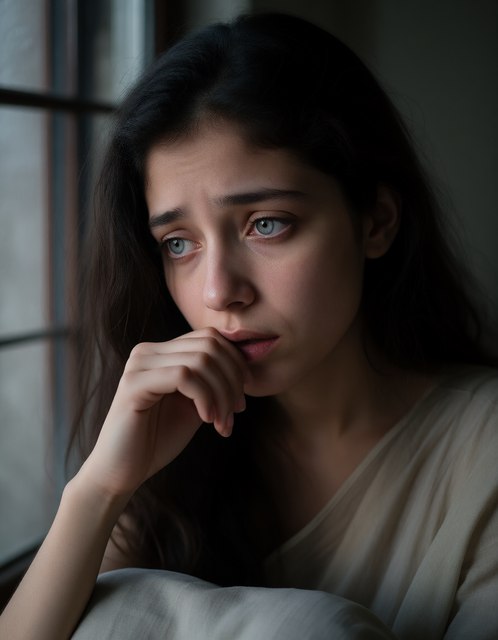
Chapter 55: The Third Wish
A year later it was Holi again.
It fell on a Friday, the way it had the year before. I noticed that when I looked at the calendar in January, and I sat for a moment with my finger on the date. Then I turned the page and got on with my day. That was how most things were now. I noticed them, and sat for a moment, and turned the page.
By the terms of the decree, alternate festivals were Poroma's. Durga Puja had been mine in October. Diwali had been hers. Christmas mine. So Holi was hers. She was to pick the children up at nine in the morning and bring them back by six.
She sent me a message on Thursday night.
Would it be all right if I came up for a few minutes when I pick them up? There's something I'd like to say. If it's not all right, I understand completely. — P
She always signed them P. Never Poroma. Never anything else.
I wrote back: Come up.
A great deal had happened in a year.
Rahul's trial had begun in November at the Bankshall Court. It would go on, Banerjee said, for at least another year, possibly two, but the forensic report on the laptop was eleven hundred pages long and his own voice was on the recording from the flat. I had given my evidence in December. So had Poroma. We did not sit together. She gave hers in the white saree with the red border, and the defence lawyer, a slick young man from a big firm, spent two hours trying to make her say that she had wanted it all, that she was a willing participant, that the video was a lovers' game.
"Yes," she told him calmly, again and again. "I wanted him. I was a willing participant in a love affair with him. I was not a willing participant in being filmed. And I was not a willing participant in being blackmailed. Those are not the same thing, and I think you know that."
Banerjee told me afterwards that the magistrate had written something in her notebook at that point and underlined it twice.
Patel Sir had been named in the charge sheet as an accessory. He had sold his flat in Salt Lake and moved to his son's house in New Jersey. Head office had offered me his job, Vice President for the eastern region, in the conversation the MD had promised me. I had thought about it for a week. Then I had said no, and asked instead for Regional Head of Sales for Kolkata, with no travel. They had looked at me as if I were mad. But they gave it to me.
I was home by six every evening. I read Nupur the mongoose story, and then a dozen others. I taught Rajiv to kick a ball. I went to Kimi's class three nights a week and was finally, after nineteen months, almost as good as the college boys.
Sutapa had left Dilip in June. Quietly, without drama. She had a small flat four streets away from ours now and taught Bengali literature at a girls' college in Bhowanipore. She came for dinner on Sundays and on Wednesdays, and sometimes she stayed. Nupur had stopped asking whether she would. Rajiv called her Tupa, because he could not say Sutapa, and she had decided that she liked it better.
We did not call it anything. Neither of us needed to.
Rashmi was still in Bangalore. In September she had sent me a photo of herself with a tall, laughing Malayali architect, both of them holding up glasses of filter coffee. Under it she had written a single line: He's not too much either.
And Poroma.
Poroma had found a job in April, teaching English to Class Nine and Ten at a girls' academy in Jodhpur Park. Eleven thousand rupees a month. A third of what Didi earned with us. She took a two-room flat above a sweet shop on Rashbehari Avenue, and her mother paid the deposit, and her father came down from Vizag once a month and fixed things that did not need fixing.
She had not missed a single Saturday or Wednesday in a year. Not once. Not when she had fever in August. Not when the monsoon flooded Rashbehari Avenue up to the knees and she came anyway, wading, with her saree hitched up and a plastic bag over her head. She took the children to the Victoria Memorial so often that Nupur could now name every painting in the Royal Gallery. She took them to the zoo, to the Science City, to the Indian Museum to see the mummy. She sat with Nupur in the library at the Ramakrishna Mission on Saturday afternoons and read to her for hours.
She still went to the psychologist at Woodlands. Once a week now, instead of twice.
She had never once asked me for anything. Not money, not extra time, not to come up for tea when she dropped the children back. She brought them to the door at exactly six o'clock, kissed them both, and said, "Thank you, Ranjeet," and went back down the four flights of stairs. Every Saturday for a year.
This was the first time she had asked to come up.
She rang the bell at nine o'clock exactly.
I opened the door. She was standing on the landing in an old white salwar kameez, already speckled with pink and green, and a pair of rubber chappals. Her hair was tied up in a cloth. She was holding a plastic bag full of little paper packets of gulal and two water pistols shaped like fish.
"The children made me play with the neighbours' boys on the way up," she said. "I'm sorry. I've got colour on your doorstep."
Behind me, Nupur shrieked "Mamma!" and came barrelling down the hall, already in her oldest frock. Rajiv followed at a determined toddle, shouting something that might have been colour.
Poroma knelt and caught them both. She smeared a tiny dab of pink on each nose with her thumb. Rajiv screamed with delight. Nupur, seven now and very grand, gave her mother an equally tiny dab of green on the chin, very precisely, like a doctor applying ointment.
"Shubho Dol, Mamma."
"Shubho Dol, shona."
Didi took them into the kitchen to put their old shoes on. Poroma stood up and wiped her hands on her kurta. She looked at me.
"I won't stay long," she said. "I just need two minutes."
"Come in."
We stood in the little living room. The yellow curtains were a year older and faded at the edges where the sun came in. The walls were covered with drawings now, floor to ceiling, Nupur's and Rajiv's scribbles mixed together. On the windowsill was a photograph Sutapa had taken at Christmas. Me and the children on the steps of St. Paul's Cathedral, all three of us wearing cheap red Santa hats.
Poroma looked at the photo for a moment. Her face did not change.
"She takes good pictures," she said.
"She does."
She turned back to me. She took a breath.
"A year ago," she said, "in the corridor at Alipore, I told you I still had one wish. From the bet."
"I remember."
"I said I wouldn't use it until the right day. And I said that when I did, it wouldn't be for me." She looked down at her colour-stained hands. "I've thought about it every day for a year. I thought about what to ask. I made lists." A brief, crooked almost-smile. "My psychologist says I make too many lists."
I waited.
"I'm going to use it today," she said. "Because it's Holi. And it was Holi when I took everything from you. And I'd like Holi to be the day I give something back. If you'll let me."
"Go on, Poroma."
She raised her eyes and looked straight at me. The same ice-blue eyes I had first seen across a corridor at Presidency College, seventeen years ago, when she had smiled at me as if she had already decided something.
"Nupur is seven," she said. "One day, maybe when she's twelve, maybe sixteen, she's going to ask you why her mother and father don't live together. Why she lives with you and only visits me. Rajiv too, later. They're going to ask." Her voice was very steady. "And you're going to want to protect me. I know you. You're going to want to say something kind and vague. Mamma and Papa grew apart. Sometimes grown-ups make mistakes."
She stopped, and swallowed.
"My third wish is that you don't," she said. "When they ask, I want you to tell them the truth. All of it. Not the details they're too young for. But the truth. That their mother hurt their father very badly. That she lied to him for a long time. That she hit Nupur, once, and walked away while she cried, and that it was the worst thing she ever did." Her voice cracked very slightly on the last word, and steadied. "I don't want them growing up thinking it was nobody's fault. I don't want them thinking it was yours. It was mine. They should know that."
I could not speak.
"And then," Poroma said, more quietly, "if you want to. Only if you want to. You can tell them the rest. That she went to Lalbazar. That she went to that flat. That she spent every Saturday for a year at the Victoria Memorial learning the names of all the paintings so she could tell them." She looked away, at the yellow curtains. "You don't have to. That part's up to you. But the first part, I want them to know. From you. Not from someone at a party when they're fifteen. From their father, who never lied to them."
She looked back at me.
"That's my third wish," she said. "That's all of it."
I stood there in my small living room, with the faded yellow curtains and the drawings on the walls and my children's voices coming from the kitchen, where Didi was trying to get Rajiv into his old sandals.
For two years I had believed that the worst moment of my life was the night of the Holi party. Standing in Sutapa's hall with four pairs of hands holding me down, watching my wife walk past me on another man's arm without turning her head.
I knew now that it had not been the worst moment. The worst moment had been on Valentine's night, five weeks earlier, in a room I had never seen, with a camera I had never known about. And I had not even been there. I had been sitting in a taxi on the bypass in the rain, worrying that my wife was cold.
But standing there on Holi morning a year later, I understood something else too. If there had been a worst moment, there could also be other ones. Smaller. Quieter. Not erasing anything. Just standing next to it.
This was one of them.
"Yes," I said.
Poroma let out a long breath, and closed her eyes for a second.
"When they ask," I said. "I'll tell them the truth. All of it." I paused. "And I'll tell them the rest. I'll tell them about the white saree. And the flat. And the Victoria Memorial every Saturday. And Lalbazar." I looked at her. "I'll tell them their mother did the bravest thing I've ever seen anyone do, and that she did it too late, and that both of those things are true."
She opened her eyes. They were wet. She did not let the tears fall.
"Thank you," she said.
At that moment Nupur came charging out of the kitchen with both fists full of gulal, one pink and one green, and her eyes shining with purpose.
"Papa! Mamma! Close your eyes!"
"Nupur, no, Mamma's already—"
Too late. She flung both fistfuls at once, one at each of us, with the precision of a fast bowler. Pink exploded across my face and shirt. Green burst over Poroma's hair and shoulders. We both stood there coughing, dusted in colour from head to foot.
Nupur stood back and surveyed her work with deep satisfaction.
"There," she said. "Now you match."
Rajiv, arriving behind her with one sandal on, looked at his parents and laughed so hard he sat down on the floor.
Poroma looked at me through a cloud of green. I looked at her through a cloud of pink. And for one moment, for the first time in two years, we both laughed. Not long. Not together, exactly. But at the same time, in the same room, at the same small fierce girl standing between us with coloured hands.
Then Poroma wiped her eyes with the back of her wrist, leaving a long green streak across her cheek, and held out her hands to her children.
"Come on," she said. "The Victoria Memorial gardens. Everyone's going to be playing colour on the lawns. And there's a man with a big drum."
"A big drum!" Rajiv shouted, struggling up.
At the door Nupur turned back and looked at me, still standing there pink from head to foot in the middle of the living room.
"Papa, aren't you coming?"
"Not this time, shona. This is Mamma's Holi."
She considered this. Then she nodded, satisfied, and took her mother's hand.
"Next year," she said. "Next year, everyone comes."
Poroma looked back at me over our daughter's head. Neither of us said anything.
Then the door closed, and I heard the three of them going down the four flights of stairs. Nupur explaining something very loudly about the big drum. Rajiv chanting colour, colour, colour. And under it, low and steady, their mother's voice answering both of them at once, the way only a mother can.
I stood at the window and watched them come out onto the street. The lane was already a riot of colour, the neighbours' children with buckets and pichkaris, an old man on a balcony throwing marigold petals, a drum somewhere round the corner, dhak-dhak-dhak. A boy on a bicycle threw a handful of yellow at Poroma as they passed. She ducked and laughed and threw a handful of pink back at him, and Nupur shrieked with joy.
Then they turned the corner towards Rashbehari Avenue and were gone.
People have asked me, over the years, what the story was really about. Some of them read it on a forum, where somebody else wrote it down. They ask whether I won in the end, or she did, or Rahul.
I tell them it was never about winning. The story was called The Defeat of Poroma, and for a long time I thought her defeat was a game at a Holi party, forty seconds before a stopwatch ran out. Then I thought it was Valentine's night, in a room with a camera on the wardrobe. Then I thought it was the morning she sat alone in an empty house looking at a crayon drawing with the eyes coloured so hard they tore the paper.
I know better now. Her defeat was all of those things. But defeat is not the end of a person. It is only the end of who they were pretending to be.
What she did afterwards in a white saree on the seventh floor of a building in New Alipore, and every Saturday at ten o'clock for a year, and this morning in my living room with her hands full of colour, was not a victory. She would never let me call it that.
But it was hers.
And it was true.
The End.
Mail: mvishakt[at]gmail[dot]com
Kik: mvishakt